
Backyard Creations makes two main patio heater types worth knowing about: a compact tabletop propane unit (the PBF-SS, at 33-7/8 inches tall) and a larger freestanding propane infrared heater, the Stackstone (Model F180073/PD-F180073, rated at 41,000 BTU). If you have a small patio table gathering, the tabletop works fine. If you want real warmth across a full backyard seating area, the Stackstone is the one to consider. Neither is a premium commercial unit, but both offer solid value for the price point where Backyard Creations plays. Here is what you need to know before buying either.
Backyard Creations Patio Heater Review and Buying Guide
Caleb Vale
2 Jul 2026
What Backyard Creations patio heaters are (and which type to consider)
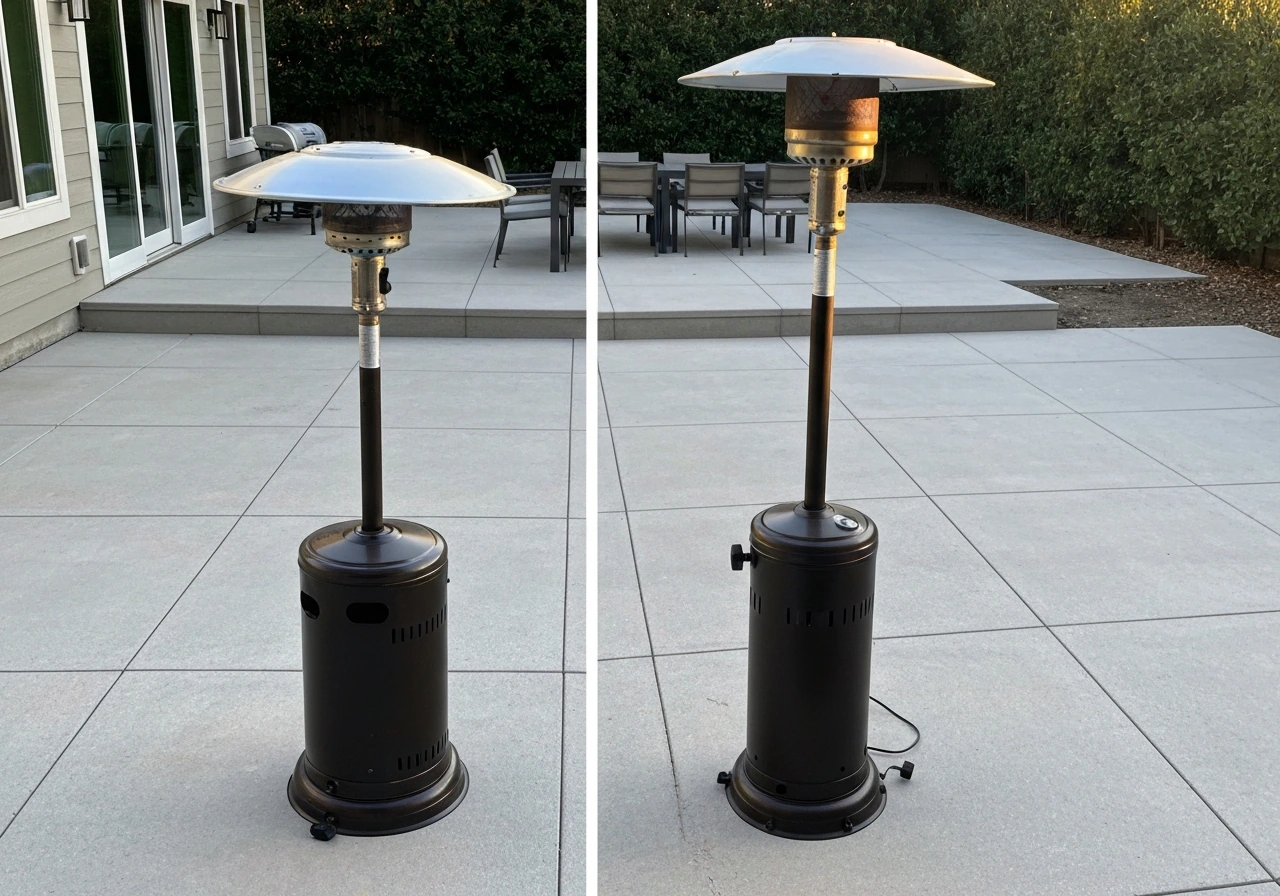
Backyard Creations is a Menards house brand, which means these heaters are sold exclusively through Menards stores and their website. That has real implications for buyers: pricing is typically competitive with big-box alternatives, but replacement parts and warranty service go through Menards rather than a dedicated brand support channel. The lineup is focused and affordable rather than sprawling and premium.
The two primary models in the current lineup target different use cases. The PBF-SS tabletop propane heater is designed for small gatherings around a table, runs off a 1-lb or adapted tank, and provides localized warmth rather than zone heating. The Stackstone (F180073) is a propane-fueled outdoor infrared heater built around a faux-stone column aesthetic. At 41,000 BTU, it produces radiant infrared heat, meaning it warms people and surfaces directly rather than heating the air. That distinction matters a lot outdoors, where ambient air heat bleeds away quickly in wind.
Backyard Creations does not currently offer electric, natural gas, or pellet heaters in their patio lineup. If you are specifically looking for an electric infrared option for a covered patio, or a natural gas model with a fixed line, you will need to look elsewhere. The best backyard patio heaters category overall has more variety, but within Backyard Creations, you are choosing between propane tabletop and propane infrared freestanding.
| Model | Type | BTU Output | Fuel | Best For |
|---|---|---|---|---|
| PBF-SS | Tabletop Propane | Not specified (small unit) | Propane (1-lb or adapted) | Small table gatherings, apartment balconies |
| F180073 / PD-F180073 (Stackstone) | Freestanding Propane Infrared | 41,000 BTU | Propane (20-lb tank) | Mid-size to large backyard patios, open or semi-covered |
How I evaluated these heaters
For this review, I looked at documented specification data from manufacturer manuals, Menards product listings, and real-world user feedback patterns across retail review platforms. Because Backyard Creations is a store brand with limited independent press coverage, the evaluation leans on the official manual specifications (which are more detailed than many brands publish) and aggregated customer experience. I assessed each model across six criteria: heat output and coverage, real-world performance in wind and cold, control quality, build quality and materials, ease of assembly and use, and aesthetics.
The Stackstone manual is unusually specific about operating conditions, which is actually helpful for setting real expectations. Most heater manuals bury limitations in fine print. Backyard Creations calls out wind speed thresholds and cold-temperature efficiency drops explicitly, which I weighted positively in the honesty-of-spec scoring and used as a baseline for real-world performance expectations.
Model-by-model reviews
PBF-SS Tabletop Propane Patio Heater
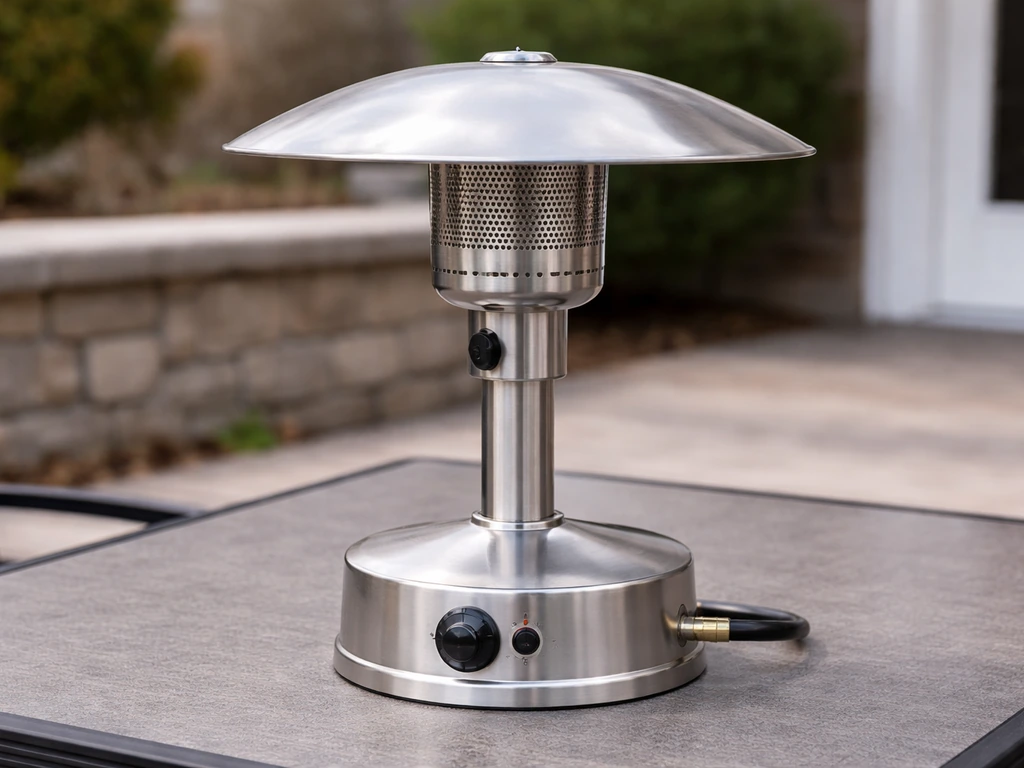
The PBF-SS is a 33-7/8-inch stainless steel tabletop heater. It is a familiar mushroom-style design that sits on a table surface and radiates heat downward and outward over the immediate seating area. At this size, you are looking at roughly a 4 to 6-foot effective comfort radius under calm conditions. It is not going to heat a 20-foot patio. What it does well is provide localized warmth for two to four people seated around a table without requiring a full tank setup.
| Criteria | Rating (out of 5) | Notes |
|---|---|---|
| Heat Output / Coverage | 3/5 | Adequate for small table settings; limited range |
| Wind/Cold Performance | 2.5/5 | Tabletop units lose effectiveness quickly in wind above 8-10 mph |
| Control Quality | 3/5 | Basic push-and-turn ignition; functional but no thermostat or timer |
| Build Quality | 3.5/5 | Stainless finish holds up well; lightweight but stable on flat surfaces |
| Ease of Use | 4/5 | Quick setup, no assembly required beyond tank connection |
| Aesthetics | 3.5/5 | Clean stainless look fits most patio table setups |
Where users report frustration with the PBF-SS is in windy conditions. Any tabletop propane heater at this size will struggle when wind picks up, and the PBF-SS is no exception. If your patio is exposed, expect noticeable heat loss above a light breeze. In sheltered or covered spots it performs well for the price. Overall verdict: a practical, no-frills tabletop heater for casual use. Not the right tool for serious cold-weather heating.
F180073 / PD-F180073 Stackstone 41,000 BTU Infrared Heater
The Stackstone is the more serious unit in the Backyard Creations lineup. At 41,000 BTU using outdoor infrared technology certified to ANSI Z83.26-2014 and CSA 2.37-2014 standards, it meets recognized North American safety and performance benchmarks for gas-fired outdoor infrared patio heaters. The faux-stone column design is distinctive, and while it will not appeal to every taste, it blends into garden or natural-stone patio aesthetics better than a standard stainless mushroom tower.
| Criteria | Rating (out of 5) | Notes |
|---|---|---|
| Heat Output / Coverage | 4/5 | 41,000 BTU covers roughly 100-150 sq ft comfortably under good conditions |
| Wind/Cold Performance | 3/5 | Manual specifies use below 10 mph wind; reduced efficiency below 40°F (5°C) |
| Control Quality | 3.5/5 | Standard piezo/manual ignition; no electronic thermostat on base model |
| Build Quality | 4/5 | Composite stone column is durable; burner assembly is solid |
| Ease of Use | 3.5/5 | Assembly required; straightforward but takes 30-45 minutes |
| Aesthetics | 4/5 | Stackstone look stands out positively in garden-style patios |
The two most important real-world limitations the manual spells out clearly: the unit is designed for use when wind velocity is below 10 mph, and it will operate at reduced efficiency below 40°F (5°C). Both of those thresholds are honest and representative. On calm, mild evenings the Stackstone delivers solid radiant warmth. In gusty or truly cold conditions, you will notice the drop-off. For climates where you mostly entertain in the 45-65°F range with low wind, this is a genuinely capable heater. For Northern regions where evenings regularly drop below freezing, a higher-BTU or more wind-shielded setup would serve better.
User feedback patterns for the Stackstone highlight two standout positives: the visual design and the ease of ignition once assembled. Common complaints focus on assembly time, the weight of the unit (making repositioning cumbersome), and heat output in windy settings. None of those are dealbreakers, but they are worth knowing upfront.
Placement, installation, and setup checklist
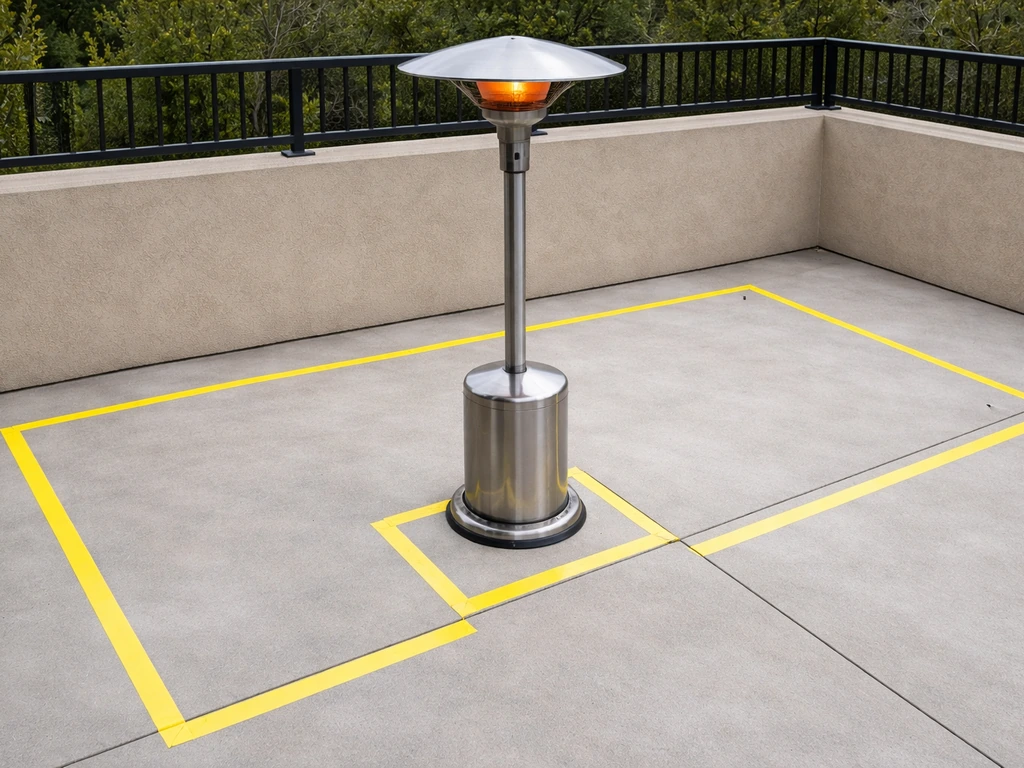
Getting placement right is the single biggest factor in whether a patio heater actually feels warm or just burns propane into the sky. The Stackstone manual specifies at least 2 feet of clearance on top and at least 3 feet on all sides from combustible materials. Those are minimum figures. In practice, I recommend treating those as hard floors, not targets.
- Measure your patio dimensions before positioning. For the Stackstone, plan for a 10-12 foot diameter comfort zone as a realistic expectation at full output under calm conditions.
- Keep at least 3 feet of clearance on all sides from wood fencing, fabric furniture, overhead string lights, pergola cross-beams, and any combustible patio cover material.
- Keep at least 2 feet above the unit clear. If you have a pergola or umbrella directly overhead, either raise it or reposition the heater.
- Place the heater on a flat, level, non-combustible surface. Pavers, concrete, and composite decking rated for heat exposure all work. Uneven ground is a tipping hazard.
- Never place directly on a wood deck surface without a protective mat or tile beneath the base.
- Run the propane tank connection check before first use: apply soapy water to the regulator and hose connections while the valve is open, and check for bubbles indicating a leak.
- For the tabletop PBF-SS: place on a table rated for the weight, centered, with nothing flammable within 18 inches at table level.
- Wind positioning: orient heater placement so that your seating area is on the downwind side, reducing the effect of wind on the radiant heat zone.
Assembly for the Stackstone takes approximately 30 to 45 minutes with basic hand tools. The column panels attach to a base housing the tank and burner assembly. Follow torque specs in the manual on all fasteners, as loose panels can shift over a season. Budget time for this on initial setup and do not rush the propane connection steps.
Safety essentials and the mistakes people make
Propane heaters come with real risks that get manageable when you follow a short list of rules. The most critical: never use either Backyard Creations propane heater in an enclosed space. The Stackstone manual is explicit about this, and it is not boilerplate. Carbon monoxide from incomplete propane combustion will accumulate in enclosed spaces, including screened porches with limited airflow, tents, and any room-like structure. These heaters are rated for open-air or substantially open outdoor use only.
- Carbon monoxide risk: Never use in a tent, screened room, camper, garage, or any structure without substantial open airflow. CO is odorless and fatal at concentration.
- Tip-over hazard: The Stackstone is tall and has a moderate wind profile. In gusty conditions above 10 mph, consider moving the heater indoors or securing it. Do not leave it unattended outdoors in high wind.
- Propane leak check: Do a soapy-water bubble test at every hose and regulator connection at the start of each season and after any tank swap.
- Tank storage: Do not store a connected propane tank inside any structure. Store spare tanks upright, outdoors, away from ignition sources.
- Children and pets: Establish a clear 3-foot no-approach zone around any operating heater. The emitter surface and housing reach burn temperatures.
- Leaving unattended: Turn the heater off completely (valve closed, not just burner off) when leaving the patio, especially overnight.
- Cold-weather starts: Below 40°F, expect slower ignition and lower output. Do not repeatedly attempt ignition without checking if gas is flowing; repeated spark attempts with pooled unburned gas create a flash risk.
- Covered patios: Partial covers (pergolas, sail shades) are generally fine if clearances are met. Full solid-roof covers with limited ventilation are not appropriate for propane heater use.
Efficiency and what it actually costs to run
The Stackstone at 41,000 BTU burns roughly 0.96 pounds of propane per hour at full output. A standard 20-lb propane tank holds about 430,000 BTU of usable energy, which translates to approximately 10.5 hours of full-output runtime per tank. At current propane prices around $3.50 to $4.50 per gallon (propane is approximately 4.2 lbs per gallon), a 20-lb tank costs roughly $16 to $21 to refill, giving you a per-hour fuel cost of $1.50 to $2.00 at full output.
In practice, most people do not run heaters at full output constantly. At 70 to 80 percent output, runtime per tank extends to 13 or 14 hours and per-hour cost drops to around $1.20 to $1.60. For a household doing two or three patio evenings per week through a cool-weather season (say, 15 weeks of late September through early January), that works out to roughly 3 to 4 tanks of propane, or $50 to $85 for the season. That is a reasonable fuel cost for meaningful outdoor heating.
The efficiency caveat: the Stackstone manual's note about reduced efficiency below 40°F is directly relevant to operating costs. When efficiency drops, you are burning more propane for less perceivable warmth. If you regularly entertain in near-freezing temps, your per-warmth cost climbs and the case for a higher-BTU or better-insulated heating setup gets stronger.
| Scenario | Approx. Runtime per Tank | Estimated Fuel Cost per Hour | Seasonal Cost (15 weeks, 3x/week, 3 hrs/session) |
|---|---|---|---|
| Full output (41,000 BTU) | ~10.5 hours | $1.50-$2.00 | $200-$270 |
| 70-80% output | ~13-14 hours | $1.20-$1.60 | $162-$216 |
| Mild evenings (50-55% output) | ~18-20 hours | $0.85-$1.10 | $115-$149 |
The tabletop PBF-SS runs off a 1-lb disposable canister or a converted larger tank. At small-unit BTU levels, per-hour cost is lower in absolute terms, but cost-per-warmth-area is actually less efficient than the larger Stackstone because coverage is so much smaller. Use the tabletop for accent warmth, not primary heating.
How to pick the right Backyard Creations heater for your setup
Here is the honest decision framework. Backyard Creations gives you two choices, and the right one mostly comes down to patio size and how seriously cold your evenings get. If you are shopping specifically for the best garden patio heaters, these two Backyard Creations options cover the main scenarios most people face.
| Your Situation | Best Fit | Why |
|---|---|---|
| Small balcony or patio table, 2-4 people | PBF-SS Tabletop | Compact, no permanent setup, adequate for intimate table settings |
| Mid-size backyard patio, 6-10 people, mild to cool climate | Stackstone F180073 | 41,000 BTU covers the space; infrared warms people efficiently in open air |
| Covered pergola or partial roof, moderate wind | Stackstone F180073 (with clearance check) | Works well if clearances are met; check roof material for combustibility |
| Fully open patio in regularly windy conditions | Consider alternatives | Both units lose performance above 10 mph wind; a windscreen or alternative heater type may be better |
| Sub-freezing temperatures regularly | Consider higher-BTU alternatives | Stackstone efficiency drops below 40°F; for serious cold, look at higher-BTU propane or electric infrared options |
| Budget under $100, just testing outdoor heating | PBF-SS Tabletop | Low entry cost, no real installation, easy to try out seasonal use |
| Natural gas line available on patio | Not Backyard Creations | Brand does not offer NG; explore dedicated natural gas patio heater options |
If you are comparing across a broader set of options, it is worth noting that the best home patio heaters and best backyard patio heaters categories include electric infrared and natural gas models that outperform propane in specific scenarios, especially covered patios where running a gas line is feasible or where 240V electric is available. Backyard Creations is competitive for its price range, but the lineup is narrow by design.
Before you buy, take three measurements: your patio square footage, the clearance height above where you would place the heater, and the horizontal distance to the nearest combustible surface (wood siding, fencing, fabric). If those clearances meet the 2-foot top and 3-foot side minimums for the Stackstone, you are in good shape. If you are tight on clearances, the tabletop in a low-clearance covered spot is actually the riskier choice, not the safer one. Match the heater to the space, not the other way around.
Bottom line: the Stackstone F180073 is the more capable and versatile of the two Backyard Creations heaters, and at 41,000 BTU with legitimate ANSI/CSA certification, it delivers real performance for a mid-range price. For restaurants, the best patio heaters are the ones that provide reliable radiant warmth across your seating area while staying compliant with safe clearance and fuel rules best patio heaters for restaurants. The PBF-SS tabletop is a solid accent heater for small setups. Know the wind and cold limitations going in, follow the clearance and safety rules, and either unit will serve you well through a mild-to-moderate outdoor heating season.
FAQ
Can I use the Stackstone or PBF-SS under a screened-in porch or covered patio?
No, you should not. Both Backyard Creations propane models are intended for open-air or substantially open outdoor use. Even “mostly covered” porches can have stagnant air around the heater, which increases the risk of carbon monoxide buildup. If you want something for enclosed or semi-enclosed spaces, look for an electric or natural-gas option that is specifically rated for that environment, and keep the heater’s listed installation requirements in mind.
How should I place a Backyard Creations patio heater for best warmth coverage?
To get the coverage you expect, you typically need to sit within the effective radiant zone, not treat the patio as a room you are heating. For the Stackstone, center the unit so the people are facing the radiant path, and keep a clear line of sight (large umbrellas, tall planters, or furniture can block heat). For the tabletop PBF-SS, assume the effective comfort area is closer to the seating around the table, roughly a few feet rather than a wide patio spread.
What propane tank size and fuel setup should I plan for with these Backyard Creations models?
Use a standard 20-lb propane tank for the Stackstone, because the manual-calculated runtime and fuel cost assumptions are based on that type of setup. For the PBF-SS tabletop model, it uses a 1-lb disposable canister or a compatible adapted larger-tank arrangement. If you switch tank types, confirm the correct regulator, hose routing, and fit, because an incorrect connection can prevent safe operation or cause poor flame stability.
Do the Stackstone clearance distances include overhead items like umbrellas and pergola beams?
Don’t “guess” at clearance using safety rules of thumb. The Stackstone manual calls out minimum clearance distances, including 2 feet on top and 3 feet on all sides from combustibles, and those are the numbers to follow. Also check overhead hazards like pergola slats, hanging lights, and umbrella fabric, since those can count as combustibles even if they are not directly beside the heater.
What should I do if my patio has occasional gusts of wind?
Watch wind, but also plan for gusts. The Stackstone is designed for wind below 10 mph, and users commonly report reduced heat feel when breezes pick up even if the heater is still operating. A practical mitigation is positioning the heater where it is protected on at least one side by a noncombustible structure (for example, a solid masonry wall), while still meeting the required side clearance.
How do cold temperatures change real performance and fuel cost for the Stackstone?
For cold-weather use, the key threshold is efficiency dropping below 40°F (and you will feel it as less noticeable radiant warmth per dollar spent). If you regularly entertain below freezing, it can make more sense to either use a higher-output heating strategy or keep guests closer (more heaters, or a layout that reduces the distance people are from the radiant source). Budget for higher propane consumption when temperatures are near that cutoff.
How should I handle assembly and ongoing maintenance so the Stackstone stays secure?
Be careful not to treat assembly time as “done once.” The Stackstone weighs enough that moving it after setup is inconvenient, so placement decisions should be made first. After the initial build, recheck fasteners periodically, especially across a season where vibration and temperature cycling can loosen panels. If panels shift, the radiant output pattern and the safe fit can be affected.
Is Backyard Creations patio heating realistic for winter nights or a large open backyard?
In general, neither is a good fit for keeping a large patio comfortable in serious cold or windy conditions. If you need broad coverage in colder weather, consider solutions with either higher output, better wind shielding, or non-propane options (electric or natural gas) that can be more consistent in a covered environment. If you stay with Backyard Creations, the Stackstone is the better pick, but only if your patio conditions match the wind and temperature limits.
Can I use these heaters during rain as long as they stay outdoors?
Yes, but only if the heater’s rated operating conditions are met. For the Stackstone, confirm wind and temperature limits still apply at the time you use it, and keep clearances strict. Also note that “substantially open” is not the same as “mostly enclosed,” so if the area traps air, you should not operate it there even if people are sheltered from weather.
How can I estimate my monthly propane cost if I do not run the Stackstone on full power all evening?
A simple budgeting approach is to estimate runtime based on your typical output level, then multiply by tank refill cost. The Stackstone burns close to 0.96 lb propane per hour at full output, so if you plan to run it intermittently, you may not need to budget for continuous operation. If you expect you will keep windows open or run it in wind, plan fewer “hours of comfort per tank,” because fuel use can go up while warmth feels weaker.
Next Articles
Best Price on Outdoor Patio Heaters: Compare Costs & Deals
Score the best price on outdoor patio heaters, price ranges, top picks, deal tactics, total-cost & safety checklist.
Where Can I Rent Patio Heaters Near Me Today
Find where to rent patio heaters near you today, choose the right fuel type, compare costs, and book safely.
Where to Buy a Patio Heater: Best Places and Types
Where to buy a patio heater now, plus electric vs gas vs propane tips, safety checks, and size/BTU buying checklist.