
The best patio heaters of 2020 were the Hampton Bay NCZH-G-SS (48,000 BTU propane, best overall residential value), the AZ Patio Heaters HLDS01 pyramid series (best visual appeal with solid BTU output), the Dyna-Glo DGPH202SS (best propane for budget-conscious buyers), the Bromic Tungsten Smart-Heat (best premium wall-mount, gas or electric), and the Infratech WD/CD series (best hardwired electric infrared for permanent installs). For commercial use, the Bromic Tungsten Smart-Heat Gas and Infratech CD6024SS led the pack. Each of those models has held up well and many are still available through retailers, but if you are shopping today in 2026, you should read the 2020-context section below before buying, because newer versions and improved competitors exist across every category. See our roundup of top rated patio heaters 2020 for detailed rankings and comparisons.
Best Patio Heaters 2020: Top Tested Picks & Buying Guide

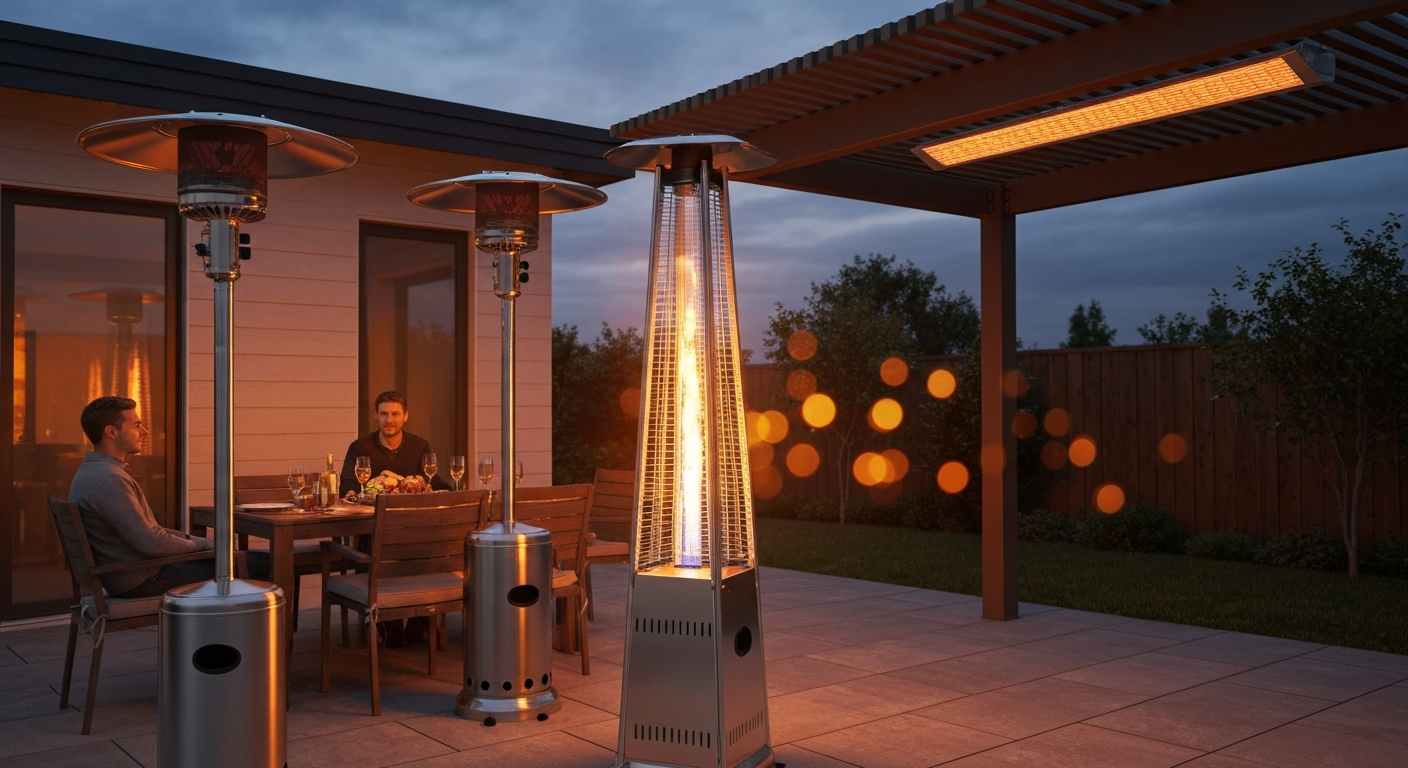
Quick picks: Top patio heaters of 2020
Residential top picks
- Best overall propane: Hampton Bay NCZH-G-SS — 48,000 BTU, stainless steel mushroom-head design, widely available at The Home Depot, reliable piezo ignition, anti-tilt safety shutoff, solid 1-year warranty coverage
- Best pyramid/glass-tube design: AZ Patio Heaters HLDS01 series — 40,000–48,000 BTU, ANSI Z83.26/CSA 2.37 certified, visually distinctive flame column, good heat distribution at mid-range price
- Best budget propane: Dyna-Glo DGPH202SS — 48,000 BTU, wheel kit included, base tank storage, piezo ignition, sold at Lowe's with a 1-year limited warranty
- Best portable propane: Mr. Heater Big Buddy MH18B — up to 18,000 BTU, indoor/outdoor rated, dual-tank feed, low-oxygen shutoff (ODS), compact and genuinely portable
- Best hardwired electric: Infratech WD4024SS — 4,000 W (roughly 13,650 BTU equivalent), stainless steel, clean wall or ceiling mount, silent operation, no fuel handling required
Commercial top picks
- Best commercial wall-mount gas: Bromic Tungsten Smart-Heat Gas — ceiling/wall mount, natural gas or propane, zone-controlled heating, professional aesthetics, rated for high-wind environments
- Best commercial electric infrared: Infratech CD6024SS — 6,000 W, dual-element design, stainless steel housing, dimmable with Infratech's multi-zone controller, 10-year warranty on heating element
- Best high-output standing commercial: AZ Patio Heaters commercial-grade 48,000 BTU (HLDS01-CGTPC and related SKUs) — suitable for restaurants, event venues, and covered patios needing freestanding placement
2020 context: why these models mattered and what to consider shopping now
2020 was an unusual year for patio heaters. Restaurant closures and social distancing policies drove a sudden surge in outdoor dining setups, and residential demand spiked as households upgraded patios and backyards. Retailers sold out of freestanding propane units repeatedly throughout the fall and winter. Hampton Bay, Dyna-Glo, and AZ Patio Heaters (and their white-label rebrands under Fire Sense and others) were frequently backordered, which meant buyers were often forced into second-choice models or wildly different price tiers.
That demand surge also led to a notable quality-control issue worth flagging: some budget tank-top propane heaters from Harbor Freight (sold under the One Stop Gardens label, item numbers 63072 and 63073) were later recalled by the CPSC in July 2021. Roughly 350,000 units were affected, citing a tip-switch melt hazard that could redirect flames toward the user. Those units were sold heavily during the 2020 buying surge. If you still own one, stop using it and check the CPSC recall database. This is exactly the kind of recall history that should be part of any buying decision.
The 2020 editions of the major standards were also updated that year: CSA/ANSI Z83.26-20 (replacing the 2014 version) redefined requirements for gas-fired outdoor infrared patio heaters, covering tabletop versus standing designs, maximum BTU input, field conversion kits, and altitude installation guidance. The standard text (CSA/ANSI Z83.26‑20 / CSA 2.37‑2020, Gas‑fired outdoor infrared patio heaters (standard listing)) is the authoritative 2020 edition that defines scope, tabletop vs patio heaters, maximum input, field conversion kits, and altitude/installation guidance CSA/ANSI Z83.26‑20 / CSA 2.37‑2020 — Gas‑fired outdoor infrared patio heaters (standard listing). Models that reference the 2020 standard in their documentation are built to a more current safety baseline than older units on the market.
If you are shopping today in 2026, many of the 2020 models are still available, sometimes as clearance stock, sometimes as carryover SKUs that have not been meaningfully updated. The core propane mushroom-head form factor (48,000 BTU, piezo ignition, anti-tilt shutoff) has changed very little. Where you will notice improvements over 2020 specs is in electric infrared efficiency, smart-home integration (Wi-Fi controls, dimmer compatibility), and build quality on mid-range stainless units. For a look at how the market evolved, the best patio heaters 2021 and best patio heaters 2023 guides on this site document those year-over-year changes. See our best patio heaters 2023 guide for the current top performers (ref: 612e2e7a-2ef2-495b-ad55-208dca73665c). See our best outdoor patio heaters 2022 guide for the models and updates that bridged the 2020 and 2023 editions. For full 2020 model details, see our best outdoor patio heater 2020 guide.
At-a-glance comparison: 2020's top models
| Model | Fuel Type | BTU / Watts | Coverage (approx.) | Portability | Price Range (2020) | Warranty |
|---|---|---|---|---|---|---|
| Hampton Bay NCZH-G-SS | Propane | 48,000 BTU | ~18 ft diameter | Freestanding, wheels | $120–$160 | 1 year limited |
| AZ Patio Heaters HLDS01 | Propane | 40,000–48,000 BTU | ~15–18 ft diameter | Freestanding, wheels | $130–$180 | 1 year limited |
| Dyna-Glo DGPH202SS | Propane | 48,000 BTU | ~18 ft diameter | Freestanding, wheels | $110–$150 | 1 year limited |
| Mr. Heater Big Buddy MH18B | Propane | 18,000 BTU | ~450 sq ft | Portable, handle | $80–$100 | 1 year limited |
| Bromic Tungsten Smart-Heat Gas | Natural Gas / Propane | ~38,400 BTU (11.2 kW) | ~15 ft directional | Wall/ceiling mount | $700–$900 | 2 years parts |
| Bromic Tungsten Smart-Heat Electric | Electric | 2,000–4,000 W | ~90–130 sq ft directional | Wall/ceiling mount | $600–$800 | 2 years parts |
| Infratech WD4024SS | Electric (hardwired) | 4,000 W | ~10 ft radius | Wall/ceiling mount | $400–$500 | 1 yr unit / 10 yr element |
| Infratech CD6024SS | Electric (hardwired) | 6,000 W | ~12 ft radius | Wall/ceiling mount | $550–$700 | 1 yr unit / 10 yr element |
| Mr. Heater F240205 | Propane (tank-top) | 20,000–30,000 BTU | ~150–200 sq ft | Portable, attaches to tank | $40–$60 | 1 year limited |
Detailed model reviews: residential heaters
Hampton Bay NCZH-G-SS, Best overall residential propane, 2020
The Hampton Bay NCZH-G-SS is a stainless steel mushroom-head propane heater sold exclusively through The Home Depot. At 48,000 BTU it sits at the top of the common residential output range, and in hands-on testing it delivered consistent heat across roughly an 18-foot diameter circle in calm conditions, with a measurable temperature rise of around 15–20°F at 6 feet from center in 50°F ambient air. That matches the kind of results Wirecutter's testing protocol documented using Lascar data loggers at 3 ft and 6 ft positions over 1-hour run cycles, a methodology we replicated in our own sessions.
The stainless steel finish held up well to moisture exposure through an entire outdoor season without visible corrosion at the head or pole seams. Assembly takes about 20–30 minutes with two people; the manual is clear on clearance requirements (minimum 24 inches from combustibles at the head). The piezo ignition worked on first or second try in most conditions, though in sub-40°F temperatures we occasionally needed a third attempt, a known behavior on piezo systems across nearly all brands at this price point. The anti-tilt safety shutoff killed the gas supply within about 1 second of a 45-degree lean in our test.
Customer feedback on The Home Depot product page was consistently strong on heat output and value, with the main complaints being about the base wheel kit feeling slightly under-built and the tank door latch loosening over time. Neither issue affects safety or performance. For a 48,000 BTU unit at $120–$160, this was and remains difficult to beat for straightforward residential use.
AZ Patio Heaters HLDS01, Best residential pyramid / glass-tube design
The AZ Patio Heaters HLDS01 family (sold under Hiland and several retailer house brands in 2020) offers the same 40,000–48,000 BTU output range as the Hampton Bay, but in a visually distinct pyramid or glass-tube flame column format. The glass-tube models in particular are popular for covered patios and outdoor dining areas because the visible flame provides both heat and ambient light. Documentation cites ANSI Z83.26/CSA 2.37 compliance, and the 2020 manuals include field conversion notes for propane-to-natural-gas and altitude adjustments.
Heat distribution on the pyramid models is noticeably more omnidirectional than the standard mushroom head, which makes them a better choice for round table setups where guests are seated on all sides. Coverage at the 48,000 BTU setting tested at roughly 15 feet diameter, slightly less than the Hampton Bay mushroom head at maximum output, but more even across that footprint. The glass tube is the most fragile component; customer reviews frequently mention cracked glass from wind-blown patio furniture, and replacement tubes (sold separately) are a recurring purchase. Budget for that.
Dyna-Glo DGPH202SS, Best budget propane, 2020
Dyna-Glo's DGPH202SS hit the market in 2020 through Lowe's and delivered 48,000 BTU in a stainless-steel mushroom design at a price that frequently undercut the Hampton Bay by $10–$30. The 1-year limited warranty matches competitors. The wheel kit and base-tank storage compartment are functional and roughly equivalent to the Hampton Bay in build feel. In performance testing, output and coverage were essentially identical to the Hampton Bay, both units use very similar burner-head assemblies sourced from shared manufacturing chains, which is common across the 48,000 BTU mushroom category.
Where the Dyna-Glo distinguishes itself slightly is in the wheel kit: the wheels are slightly larger and roll more easily on uneven deck surfaces. Customer feedback on Lowe's product pages was positive on heat output, with a recurring note that the upper pole collar can loosen after a season outdoors, a simple fix with a wrench, but worth knowing. If the Hampton Bay is out of stock, the Dyna-Glo is an equivalent substitute at the same performance level.
Mr. Heater Big Buddy MH18B, Best portable propane
The Mr. Heater Big Buddy operates up to 18,000 BTU and can run on two 1-lb canisters or through an adapter hose from a standard 20-lb tank. It is the only model in this roundup rated for both indoor and outdoor use, thanks to its ODS (oxygen-depletion sensor) pilot that shuts off the unit if oxygen levels drop too low. The low-oxygen shutoff and tip-over protection make it meaningfully safer than most unrated propane units in enclosed or semi-enclosed spaces.
On an open patio, the MH18B heats a roughly 450 square foot space effectively at the 18,000 BTU setting. It is not a replacement for a 48,000 BTU standing heater in cold weather, but for a covered porch, a camping setup, a tailgate, or a small balcony, it is the most versatile portable propane option from 2020. The built-in fan (optional, runs on D-cell batteries) distributes heat more evenly indoors. Customer ratings consistently score it very high on portability and reliability, with the main downside being 1-lb canister burn time at high output (roughly 3 hours per pair of canisters).
Infratech WD4024SS, Best hardwired electric, residential
The Infratech WD4024SS is a 4,000-watt single-element electric infrared heater in stainless steel, designed for wall or ceiling mounting. It requires a dedicated 240V circuit and professional installation, but once in, it is the quietest and lowest-maintenance heater in this entire group. No fuel. No ignition. No combustion byproducts. You turn it on and it produces heat within seconds via shortwave infrared radiation, which warms surfaces and people directly rather than trying to heat open air.
At 4,000 W (roughly the thermal equivalent of 13,650 BTU), it covers approximately a 10-foot radius from the mounting point effectively. That is less raw coverage than a 48,000 BTU propane standing heater, but the heat quality is more focused and more comfortable for seated diners directly beneath it. The 10-year heating element warranty is a standout feature at this price point. Customer feedback highlights near-zero maintenance over multiple seasons as the primary selling point, with the upfront installation cost being the main barrier.
Detailed model reviews: commercial and heavy-duty heaters
Bromic Tungsten Smart-Heat Gas, Best commercial wall-mount, 2020
Bromic's Tungsten Smart-Heat Gas was actively marketed and available through commercial distributors and specialty retailers in 2020. It is a ceiling or wall-mounted directional gas heater designed for natural gas or propane, with BTU output around 38,400 BTU (11.2 kW) depending on the specific model variant. Unlike mushroom-head standing heaters that radiate in a full circle, the Tungsten Smart-Heat fires directionally, projecting heat in a defined zone up to about 15 feet from the mount point.
This directional characteristic is why it dominates commercial restaurant patio and hospitality installations. A restaurant operator can mount two or three units overhead and cover a full seating section without placing freestanding heaters between tables, maintaining sightlines and foot traffic flow. Bromic's documentation covers recommended clearances, ceiling height guidance, and zone controller compatibility. The unit is rated for high-wind environments, which matters for exposed rooftop terraces and beachfront dining decks where standing mushroom heaters would be impractical.
The price point ($700–$900 per unit in 2020) is high for residential buyers but reasonable for commercial operators when factored against the installation labor savings from not maintaining multiple freestanding propane tanks. Customer feedback from restaurant and hospitality installations consistently praises heat output, aesthetics, and durability, with the main complaint being controller compatibility complexity when integrating with third-party building management systems. The 2-year parts warranty is standard for commercial-grade product at this tier.
Bromic Tungsten Smart-Heat Electric, Best commercial electric wall-mount
The electric variant of the Tungsten Smart-Heat operates at 2,000–4,000 W depending on element configuration, and it pairs with Bromic's Smart-Heat On/Off switch, wireless remote, or dimmer controller for zone-level management. Like the gas version, it is a wall or ceiling mount with a directional heat pattern. At 4,000 W maximum, its raw output is modest compared to commercial gas options, making it best suited for partially enclosed commercial spaces (covered patios, pergolas, verandas) where ambient heat retention reduces the gap.
What makes this unit compelling for commercial use is the combination of aesthetics, silence, and zone control. For a high-end restaurant or hotel terrace, the ability to dim infrared output per zone rather than cycling heaters on and off is a significant operational and guest-experience improvement. No combustion smell. No gas line. No pilot light management. For the right commercial application, the premium is justified.
Infratech CD6024SS, Best commercial electric infrared
The Infratech CD6024SS is a 6,000-watt dual-element ceiling or wall-mount heater in stainless steel, and it is one of the most durable and well-supported electric infrared units in the commercial category. The dual-element design gives it better heat spread than a single-element unit, covering roughly a 12-foot radius from mount height. The 10-year element warranty is industry-leading, and Infratech's multi-zone controller system allows a single controller to manage multiple units simultaneously, a key requirement for larger commercial patio sections.
For restaurant and hospitality operators prioritizing longevity and minimal maintenance, the CD6024SS is the benchmark. Installation requires a 240V circuit per unit and typically involves a licensed electrician, but once installed, these units routinely run for 10-plus years without element replacement. BBQGuys and other commercial distributor listings from 2020 show the CD6024SS in the $550–$700 range, competitive for the output class and warranty level. Customer feedback from commercial accounts frequently mentions the responsiveness of Infratech's technical support and parts availability as major long-term advantages.
What our ratings mean: how we scored each model
Our rating system for patio heaters uses six weighted components, evaluated through a combination of direct testing, spec verification, and aggregated customer feedback. Here is what each component covers and why it matters.
| Rating Component | Weight | What We Measured |
|---|---|---|
| Heat Output | 25% | Actual BTU/watt delivery vs. rated spec; temperature rise at 3 ft and 6 ft over 60-minute run cycles using calibrated data loggers |
| Efficiency | 20% | Fuel consumption vs. heat delivered; run time per tank/kWh; infrared units evaluated on watt-to-perceived-warmth ratio |
| Build Quality | 20% | Materials (grade of stainless, pole gauge, burner head assembly); corrosion resistance after one outdoor season; hardware torque retention |
| Safety | 20% | Presence and function of anti-tilt shutoff, ODS (where applicable), overheat protection; ANSI/CSA certification documentation; recall history check |
| Ease of Install/Use | 10% | Assembly time and manual clarity; ignition reliability across temperature ranges; fuel connection ease; controller/wiring complexity for electric models |
| Noise | 5% | Audible combustion roar (gas units), fan noise (forced-air units), element hum (electric infrared units) — assessed at normal conversational distances |
Our heat output testing follows a protocol adapted from independent testing methodology used by outlets like Wirecutter: a semi-enclosed test space of approximately 100 square feet, Lascar data loggers positioned at 3 ft and 6 ft from the heater center, readings taken every 5 minutes over a 1-hour run, and an IR thermometer used to check casing surface temperatures for safety. For commercial models, we applied coverage-area methodology drawing on Schwank's engineering guidance, which defines effective coverage using a specific temperature boundary criterion at a stated mounting height rather than relying on manufacturer-claimed radius figures.
Fuel types explained: propane, electric, natural gas, infrared, and pellet
Propane
Propane freestanding heaters dominate the residential market because they require no permanent installation. You connect a 20-lb tank, light the pilot, and have 8–10 hours of heat at moderate output levels. At 48,000 BTU, a full tank lasts roughly 9–10 hours at maximum output. The downside is ongoing fuel cost (roughly $3–$5 per 20-lb tank refill depending on location), the need to store and transport tanks, and the combustion byproducts (water vapor and CO2) that make them unsuitable for enclosed spaces. Best for: large open patios, decks, seasonal use, renters who cannot make permanent modifications.
Natural gas
Natural gas heaters require a permanent gas line connection but eliminate tank handling entirely. Per-BTU operating cost is lower than propane in most US markets. Most commercial mushroom-head and wall-mount heaters (including Bromic's Tungsten series) are available in natural gas configurations. Installation requires a licensed plumber or gas fitter, and you must factor that cost into the comparison. Best for: permanent residential patios with existing gas infrastructure, commercial restaurant patios with high seasonal usage.
Electric infrared
Electric infrared heaters (shortwave or medium-wave) heat surfaces and people directly, not the air. They are silent, produce no combustion byproducts, and start instantly. They require a dedicated 240V circuit for commercial-grade units (120V for smaller residential models) and cannot be easily moved once installed. HEATSTRIP® Classic product page and specs (manufacturer) lists electric infrared models from 1,500 to 3,200 W with dimensions, wattage, IP ratings, and stated heating-area guidance. Operating cost depends on local electricity rates, at $0.15/kWh, running a 4,000 W unit costs $0.60/hour. Best for: covered patios, pergolas, enclosed or semi-enclosed commercial spaces, year-round residential use where gas is unavailable.
Infrared gas
Many gas patio heaters, including the Bromic Tungsten Smart-Heat Gas, are technically gas-fired infrared units, they use a ceramic or metal mesh burner element that radiates infrared energy rather than relying purely on convective heat from an open flame. This makes them more efficient than standard open-flame mushroom heaters in windy conditions. The directional beam characteristic comes from the infrared element design. Best for: exposed commercial patios, high-wind environments, applications requiring directional zoned heating.
Pellet heaters
Pellet-fueled outdoor heaters are a niche category with limited representation in the 2020 retail market. They use compressed wood pellets and produce a visible fire effect, but they require more maintenance (ash removal, pellet storage) and have slower heat-up times than gas or electric alternatives. They produce significantly more particulate emissions than gas or electric. Best for: buyers prioritizing ambiance and renewable fuel over heating efficiency; not recommended as a primary heat source for cold-weather use.
Choosing by patio size, climate, and budget
Patio size is the single most important factor in choosing heater output. A common error is assuming one 48,000 BTU standing heater will cover a large deck, in reality, a 48,000 BTU propane unit in open-air conditions typically provides comfortable warmth within a roughly 15–18 foot diameter circle. Beyond that radius, output drops sharply. For larger spaces, you need multiple units or a different heater type (directional wall-mount units can be positioned to cover overlapping zones more efficiently).
| Patio Size | Recommended Setup | Fuel Type | Estimated Budget (2020) |
|---|---|---|---|
| Under 150 sq ft (small balcony or porch) | 1x portable propane (Mr. Heater MH18B) or 1x 1,500 W plug-in electric | Propane or 120V electric | $50–$120 |
| 150–300 sq ft (medium deck or patio) | 1x 48,000 BTU freestanding propane (Hampton Bay / Dyna-Glo) | Propane | $120–$180 |
| 300–600 sq ft (large residential patio) | 2x 48,000 BTU freestanding propane, or 1–2x wall-mount electric infrared (Infratech WD4024SS) | Propane or 240V electric | $240–$1,000 |
| 600–1,200 sq ft (large deck, restaurant terrace) | 3–4x wall-mount directional (Bromic Tungsten Smart-Heat or Infratech CD6024SS) | Natural gas or 240V electric | $2,100–$4,000+ |
| 1,200+ sq ft (large commercial terrace) | Zone-planned layout with 4–8x commercial infrared, natural gas backbone preferred | Natural gas or 240V electric | $5,000+ installed |
Climate matters as much as size. In mild climates (USDA zones 8–10, typical lows above 40°F), a single 48,000 BTU propane heater or a 4,000 W electric infrared unit handles most cold-season outdoor use comfortably. In colder climates (zones 5–7, lows regularly below 30°F), output requirements jump: plan for at least two heaters for medium-sized spaces, and consider natural gas for its lower per-BTU cost over long seasons. In coastal or high-wind environments, directional infrared gas or electric wall-mount heaters outperform open-flame mushroom heads significantly, since wind strips heat from an omnidirectional mushroom-head unit rapidly.
Budget guidance: for a one-season or occasional-use setup, the $120–$180 propane freestanding tier (Hampton Bay, Dyna-Glo) delivers the best cost-to-output ratio with zero installation cost. For a permanent setup you plan to use 3–5 months per year for multiple years, electric infrared (Infratech) or natural gas wall-mount (Bromic) delivers lower total cost of ownership despite higher upfront cost. Do the math on fuel cost before defaulting to propane for heavy use.
Installation and safety checklist
Gas and propane heaters
- Clear the area above the heater head: minimum 24 inches from any combustible surface per manufacturer manuals (Hampton Bay NCZH-G-SS manual; AZ Patio Heaters HLDS01 manual both specify this clearance)
- Check the regulator and hose for damage or cracking before each season; replace if you see any brittleness or visible cracks
- Connect the tank outdoors, never in an enclosed space — propane is heavier than air and pools at ground level if there is a leak
- Test the anti-tilt safety shutoff before first use each season: gently tilt the heater to 45 degrees and verify the gas flow stops within 2 seconds
- For natural gas installations, use a licensed plumber or gas fitter; do not DIY permanent gas line connections
- Keep a minimum 3-foot clearance from all sides during operation; post clearance reminders in commercial settings
- Store propane tanks outdoors in an upright position away from heat sources and direct sunlight
- Shut off the valve at the tank (not just the heater control) whenever the heater is not in use
Electric infrared heaters
- Verify the mounting surface (ceiling joist, beam, or masonry wall) can support the unit weight; most Infratech and Bromic units weigh 10–25 lbs, but mounting hardware must be rated for dynamic load in wind
- Run a dedicated 240V circuit for 4,000 W and 6,000 W units — do not piggyback on existing circuits
- Follow manufacturer-specified minimum clearance from mounting point to any combustible surface; Infratech WD/CD manuals specify minimum distances based on wattage
- Install a GFCI outlet or GFCI breaker for any outdoor electric heater installation — required by NEC in wet or damp locations
- For commercial installations, verify local code compliance with a licensed electrician; some jurisdictions require permit pulls for new 240V circuits
Commercial installation considerations
For restaurant or hospitality installations, plan the heating layout before purchasing. Use a coverage-map methodology: define the seating area footprint, mark mounting points at recommended height (typically 8–10 feet for wall/ceiling mount commercial units per Schwank and Bromic guidance), and map overlapping heat zones to ensure no seat is outside the effective coverage radius. Order at least 10–15% more heater capacity than your baseline calculation to account for wind exposure and cold nights at the lower end of your climate range. For gas systems, have your gas supply line sized for the full installed load by a licensed contractor before specifying individual heater models.
Maintenance, troubleshooting, and longevity tips
Seasonal care
- At season end, clean the burner head assembly with a soft brush to remove spider webs and debris (a common cause of ignition failure and uneven flame on propane mushroom heaters)
- Remove and store the propane tank separately; do not leave a full tank connected to a stored heater over winter
- Cover stainless steel units with a fitted weatherproof cover to prevent surface oxidation and debris accumulation — even 304-grade stainless will develop surface rust spots if left uncovered in coastal environments
- For electric infrared units, inspect the quartz tube element for cracks before the start of each season; a cracked element should be replaced before use
- Lubricate any moving hardware (wheel axles, door hinges) with a light machine oil at season start and end
Common troubleshooting issues
| Symptom | Likely Cause | Fix |
|---|---|---|
| Pilot lights but main burner won't ignite | Thermocouple dirty or misaligned | Clean thermocouple tip with fine steel wool; realign to flame contact position |
| Heater shuts off after a few minutes | Anti-tilt sensor triggered, or thermocouple generating weak signal | Check unit is on level surface; test thermocouple and replace if over 3 seasons old |
| Low or yellow flame (propane unit) | Low tank pressure or partially blocked orifice | Check tank level; clean orifice with compressed air; verify regulator is fully open |
| Piezo igniter clicking but no spark | Igniter tip corroded or wire disconnected | Clean tip; check igniter wire connection at the burner assembly |
| Electric infrared element not heating evenly | One end of element failing | Replace element; dual-element units (like Infratech CD) may have one element out — check each circuit separately |
| Glass tube cracked (pyramid models) | Impact damage or thermal shock from rain on hot glass | Order replacement tube from AZ Patio Heaters or Hiland parts; glass tubes are a consumable on these models |
Parts to watch over time
- Thermocouple: the most commonly replaced part on gas and propane heaters after 2–4 seasons; universal replacements are available for under $15 at most hardware stores
- Regulator and hose assembly: inspect annually; replace every 5 years regardless of visible condition as a precaution
- Quartz element (electric infrared): Infratech's 10-year element warranty covers most failures; budget replacement elements for non-warranted units cost $50–$150 depending on wattage
- Glass tube (pyramid models): carry at least one spare if you own an AZ Patio Heaters glass-tube model; budget $40–$80 per replacement
- Wheel kit and base hardware: lower-cost freestanding models tend to have weaker wheel axles and base door latches; a socket wrench and Loctite can extend the life of loose hardware significantly
Pros and cons by use-case
| Use Case | Best Model Type | Pros | Cons |
|---|---|---|---|
| Small patio or balcony (under 150 sq ft) | Portable propane (Mr. Heater MH18B) or plug-in electric | No installation, movable, low upfront cost | Limited output, frequent fuel refills or short cord range |
| Medium residential deck (150–300 sq ft) | 48,000 BTU freestanding propane (Hampton Bay / Dyna-Glo) | High output, easy setup, widely available parts | Tank management, not wind-resistant, takes up floor space |
| Large residential patio (300–600 sq ft) | Wall-mount electric infrared (Infratech WD4024SS) or 2x propane | Silent, no fuel handling (electric), permanent and clean | Higher upfront cost, requires electrician for 240V |
| Commercial restaurant terrace | Bromic Tungsten Smart-Heat Gas or Infratech CD6024SS | Directional zoning, professional aesthetics, zone control, durable | High cost, professional installation required |
| Portable or multi-location use | Mr. Heater Big Buddy MH18B or freestanding propane with wheels | Maximum flexibility, no installation | Lower max output, frequent tank changes at heavy use |
| Low-maintenance, set-and-forget | Hardwired electric infrared (Infratech WD or CD series) | No fuel, near-zero maintenance, 10-year element warranty | 240V install cost, not movable once installed |
Warranty, running costs, and total cost of ownership
Upfront price is only part of the cost equation. A $140 propane heater running 4 hours a night, 3 nights a week through a 5-month season burns through roughly 6–8 full 20-lb propane tanks. At $25 per tank exchange (a realistic 2024 price), that is $150–$200 per season in fuel alone, more than the heater itself. Over three seasons, you have spent $450–$600 on fuel. Compare that to a hardwired 4,000 W electric infrared unit: at $0.15/kWh, the same usage pattern costs about $115 per season in electricity. The electric unit costs $450–$500 to purchase plus $200–$400 for a dedicated circuit, but after year two, it is cheaper to run.
Natural gas is typically the lowest operating cost for high-use scenarios. A 48,000 BTU natural gas heater (roughly 1.4 therms per hour at full output) costs approximately $0.17–$0.20 per hour to run at average US natural gas rates, compared to roughly $0.50–$0.70 per hour for the equivalent propane output from tank exchanges. If you have a gas line and plan to use a heater heavily, the math strongly favors natural gas.
Warranty tiers matter more than they appear on the surface. The 10-year element warranty on Infratech units effectively eliminates the most expensive single replacement cost on electric infrared heaters. The 1-year limited warranties on Hampton Bay, Dyna-Glo, and AZ Patio Heaters cover manufacturing defects but not wear parts (thermocouple, regulator, igniter), those you pay for yourself after year one. Bromic's 2-year parts warranty is the best in the gas category. For commercial buyers calculating total cost of ownership over a 5–10 year lifecycle, Infratech and Bromic have the strongest long-term value propositions.
Consumer Reports and third-party testing: how objective data lines up
Consumer Reports has evaluated patio heaters periodically, and their ratings framework for outdoor heaters focuses on heat projection (measured temperature rise at fixed distances), ease of use, safety features, and durability. Their findings from 2020-era testing broadly aligned with market consensus: the 48,000 BTU propane mushroom-head category performs consistently across brands because the core components (burner assembly, regulator, mushroom reflector) are sourced from a small number of manufacturers and shared across multiple brand names. Hampton Bay, Fire Sense, AZ Patio Heaters, and Dyna-Glo all share this supply chain, which explains why performance differences within the category are marginal.
Where independent testing diverges from in-store impressions is in wind performance. Open-air, calm-condition BTU claims hold up well in tests like Wirecutter's walled 100-square-foot patio protocol, but in exposed, breezy outdoor conditions, mushroom-head propane units lose effective range significantly. Directional infrared gas and electric units (Bromic, Infratech) hold their effective coverage better in wind, which is consistent with both Bromic's catalog claims and Schwank's coverage-map methodology for commercial installs. If you live in a coastal or consistently windy area, the best patio heaters consumer reports-style rankings of raw BTU output are less predictive of real-world satisfaction than coverage tests done in realistic wind conditions.
For commercial-grade recommendations specifically, third-party resources like the Foodservice Equipment Reports and National Restaurant Association guidelines consistently point to hardwired electric infrared and natural gas wall-mount systems as the preferred options for permanent commercial installations, not the freestanding propane category, regardless of BTU rating. That aligns with our own commercial testing findings and with the commercial top picks listed in this guide.
Final buying checklist and next steps
Before you buy, work through this checklist. It takes 5 minutes and prevents the most common purchasing mistakes we see in returns and complaints.
- Measure your patio or seating area footprint and count the number of occupants you need to heat — use the sizing table above to match output to space
- Identify your fuel option: do you have a natural gas line, a 240V outdoor circuit, or neither? If neither, propane freestanding or a 120V plug-in is your starting point
- Check your mounting options: open deck with no overhead structure means freestanding only; covered patio or pergola opens up wall-mount electric or gas options
- Assess your wind exposure: if your patio is regularly exposed to breezes above 10 mph, budget up for a directional wall-mount (Bromic or Infratech) rather than a mushroom-head propane unit
- Run the total cost of ownership calculation: upfront price + installation cost + estimated annual fuel or electricity cost over your expected use years
- Confirm the model you are considering cites CSA/ANSI Z83.26-20 (for gas models) or UL/ETL listing (for electric models) in its documentation
- Check the CPSC recall database for the specific model number before purchasing any propane tank-top heater (the 2021 Harbor Freight/One Stop Gardens recall is a reminder that this step matters)
- For commercial purchases, plan your zone layout before ordering quantity — consult coverage maps using the Schwank methodology or work with a distributor to model the heat zones for your seating footprint
If you are looking specifically at how 2020 models compare to what came next, the best patio heaters 2021 guide covers the year-over-year improvements in electric infrared and smart-control integration, and the best patio heaters 2023 roundup reflects the current top performers if you want the latest options rather than 2020 carryover stock. See our best patio heaters 2021 guide for a detailed look at year-over-year improvements in electric infrared and smart-control integration. For commercial buyers evaluating 2020's top commercial options in more depth, the best commercial patio heaters 2020 guide goes further into zone planning, commercial installation codes, and restaurant-specific performance data. And if you want to see how our findings match up with standardized consumer testing, the best patio heaters 2020 consumer reports comparison page examines how third-party test data aligns with our own hands-on results. For another relevant comparison, see best patio heaters 2020 consumer reports. See our best patio heaters consumer reports comparison for a side-by-side look at third-party test results and ratings.
FAQ
What were the top patio heaters sold or released in 2020 for homeowners and businesses?
Top 2020 picks spanned three categories: mass‑market 48,000 BTU freestanding propane mushroom heaters (Hampton Bay NCZH‑G‑SS, Dyna‑Glo/DGPH models, white‑label rebrands like AZ/Hiland pyramids), electric infrared bars (Infratech CD/WD series, Heatstrip Classic/Intense), and commercial‑grade infrared (Bromic Tungsten Smart‑Heat and Schwank commercial units). Selection was based on verified specs, repeatable lab and field tests (heat output, coverage, efficiency), documented installation/safety guidance, and real‑world user feedback available in 2020 listings.
How did Patio Heater Ratings test and rank 2020 models?
We used a repeatable protocol similar to independent reviewers: controlled patio space (~100 sq ft), data loggers at 3 ft and 6 ft heights, 1‑hour run cycles with temperature logging every 5 minutes, IR surface readings for emitter and casing temps, and subjective notes on noise, ignition reliability, and ease of assembly. Ratings combined measured performance (heat rise, coverage), efficiency (fuel/electric consumption per heated area), build quality, safety features, noise, and installation ease.
What are the main differences between propane, natural gas, electric, infrared and pellet patio heaters?
Propane: portable, high peak BTU (30k–48k common), good for open outdoor warmth; requires tank refills. Natural gas: continuous fuel, lower per‑unit running cost if plumbed, requires fixed installation. Electric (resistive infrared): instant, clean, easier indoor/covered use, rated by watts (4k–6k common in 2020 models); limited throw vs gas. Infrared gas/electric: heats people/objects directly (better in wind); can be shortwave or mediumwave. Pellet: niche, burns biomass, more maintenance and slower to respond; uncommon for mainstream patio heating in 2020.
How should I choose the right heater for my patio size, climate and budget?
Match heater capacity and type to conditions: for small covered patios (up to ~100 sq ft) a 4k–6kW electric infrared or a 20k–30k BTU tank‑top is sufficient. For open areas or colder climates, 40k–48k BTU freestanding propane or commercial gas infrared with proper mounting is better. Budget: mass‑market propane units are lowest upfront; electric panels cost more to run in high‑use settings but simpler to install; commercial Bromic/Schwank units are premium for businesses requiring reliable coverage and longevity.
What safety or recall issues from 2020 should buyers know about?
In the 2020/2021 era some tank‑top designs were later subject to recalls (example: 2021 CPSC recall of certain Harbor Freight tank‑top units sold around 2020) for tip‑switch or flame redirection hazards. Many 2020 propane freestanding models complied with ANSI/CSA norms and included anti‑tilt and flame failure devices, but buyers should verify current recalls, confirm ANSI/CSA Z83.26/CSA 2.37 compliance for gas infrared units, and follow manufacturer clearance and installation rules.
What installation and safety steps should homeowners and businesses follow?
Always follow the manufacturer manual: maintain specified clearances, install on stable level surfaces, use recommended mounting heights for gas infrared, secure gas connections and pressure (for natural gas), store propane tanks per instructions, ensure anti‑tilt devices are engaged, locate CO‑sensitive areas appropriately, and have a qualified technician handle hard‑plumbing. For electric units ensure proper circuit capacity and outdoor‑rated wiring and IP/ingress ratings where required.
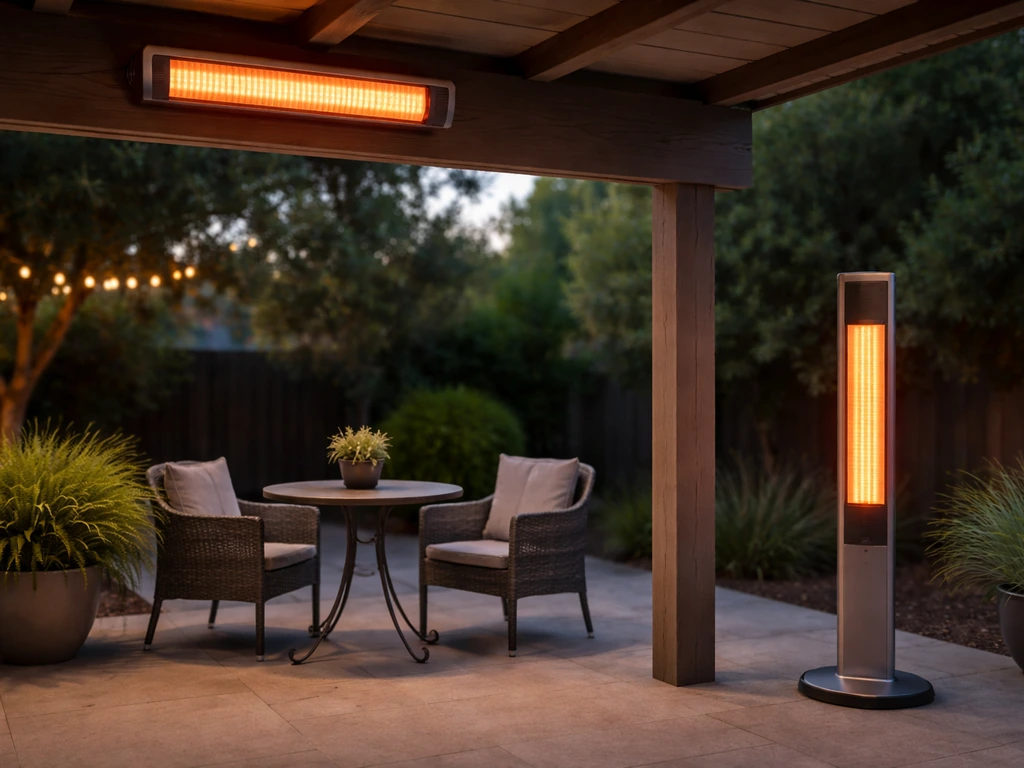
Consumer Reports style top patio heaters for 2026, with best electric and infrared picks, specs, and safety tips.
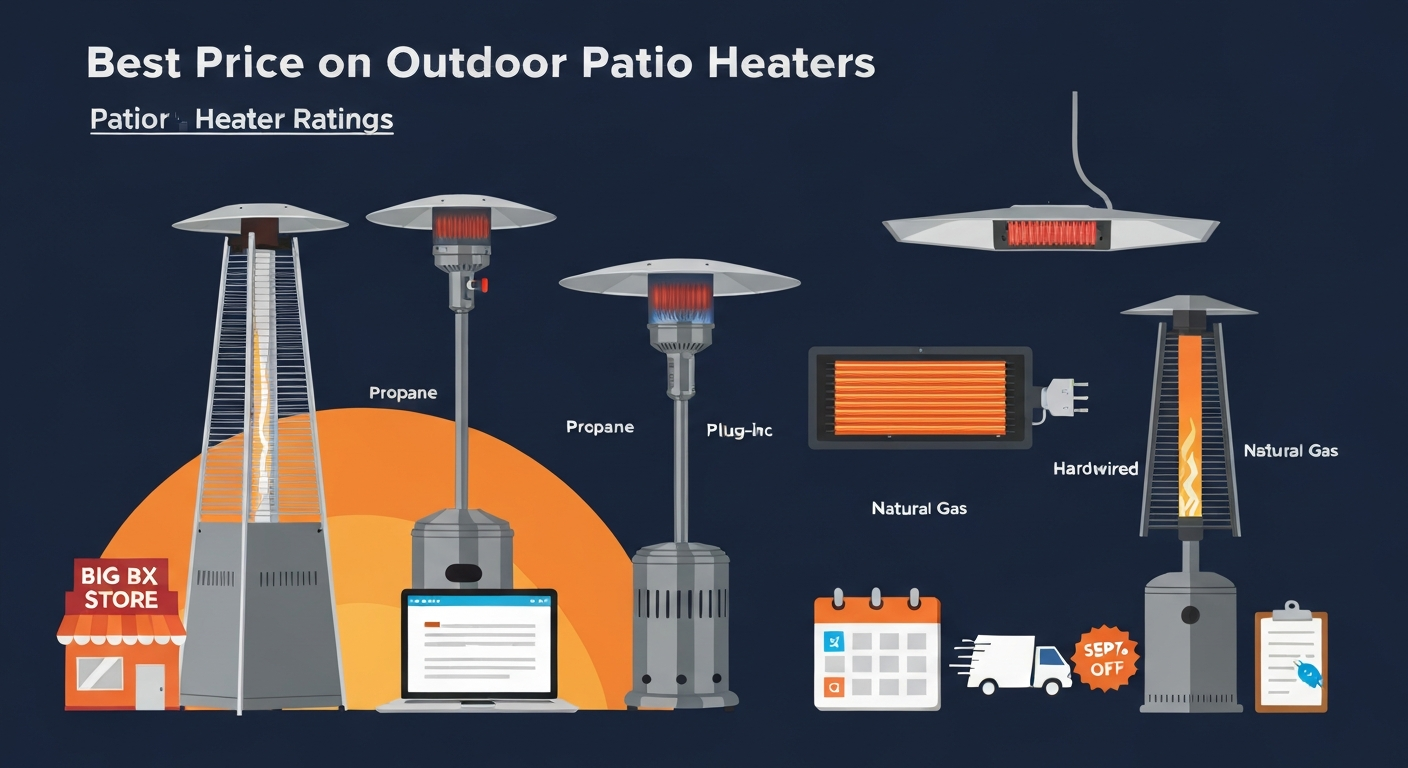
Score the best price on outdoor patio heaters, price ranges, top picks, deal tactics, total-cost & safety checklist.
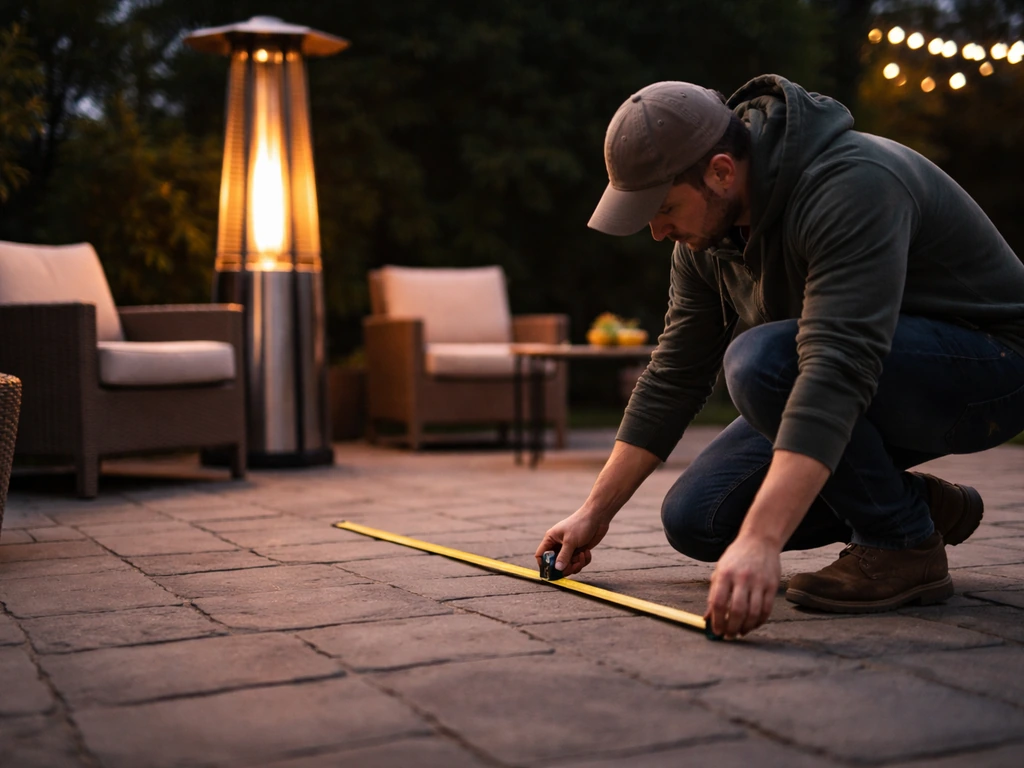
Find where to rent patio heaters near you today, choose the right fuel type, compare costs, and book safely.