
For most patios, a 40,000–46,000 BTU freestanding propane heater is the best all-around pick: it's portable, needs no permanent installation, and puts out enough heat to cover a 10-foot-diameter seating area without running up a huge electricity bill. If you have a covered porch with an outlet nearby, a 1,500–2,000W electric infrared heater mounted on the wall or ceiling is cleaner, safer, and cheaper to run per hour. Natural gas wall-mounts are the best choice for permanent setups where you already have a gas line. Once you know your patio size, fuel source, and whether you need portability, the right category becomes obvious fast.
Patio Heater Best Guide: Types, Picking, Setup, Costs

Caleb Vale
29 Apr 2026
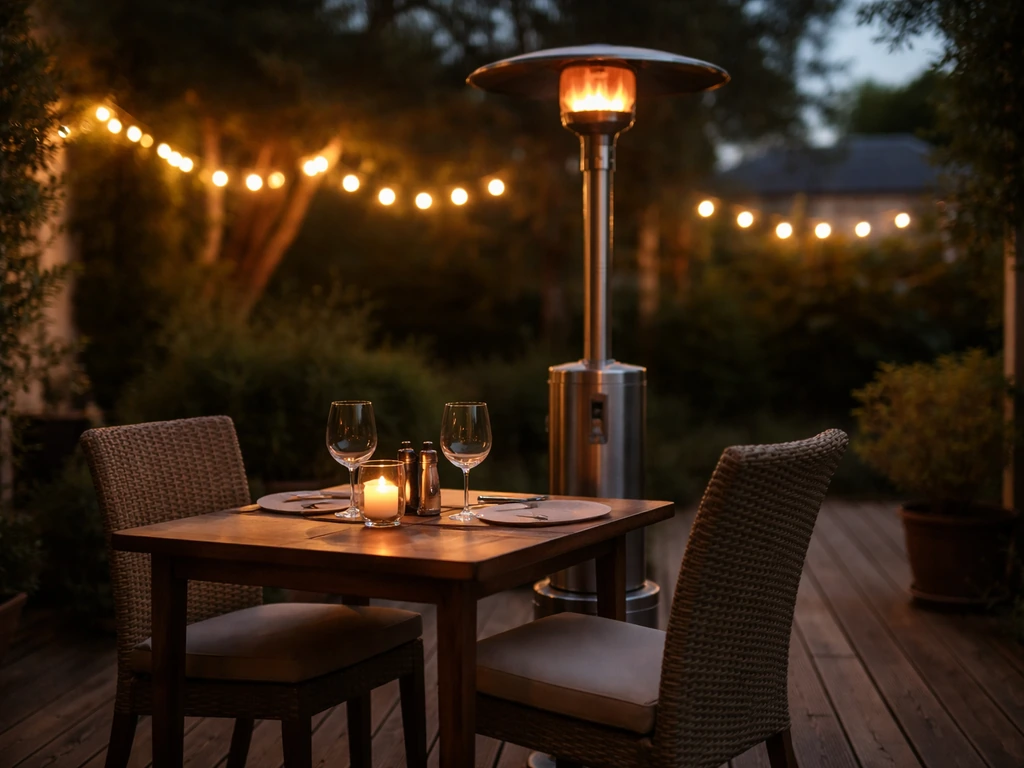
How to pick the right heater for your specific space
Start with your patio's square footage and layout, not the heater's price tag. A small balcony or bistro table needs a completely different heater than a 20-foot open deck with four chairs. The sizing rule most commercial patio heater suppliers use is straightforward: a 25,000 BTU unit covers roughly an 8x8-foot zone, a 35,000–40,000 BTU unit reaches about 8–10 feet across, and a 50,000–75,000 BTU commercial-grade heater can heat something closer to a 15x15-foot area. For electric heaters, a useful planning number is roughly 10 watts per square foot, then add about 30% if your space is open on multiple sides or drafty.
Layout matters almost as much as square footage. A long, narrow covered porch is better served by two wall-mounted infrared heaters spaced along the length than one powerful freestanding unit stuck at one end. An open circular patio with a central table is the classic use case for a freestanding umbrella-style propane heater, since the heat radiates 360 degrees from the center. If your seating is pushed against walls or arranged in an L-shape, directional wall-mount or tabletop units aimed at people rather than empty space will give you better results.
- Small balcony or tabletop zone (under 50 sq ft): tabletop propane or 1,000–1,500W electric infrared tabletop unit
- Mid-size open patio (50–150 sq ft): 40,000–46,000 BTU freestanding propane or 2,000W wall-mount electric
- Large open area (150–300 sq ft): 50,000–75,000 BTU propane, commercial natural gas, or multiple infrared units
- Covered porch or pergola: wall-mount or ceiling-mount electric or natural gas infrared
- Restaurant/commercial use: dedicated natural gas or multiple 43,000 BTU infrared units on a planned grid
Also factor in how far your guests typically sit from the heat source. Most umbrella-style propane heaters are designed with an 'optimum seating distance' of 3–6 feet from the pole. Infrared wall mounts like the Bromic Tungsten series are designed to be mounted at 8 feet off the ground, which throws heat down at an angle across a defined rectangle. Knowing your seating distance helps you avoid the frustrating experience of buying a heater that's technically the right BTU but aimed wrong.
Patio heater types: what each one actually is and when it makes sense
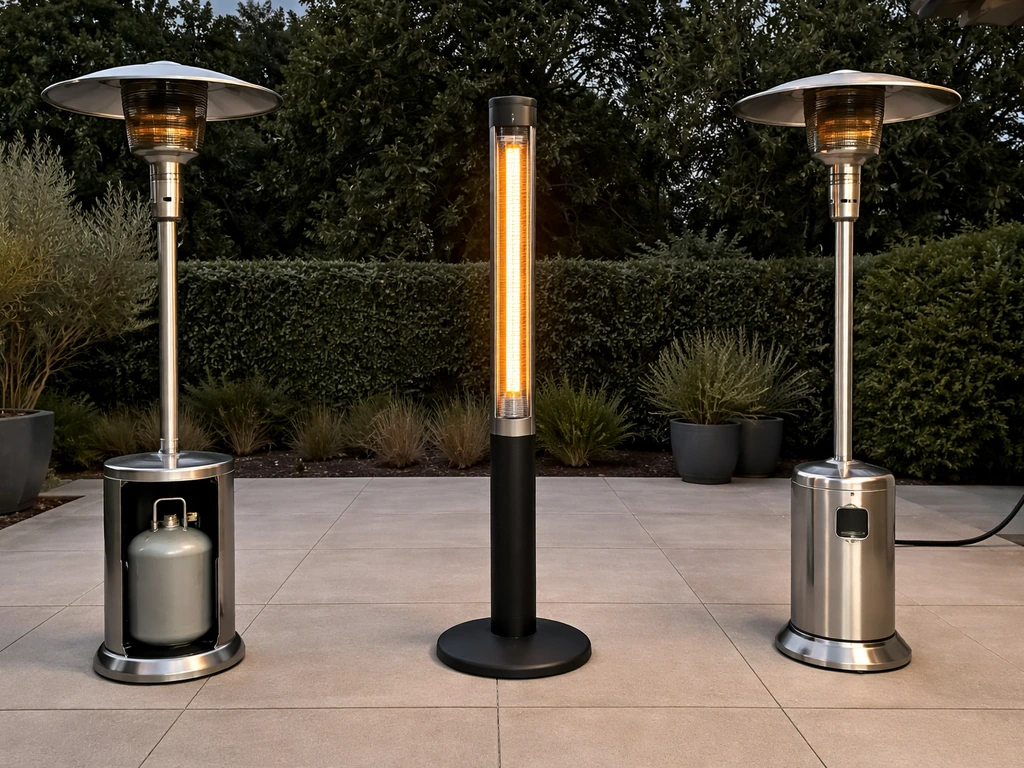
Propane heaters
Propane is the most popular fuel for freestanding patio heaters because the tanks are portable and the setup requires zero electrical work or gas line connections. You wheel it out, attach a standard 20 lb tank, and it's running. The trade-off is ongoing refill costs and the fact that a 20 lb tank lasts about 10 hours on high, so heavy users refill frequently. Most residential models run 40,000–48,000 BTU. They work well on open patios but lose noticeable effectiveness when wind gusts hit, since warm air convects upward and gets swept away.
Electric heaters
Electric patio heaters are the cleanest and simplest to operate: plug in, turn on, instant heat. They're almost always infrared, which means they warm people and objects directly instead of trying to heat the surrounding air. This makes them more wind-resistant than propane convection models. The downsides are that you need an outdoor outlet within reach, and the per-hour heat output tops out around 5,100 BTU for a 1,500W unit, which is noticeably less than a propane heater at full blast. They're ideal for covered patios, balconies, and smaller spaces.
Natural gas heaters
If you have a natural gas line at or near your patio and want a permanent installation, a natural gas heater is the most cost-effective choice for long-term use. No tanks to refill, no power cords to manage. The obvious catch is the installation cost: you'll need a licensed plumber or gas technician to run a line and connect it, which can run $200–$600 or more depending on your setup. Once it's done, though, the per-BTU cost of natural gas is typically lower than propane, and commercial-grade models often hit 50,000–75,000 BTU. These are a strong choice for permanent outdoor dining rooms and restaurant patios.
Infrared heaters
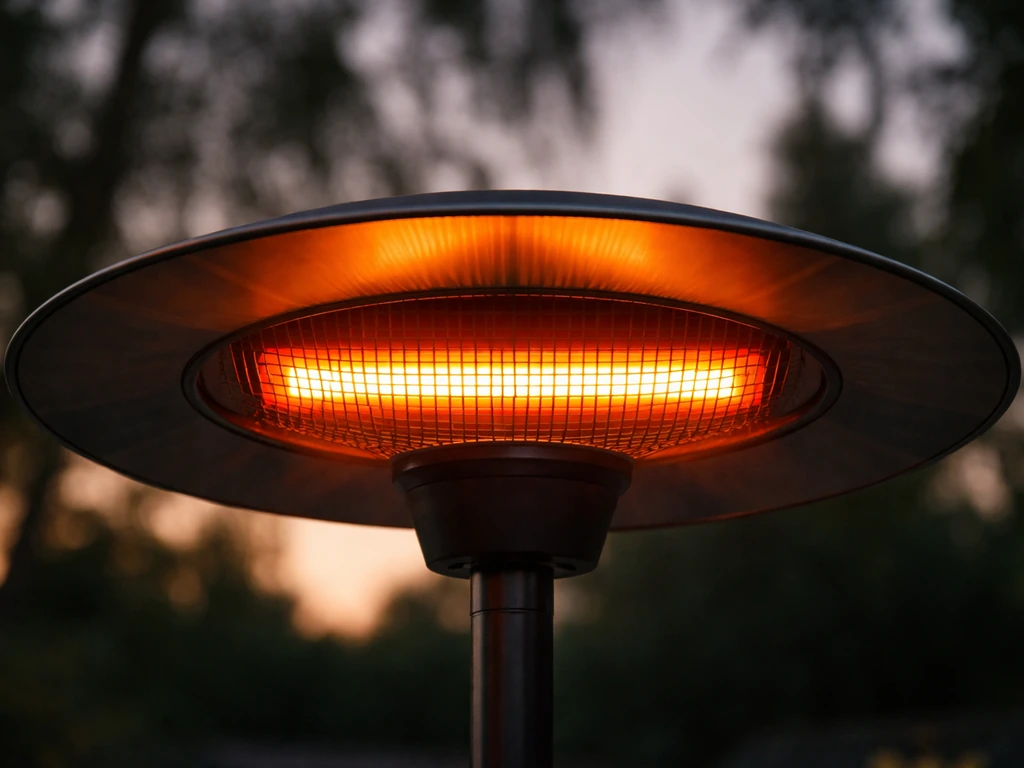
Infrared is a heating method more than a fuel type, though it's often used as a standalone category in buying guides. Infrared heaters warm people and surfaces directly through radiant energy (the same principle as sunlight warming you on a cool day) rather than heating the surrounding air. This is a significant advantage outdoors: wind can blow warm air away, but it can't easily deflect radiant heat aimed at a person. Models like the Bromic Tungsten Smart-Heat series (available at 26,000 BTU covering about 160 sq ft, or 43,000 BTU covering roughly 200 sq ft) are premium examples of directional infrared done well. The key with infrared is aiming the heater correctly, since the heat is directional and wasted if pointed at open sky.
Pellet heaters
Pellet-fueled patio heaters are a niche category that trade on ambiance as much as heat output. They burn compressed wood pellets, produce a visible flame, and give off real warmth, but they require loading fuel regularly, produce ash, and aren't the most convenient option for a quick evening outside. They're best suited for people who want a fire-feature aesthetic with more heat output than a chiminea but don't want a full wood-burning fire pit. They're not the right call if pure heating efficiency or ease of use is your main goal.
Top picks by category
Rather than one universal 'best,' different situations call for different heaters. Here's where I'd point people based on what they actually need.
| Category | Best Type | Target Spec | Why |
|---|---|---|---|
| Best overall (open patio) | Freestanding propane | 40,000–46,000 BTU, piezo ignition | No install needed, portable, covers a 10-ft seating zone |
| Best for small patios/balconies | Electric infrared tabletop or wall-mount | 1,000–1,500W | No gas line, compact, safe in tight spaces |
| Best for windy areas | Mounted electric or natural gas infrared | 1,500–2,000W / 26,000+ BTU infrared | Radiant heat is less disrupted by wind than convection |
| Best for long continuous heating | Natural gas (permanent) | 40,000–75,000 BTU | No tank refills, lower fuel cost over time |
| Best portable option | Propane tabletop or rolling freestanding | 11,000–46,000 BTU | Move it anywhere, no install |
| Best for quick heat | Electric infrared (quartz or halogen) | 1,500–2,000W | Near-instant radiant output, no warm-up time |
| Best for aesthetics | Pellet heater or premium gas infrared (e.g., Bromic Tungsten) | Varies | Flame effect or sleek low-profile design |
For most homeowners with a standard open patio, I'd lean toward a 40,000–46,000 BTU freestanding propane unit with piezo ignition and a built-in tilt-shutoff as the starting point. It's the most forgiving choice: you can reposition it, take it inside for winter, and replace a tank without calling anyone. If you have a covered outdoor space, though, seriously consider a wall-mount electric infrared instead. If you want patio heater recommendations for a covered area, a wall-mount electric infrared is often the most practical choice covered outdoor space. The heat delivery is more targeted, there are no open flames under a ceiling, and at around $0.21 per hour for a 1,500W unit (at an average rate of about 14 cents per kWh), it's cheap to run.
Performance and efficiency: what the specs actually mean
BTUs vs. watts
BTU (British Thermal Unit) is the standard measure for gas heater output. Watts measure electric heater output. To compare them directly: 1,000W of electric heat equals roughly 3,412 BTU per hour. So a 1,500W electric heater delivers about 5,100 BTU/hr, compared to 40,000+ BTU/hr for a standard propane patio heater. Gas heaters push dramatically more raw heat, which is why they work better for large open areas. For covered or smaller spaces, the lower BTU output of a quality electric infrared unit is usually more than enough.
Heating pattern: radiant vs. convection
Umbrella-style propane heaters use a combination of radiant and convective heating: the burner ring radiates heat outward while also warming surrounding air that then rises and spreads. This is effective in calm conditions but degrades quickly in wind. Dedicated infrared heaters (electric or gas-fired) focus almost entirely on radiant output aimed at people and surfaces. Think of it as the difference between warming the room and warming the person. Outdoors, warming the person wins. This is especially true for covered patios, pergolas, or any setup where wind is a recurring issue.
Wind resistance
Wind is the single biggest enemy of patio heater performance, and it hits convection-based heaters hardest. A 40,000 BTU propane heater in a steady 15 mph breeze might feel more like 20,000 BTU to the people sitting nearby, because the warm air column gets swept away before it reaches anyone. Infrared radiant heaters handle wind better because the radiation travels directly to the object being heated, though very strong gusts can still disrupt the experience. For patios exposed to consistent wind, mounting two smaller infrared heaters at an angle toward seating is more effective than one large freestanding propane unit.
Coverage assumptions to watch out for
Manufacturer coverage claims are almost always measured under ideal conditions with no wind and at the heater's maximum output. Real-world coverage is typically 20–40% lower. The Bromic Tungsten 500 series (43,000 BTU) is rated to cover about 200 sq ft in optimal conditions, but on a breezy night that number shrinks. When planning your setup, use manufacturer coverage figures as a ceiling, not a guarantee, and size up if your space is exposed or if you run the heater below max output.
Installation and setup: the practical steps
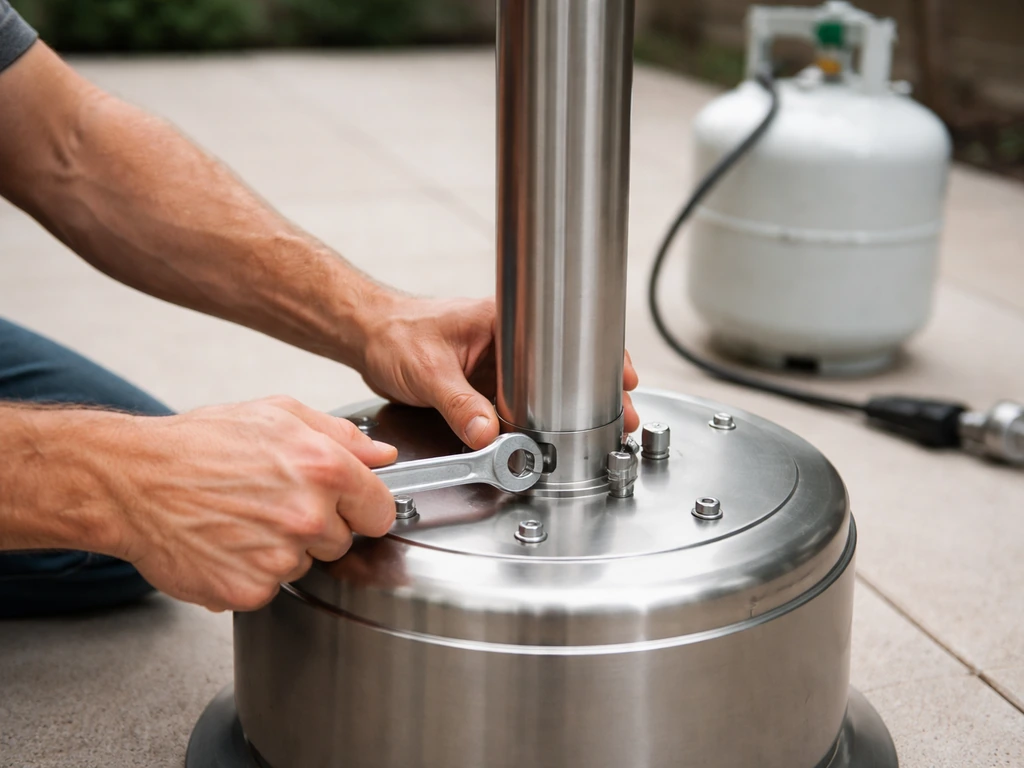
Freestanding propane heaters
Assembly is usually straightforward: bolt the base together, thread the pole sections, mount the reflector and burner head, and attach the regulator hose to the tank. Most require only basic tools and take 20–30 minutes. Place the heater on a flat, level surface (this matters for the tilt-switch safety system). Keep it at least 3 feet from any surface or overhead obstruction, and check the manufacturer's minimum clearance from combustibles, which is often listed as 36 inches above the emitter. The blank" rel="noopener noreferrer">NFPA 54 / ANSI Z223.1 2021 Minimum Clearance from Combustible Material table lists clearance values such as 36 in., 18 in., and 12 in. depending on appliance and conditions blank" rel="noopener noreferrer">minimum clearance from combustibles. Don't use these indoors or under low-clearance awnings. The Sunglo A270 manual, for example, references the National Fuel Gas Code (ANSI Z223.1) for minimum clearances and is representative of what most propane patio heater manuals require.
Wall-mount and ceiling-mount electric infrared
Wall-mount units need a secure mounting surface (stud or masonry anchor), a nearby GFCI-protected outdoor outlet, and correct clearance from adjacent walls and ceiling. The Infratech C-Series manual, for instance, specifies no closer than 18 inches to adjacent walls and 12 inches to the ceiling. Most units also specify a minimum mounting height (often 7–9 feet from the floor) and recommend angling the heater 30–45 degrees downward toward the seating zone for best radiant coverage. Keep electrical cords at least 3 feet from the front of the heater. If you're ceiling-mounting, verify your ceiling material is non-combustible or that manufacturer clearance specs are met.
Natural gas heaters
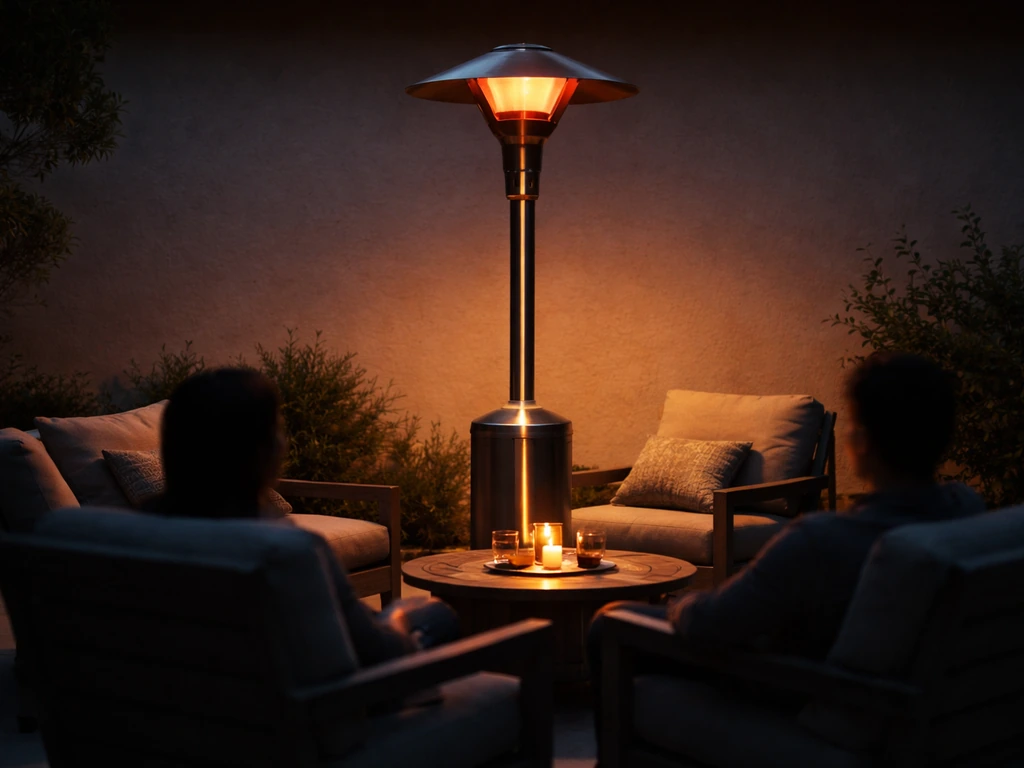
Natural gas patio heaters require a dedicated gas line with the correct supply pressure and a shutoff valve within reach. This is not a DIY job in most jurisdictions: hire a licensed plumber or gas fitter. The heater itself often mounts to a post or wall bracket and connects to the supply line with a flexible gas connector. Make sure the connection is leak-tested with soapy water before first use. Venting requirements vary by model: most outdoor natural gas patio heaters are unvented (designed for open-air use only), so they should never be used in enclosed spaces.
Placement tips that apply to all types
- Aim radiant heaters at people, not at open sky or empty table space
- For open patios, a central position maximizes 360-degree coverage from a freestanding unit
- For long narrow spaces, two smaller units along the length outperform one large central unit
- Always check overhead clearance before positioning under a patio cover, pergola, or umbrella
- Leave room to access the tank or power connection without moving furniture around it
Safety basics and maintenance
Gas heater safety
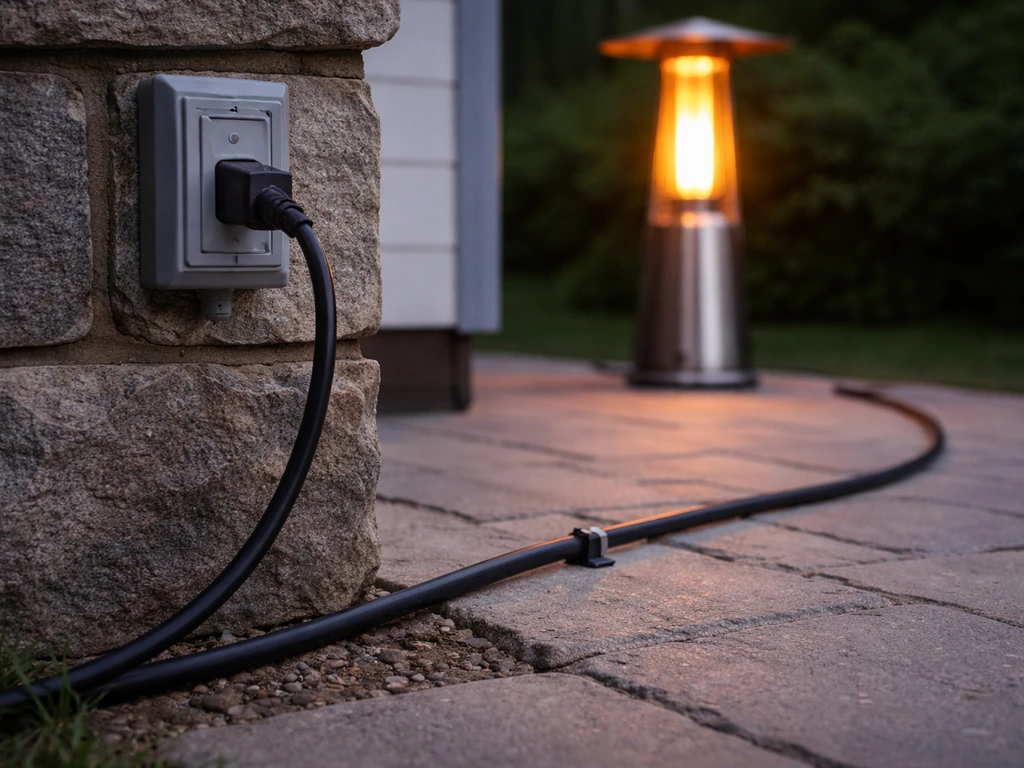
Every freestanding propane patio heater sold today should include a tilt-switch that cuts gas flow if the unit tips over, and a thermocouple that shuts off the gas if the pilot flame goes out. Verify both are functioning before each season. When connecting a new propane tank, always do it with the heater off, check the regulator connection for leaks with soapy water, and open the tank valve slowly. Don't store spare propane tanks inside a garage or enclosed structure. For natural gas models, if you smell gas, shut off the supply valve, move people away, and call your gas utility before investigating further.
Electric heater safety
Use only outdoor-rated extension cords if an extension is needed, and never daisy-chain multiple cords. The outlet should be GFCI-protected. Keep the power cord away from the heater's emitter surface (the Infratech manual specifically warns to keep electrical cords 3 feet from the front of the heater). Don't leave electric infrared heaters running unattended near flammable fabrics, patio covers, or furniture cushions.
CO awareness
Gas patio heaters are designed for outdoor use only. Using them in enclosed spaces, garages, or tents creates serious carbon monoxide risk. Even a semi-enclosed covered patio needs adequate ventilation. If you regularly use gas heaters in a partially enclosed space, install a CO detector in the adjacent indoor area as a safety baseline.
Weatherproofing, covers, and off-season storage
Most freestanding propane heaters are made from powder-coated steel that handles light weather but will eventually rust if left uncovered year-round. A fitted patio heater cover ($15–$40) dramatically extends the finish life. For propane models, remove and store the tank separately in a ventilated outdoor area (not indoors) when storing the heater for winter. For electric units, make sure the heating element and any exposed connectors are covered or brought inside. Wipe down burner components and reflectors seasonally, and check the regulator hose on propane models for cracks before each season.
Quick troubleshooting
- Heater won't ignite: check tank level, confirm tank valve is fully open, try igniting with a lighter held at the burner if piezo fails
- Flame goes out by itself: thermocouple may need replacing, or the tilt-switch may be tripped (check that the heater is level)
- Low heat output: regulator may be in 'bypass mode' from a fast tank-open; close valve, wait 30 seconds, reopen slowly
- Electric heater trips breaker: check that it's on a dedicated 15A or 20A circuit; 1,500W heaters draw close to full 15A capacity
- Rusting or discoloration: apply a light coat of high-temp spray paint to metal surfaces after the season ends
Running costs: what it actually costs per evening
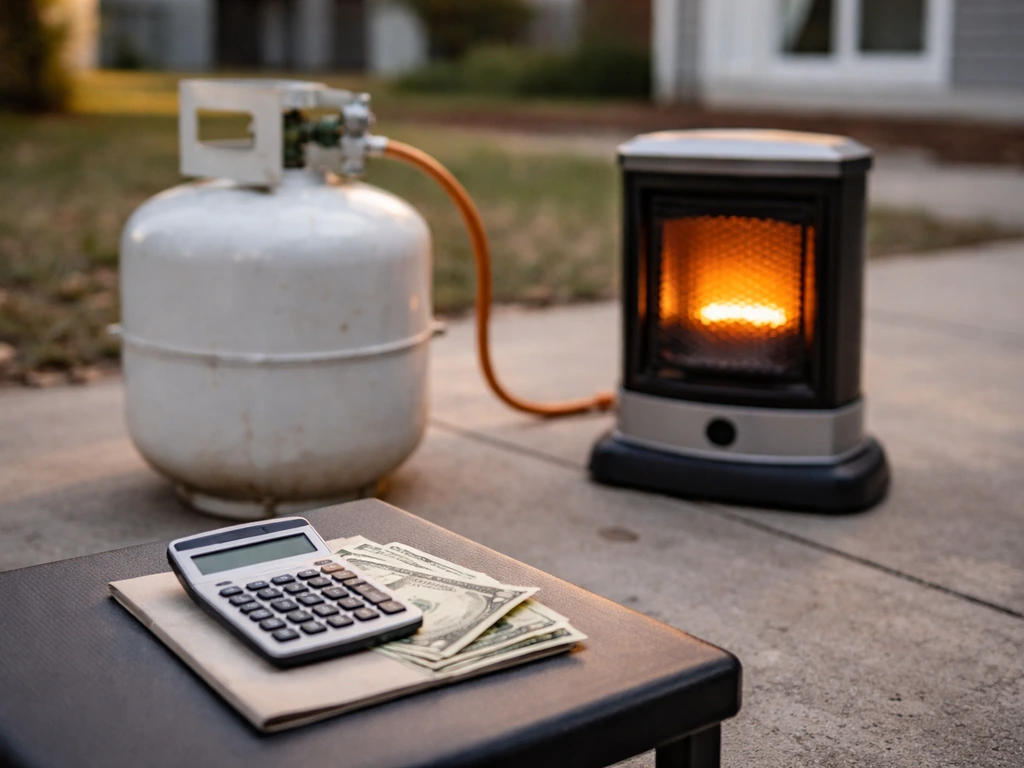
The cost gap between fuel types is real and worth calculating before you buy. At a national average propane price of around $2.78 per gallon (as of early 2026, per EIA data), a 20 lb propane tank holds about 4.7 gallons and costs roughly $13. A standard patio heater running on high burns through that tank in about 10 hours, which works out to about $1.30 per hour. A 1,500W electric heater at the national average electricity rate of about 14 cents per kWh costs roughly $0.21 per hour. Electric wins on per-hour operating cost, but the raw heat output is much lower, so you're comparing apples and oranges if your goal is heating a large open patio.
| Heater Type | Typical Output | Fuel/Energy Cost | Est. Cost Per Hour | Best For |
|---|---|---|---|---|
| Propane freestanding | 40,000–46,000 BTU | ~$2.78/gal propane | ~$1.30/hr | Open patios, portability |
| Electric infrared (1,500W) | ~5,100 BTU equivalent | ~$0.14/kWh | ~$0.21/hr | Covered spaces, balconies |
| Natural gas (installed) | 40,000–75,000 BTU | Lower than propane/kWh | ~$0.60–$1.00/hr* | Permanent setups, heavy use |
| Pellet heater | Varies | Cost of pellets | Varies widely | Ambiance + moderate heat |
*Natural gas cost per hour varies significantly by region and supply rate; the figure above is an estimate based on typical residential gas pricing and should be verified against your local utility rate.
For total cost of ownership, factor in the initial purchase price, installation (if any), annual fuel or electricity costs based on how many hours per season you realistically use the heater, and maintenance or replacement parts. A $150 propane heater with a $200/year propane bill and zero installation cost may be cheaper over three years than a $400 natural gas unit with a $500 installation, depending on how heavily you use it. On the flip side, if you're running a patio heater six hours a night three nights a week through a six-month season, the lower per-hour cost of natural gas adds up quickly.
Putting it all together: a short decision framework
Here's the fastest way to arrive at a decision. If you want zero installation hassle and full portability, start with a freestanding propane heater in the 40,000–46,000 BTU range. If your patio is covered and you have an outlet, a wall-mount electric infrared unit will serve you better and cost less per hour to run. If you entertain heavily and have a gas line nearby, invest in a permanent natural gas setup and you'll never deal with tank refills again. If heat output and aesthetics both matter and budget isn't the first concern, a premium directional gas infrared heater like the Bromic Tungsten series gives you the best combination of performance, wind resistance, and clean design.
If you're still narrowing things down by use case, the specific guides on best patio space heaters, best patio heat lamps, and heaters optimized specifically for maximum heat output can help you drill deeper into each category with more model-level detail. If you specifically want the best patio heat lamps, pay attention to mounting height and whether the infrared design is aimed at people rather than open sky.
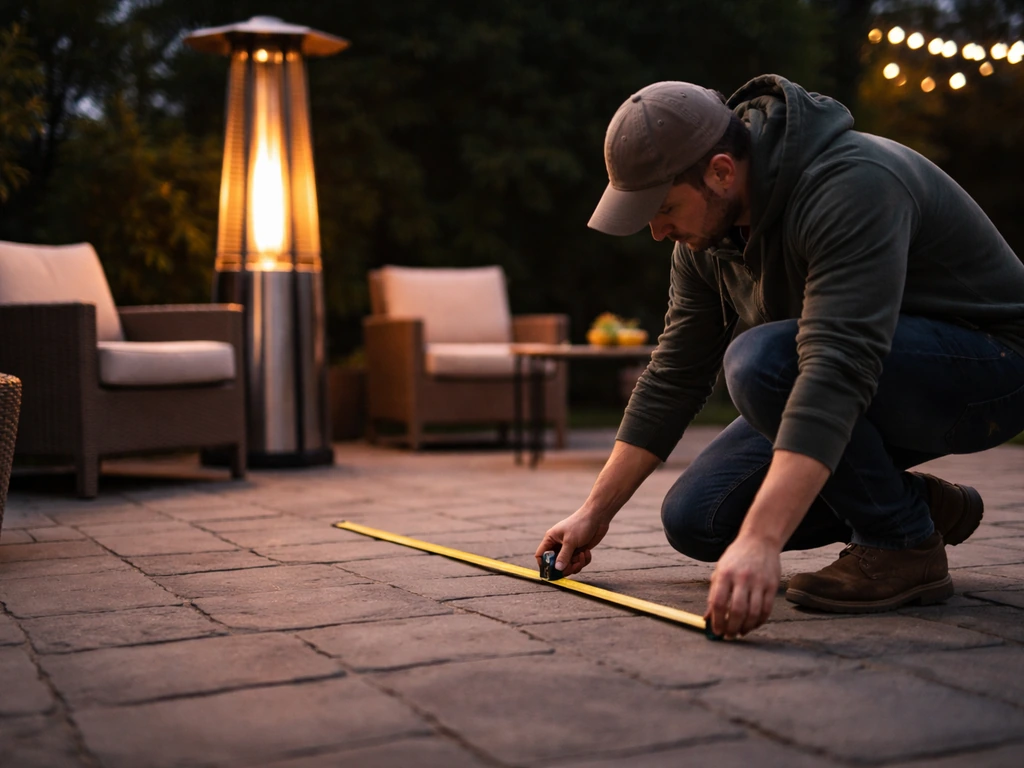
- Measure your patio and calculate square footage before shopping
- Decide on fuel type based on your access: propane (portable), electric (covered/outlet), natural gas (permanent)
- Match BTU or wattage to your coverage area using the sizing rules above, and size up if your space is exposed to wind
- For open spaces, choose a 360-degree radiant umbrella heater; for covered spaces, choose a directional wall or ceiling mount
- Budget for ongoing fuel or electricity costs, not just the purchase price
- Buy a cover, check clearances, and confirm your safety features (tilt switch, thermocouple, GFCI outlet) before first use
FAQ
How do I choose the right patio heater size if my seating is partly under a pergola or awning?
Use the patio size for watt or BTU planning, then adjust based on exposure. If guests are mostly under the cover, you can often size closer to the lower end of the BTU or watt range, because wind and heat loss are reduced. If people sit near the open edges, treat those areas like an open patio and size up (or add a second heater) to avoid a noticeable hot spot and cool perimeter.
Will two smaller infrared heaters be better than one bigger propane heater for wind?
Often yes. Infrared works best when it is aimed at the people, so multiple smaller units angled toward the seating can maintain coverage even as gusts disrupt convection. For propane, even if total BTU is higher, the warm air column can get swept away, leaving gaps at the edges of the group.
What is the safest way to use an electric patio heater with an outdoor outlet?
Make sure the outlet is GFCI-protected and use an outdoor-rated extension cord only if the cord reaches without strain. Keep the cord away from the heater’s front emitter area, and route it so nobody will trip over it. If you need to run power over a walkway, consider placing the heater closer to the outlet rather than using long cords.
How far should a propane heater be from walls, railings, or overhead structures?
Follow the manufacturer’s minimum clearance, since it varies by model, but a common baseline for propane radiant emitters is around 36 inches from combustibles above the emitter and specific side clearances. Also avoid aiming the burner head toward a ceiling or pergola slats. If your patio cover has low clearance, an infrared heater with proper mounting specs is usually safer than a freestanding propane unit.
Do I need a CO detector if I only use natural gas or propane outdoors?
If the area is truly open air, a CO detector is less critical. However, if you use gas heaters in a partially enclosed or semi-enclosed space, install a CO detector indoors in the adjacent area as a baseline safety measure. Also avoid using gas heaters under tents or in enclosed garages, where carbon monoxide can build quickly even if the tent has some ventilation.
How can I tell whether a heater’s coverage rating will be accurate for my patio?
Treat manufacturer coverage as a best-case upper limit (typically measured with calm conditions at max output). If your patio is breezy, has high ceilings, or has people sitting near the perimeter, expect real-world coverage to drop. A practical approach is to size for the number of chairs and their distance from the heater, then add one extra unit (or higher BTU) if you consistently see cold corners.
How do I avoid the “wrong BTU but it still feels cold” problem?
Most of the time the issue is aiming or distance, not raw output. Infrared heaters need to point at people and the surfaces you want warm, and propane umbrella heaters have an optimum seating distance range from the pole. If you sit farther than the design distance, or if the heater is pointed at open sky, you can end up with uneven warming even with the correct total BTU.
Can I use a propane patio heater under a low awning or in a sheltered corner?
Generally no, unless the setup meets both clearance-by-distance requirements and has sufficient ventilation. Many propane heaters specify minimum clearance from combustibles, and low awnings can trap heat and combustion products. If you want sheltered heating, choose an infrared wall or ceiling model that matches the clearance and mounting-height instructions and aim it toward seating.
What maintenance steps matter most for propane heaters before each season?
Check that safety systems are working, especially the tilt switch and the thermocouple (for pilot flame shutoff). Inspect the regulator hose for cracks and confirm connections are leak-free using soapy water. Wipe reflectors and remove debris so burner performance stays consistent, and verify the unit sits level because the tilt mechanism depends on proper orientation.
Are smart or Wi-Fi patio heaters worth it, or do they add unnecessary risk?
If you already use timers and smart outlets safely, additional connectivity can help you reduce run time and avoid forgetting the heater on, which improves both cost and safety. But you should still verify the heater’s outdoor rating, follow cord and clearance rules, and prioritize models with solid safety shutoffs. Connectivity features are secondary to correct fuel choice, aiming, and safe placement.
How should I store a propane patio heater and its tank during winter?
Keep the propane tank in a ventilated outdoor area and do not store spare tanks inside a garage or enclosed structure. Store the heater itself so the burner and reflectors stay clean and dry, and use a fitted cover to reduce rust. Before bringing the unit back out, inspect hoses and connections again for any damage.
Next Articles
Best Price on Outdoor Patio Heaters: Compare Costs & Deals
Score the best price on outdoor patio heaters, price ranges, top picks, deal tactics, total-cost & safety checklist.
Where Can I Rent Patio Heaters Near Me Today
Find where to rent patio heaters near you today, choose the right fuel type, compare costs, and book safely.
Where to Buy a Patio Heater: Best Places and Types
Where to buy a patio heater now, plus electric vs gas vs propane tips, safety checks, and size/BTU buying checklist.