
The best-rated patio heaters right now fall into two clear categories: electric models for covered patios with outlets nearby, and propane tower heaters for open-air spaces where you need portability and serious heat output. If you want a plug-and-play electric, the Infratech W-Series and Dr. Infrared DR-238 consistently top verified-purchase ratings for reliability and heat coverage. For propane, the AZ Patio Heaters HLDS01-GTSS and Bromic Tungsten 500 are the most consistently rated across performance, build quality, and BTU delivery. But 'best rated' is a loaded phrase, and which one is actually right for your patio depends on size, climate, mounting situation, and how much you want to spend per hour of heat.
Best Rated Patio Heaters: Electric vs Propane Picks

Caleb Vale
1 May 2026

What 'best rated' actually means for patio heaters
When you see a patio heater labeled 'top-rated' or 'best-rated' on a retailer site, that rating is pulling from customer reviews, and those reviews are not all equally trustworthy. Amazon, for example, weights verified-purchase reviews more heavily than unverified ones, which helps filter noise, but it does not eliminate it entirely. Research from UCLA Anderson and the OECD has found that online ratings can be distorted by fake reviews, herding bias (early high ratings pulling subsequent raters upward), and non-product factors like late shipping or poor packaging tanking an otherwise solid product's score.
For patio heaters specifically, this matters because a lot of reviews are written after a single season of use, often before the unit has faced a second winter. A heater rated 4.6 stars with 200 reviews may outperform one rated 4.3 stars with 2,000 reviews in real-world longevity, but the numbers alone will not tell you that. What you want to look for: verified-purchase reviews that mention specific BTU performance in cold weather, how the ignition holds up after a year, and whether the tip-over cutoff actually works as advertised. That is a much stronger signal than a star average.
The other thing 'best rated' hides is category blurring. A tabletop propane heater might be rated higher overall than a 48,000-BTU tower unit simply because it costs less and sets expectations lower. Always filter ratings by heater type and make sure you are comparing within the same category: freestanding propane vs. freestanding propane, wall-mounted electric vs. wall-mounted electric.
Quick shortlist: best-rated electric vs. propane patio heaters
Here is a working top-ten-style breakdown split by type. These are the models that consistently appear at the top of verified-purchase ratings, hold those ratings across multiple seasons, and have enough real-world reviews to trust the signal.
Best-rated electric patio heaters
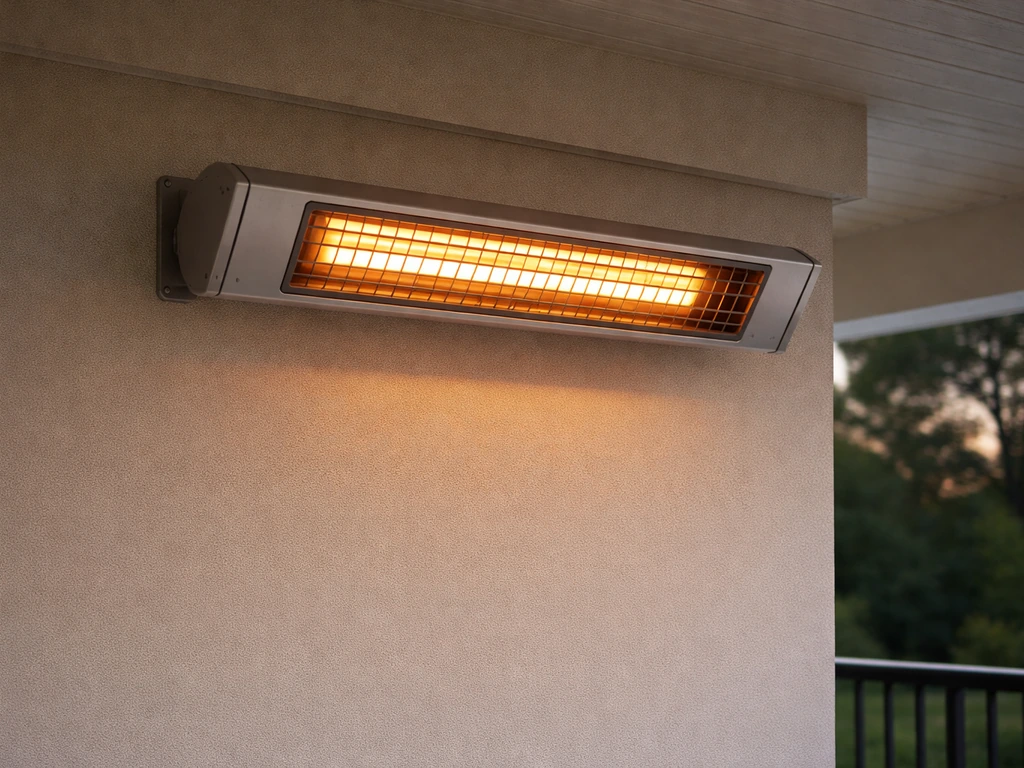
- Infratech W-Series (W-2024 / W-3024): 2,000–3,000W, hardwired, quartz shortwave infrared, covers up to 10x10 ft per unit, IP55 rated. Best for covered patios and pergolas with an electrician available.
- Dr. Infrared DR-238: 1,500W, 120V plug-in, dual heating element, remote control, tip-over and overheat protection. Best budget plug-and-play for small covered patios.
- Bromic Platinum Smart-Heat Electric: 2,000–3,400W, 240V hardwired, directional infrared, wind-resistant beam up to 15 ft. Best premium option for open-sided patios in windy climates.
- Schwank 2-Stage Electric: 3,000–6,000W, 240V, commercial-grade, long-wave ceramic element. Best for restaurant patios or large residential setups needing zone control.
- Napoleon NEPA60 Patioflame Electric: 1,500W, plug-in, flame-effect, weather-resistant, UL listed. Best for covered residential patios where aesthetics matter as much as heat.
Best-rated propane patio heaters
- AZ Patio Heaters HLDS01-GTSS: 46,000 BTU, stainless steel, CSA certified, anti-tilt safety shutoff, works with standard 20 lb tank. Best value freestanding tower for open patios.
- Bromic Tungsten 500 Portable: 47,800 BTU, stainless steel, directional heat cone, integrated regulators. Best portable propane for directed heat on large decks.
- Fire Sense 60778 Commercial Patio Heater: 46,000 BTU, hammertone finish, CSA certified, covers up to 225 sq ft. Best for commercial use or HOA-shared outdoor spaces.
- Dyna-Glo DG48PNA-4: 48,000 BTU, natural gas convertible, CSA certified, works on 20 lb propane tank. Best dual-fuel flexibility for patios near a gas line.
- Hampton Bay 48,000 BTU Stainless Tower: 48,000 BTU, electronic ignition, CSA certified, anti-tilt shutoff. Best mass-market pick for reliability at a mid-range price.
If you want more depth on electric-only options, the dedicated coverage of top electric patio heaters goes deeper on wattage tiers and mounting configurations. For a broader ranked overview across all types, the top-selling patio heaters list covers volume sales data that complements the ratings picture here. If you are looking for a quick answer like the top 5 patio heaters, use the top-selling patio heaters list as a volume-sales complement to the rating-based shortlist.
Sizing and coverage: match heat output to your patio
This is where most people get the buying decision wrong. They pick a heater based on reviews without confirming it can actually heat their space. Coverage numbers on product listings are almost always quoted under ideal conditions: no wind, 70°F ambient temperature, low mounting height. The Infratech W/WD installation manual includes a coverage-table example for a W-series configuration that illustrates coverage like 8’ x 10’ along with mounting and placement conditions coverage table example for a W-series configuration indicating coverage such as 8’ x 10’. Real-world performance can drop 30–40% in open, breezy conditions.
Propane BTU guidance
| Patio Size | BTU Needed (calm/covered) | BTU Needed (open/windy) | Recommended Unit Count |
|---|---|---|---|
| Up to 100 sq ft | 20,000–30,000 BTU | 35,000–40,000 BTU | 1 unit |
| 100–200 sq ft | 30,000–40,000 BTU | 40,000–48,000 BTU | 1–2 units |
| 200–350 sq ft | 40,000–50,000 BTU | 50,000+ BTU or 2 units | 2 units |
| 350+ sq ft | Multiple zones | Multiple zones | 3+ units or zoned system |
Electric wattage guidance
| Patio Size | Wattage Needed (covered) | Wattage Needed (open/breezy) | Circuit Requirement |
|---|---|---|---|
| Up to 80 sq ft | 1,000–1,500W | 1,500–2,000W | Standard 15A/120V |
| 80–150 sq ft | 1,500–2,000W | 2,000–3,000W | 20A/120V or 240V |
| 150–250 sq ft | 3,000–4,000W | 4,000–6,000W | 240V dedicated circuit |
| 250+ sq ft | 6,000W+ or multiple units | Multiple units zoned | 240V, licensed install |
Mounting height is a real factor that most buyers ignore. A 46,000-BTU propane tower placed correctly under an 8-foot ceiling will feel warmer than the same unit under a 12-foot pergola because radiant heat disperses with distance. For wall-mounted electric infrared, the sweet spot is typically 6 to 9 feet above the floor for residential use. Go higher and you lose perceptible warmth at sitting height; go too low and you create a hot-spot problem. Check the product spec sheet for minimum/maximum mounting height, not just the marketing copy.
Electric patio heaters: what to actually verify before buying
Electric patio heaters are the easiest to install, the cleanest to operate, and the safest for covered spaces because there is no combustion. If you want a quick shortcut, check the top selling patio heaters for what buyers purchase most often across different patio sizes and fuel types. The catch is that higher-wattage models (anything above 1,500W) often require a 240V dedicated circuit, which means hiring an electrician if you do not already have one. That adds $150–$400 to the real cost of the unit.
Key features to check
- Heating element type: shortwave quartz infrared heats faster and is more directional; longwave ceramic is gentler and better for enclosed spaces. Most top-rated residential models use shortwave infrared.
- IP or weather rating: look for IP44 minimum for covered patios, IP55 or higher for semi-exposed installations. Do not assume 'outdoor rated' means fully weatherproof.
- Power requirement: confirm whether the unit is 120V (standard plug) or 240V (requires dedicated circuit). This is the most commonly misread spec in customer reviews.
- Timer and remote: remote controls and programmable timers are worth having, especially for ceiling-mounted or hard-to-reach units. Many models in the Dr. Infrared and Bromic lines include these.
- Tip-over cutoff: standard on most floor-standing electric models; verify it is listed in the spec sheet, not just implied. The CH-1500 manual, for example, explicitly lists tip-over safety as a named feature.
- UL or ETL listing: non-negotiable for any heater you are plugging in outdoors. CSA is acceptable for Canadian markets. Avoid uncertified imports regardless of star ratings.
- Dimmer/heat settings: multi-level heat settings let you run the unit at lower wattage on mild days, which cuts operating costs significantly.
Electric pros and cons
| Pros | Cons |
|---|---|
| No combustion, safe for enclosed/covered spaces | High-wattage units need electrician install |
| Instant on/off, no warm-up time | Less effective in open, windy outdoor areas |
| Quiet operation, no fumes | Running cost depends on local electricity rates |
| Low maintenance (no tanks, no gas lines) | Top models are 240V only, not plug-and-play |
| Precise heat control with dimmers | Heat beam is directional, may not cover wide spaces evenly |
Propane patio heaters: what to actually verify before buying
Propane heaters dominate the top-selling charts and the best-rated lists for one reason: raw heat output. A 46,000-BTU propane tower can heat a 200-square-foot open patio on a 40°F night in a way that a 1,500W plug-in electric simply cannot. The trade-off is fuel logistics, safety in enclosed spaces, and ongoing tank costs.
Key features to check
- BTU output: most residential tower heaters land between 40,000 and 48,000 BTU. Commercial units can reach 60,000+ BTU. Do not pay for more BTU than your space needs.
- Tank size compatibility: nearly all standard freestanding propane heaters use a standard 20 lb (5-gallon) propane tank. Tabletop models use 1 lb disposable cylinders, which are expensive per hour of heat. Verify before assuming.
- Regulator and hose: check that a regulator is included and matches your tank type. Some budget units ship without one or include a substandard hose. Replace immediately if the included hose feels flimsy.
- Ignition type: electronic push-button ignition is far more reliable than manual piezo in cold or damp conditions. Confirmed reliability in sub-40°F temps is worth filtering reviews for specifically.
- Anti-tilt shutoff: required by most state safety codes and common sense. Any heater without one is a fire hazard on an uneven deck or in a gusty environment.
- CSA or UL certification: the single most important safety spec for a propane heater. Do not buy uncertified units, regardless of price or review count.
- Wheel kit or portability: if you need to move the heater seasonally or to follow shade, verify the wheel kit is included or sold separately. Not all 'portable' labels mean easy to move.
Propane pros and cons
| Pros | Cons |
|---|---|
| Highest heat output, works in open/windy conditions | Not safe for fully enclosed spaces (CO risk) |
| No electrical hookup required | Tank refills add ongoing cost and logistics |
| Portable, can be moved as needed | Ignition can fail in very cold or wet conditions |
| Wide coverage area per unit | Regulators and hoses need periodic inspection |
| Lower upfront cost for high BTU output | Fuel cost per hour higher than electric at most US rates |
A note on natural gas, infrared, and pellet models
If you are near a natural gas line, a hardwired natural gas heater like the Dyna-Glo DG48PNA-4 or a dedicated NG version of the Bromic Tungsten removes the tank refill problem entirely and cuts fuel costs by 30–50% compared to propane. Infrared as a technology applies to both electric and propane/gas heaters and is actually the preferred delivery method for outdoor use because it heats people and surfaces rather than ambient air, which wind just blows away. Pellet patio heaters are a niche category, more of an aesthetic fire-pit alternative than a primary heating solution, with lower BTU output and higher maintenance. If you are also shopping for the best looking patio heater, focus on finish, form factor, and how it will match your outdoor furniture and lighting. They do not compete with propane or high-wattage electric for raw performance.
Safety, installation, and weather readiness
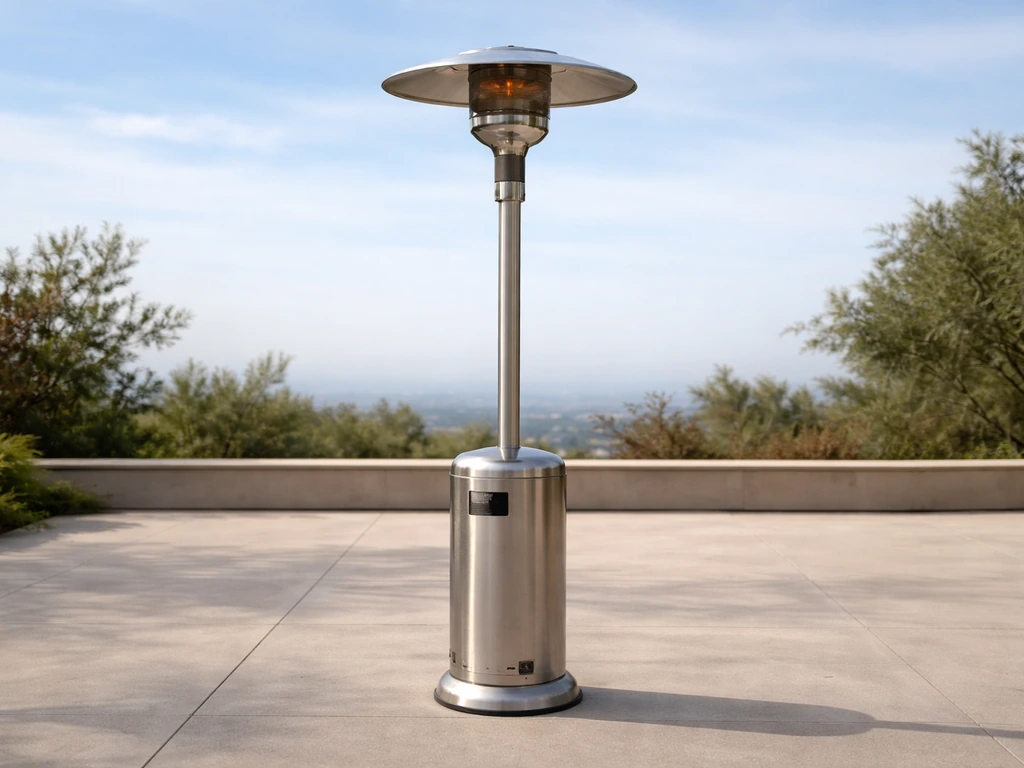
The biggest safety mistakes I see with patio heaters come down to three things: using a propane heater in an enclosed or semi-enclosed space, skipping the safety certification check, and ignoring weather ratings for storage and outdoor exposure. The Hampton Bay NCZH-G-SS user guide includes safety and regulatory instructions and notes how the anti-tilt safety switch is intended to behave anti-tilt safety switch behavior.
- Never use a propane or gas patio heater in a fully enclosed space. Carbon monoxide buildup is a real and fast-moving risk. If your patio has walls on three or more sides and a ceiling, use electric only.
- For electric heaters, confirm the IP rating matches the actual exposure. A heater rated IP44 (splash resistant) is fine under a covered patio but will degrade if left out in rain seasonally.
- All propane heaters should have a functioning ODS (oxygen depletion sensor) if used in partially enclosed areas, and a tip-over shutoff for any freestanding use. These should be listed in the product spec sheet, not just implied in marketing copy.
- Keep propane tanks upright and in a ventilated area. Never store a connected tank indoors or in a garage.
- Electric hardwired installations must be done by a licensed electrician with weatherproof conduit and a GFCI-protected circuit. This is non-negotiable for outdoor 240V setups.
- At the end of each season, disconnect propane tanks, clean the burner head, and cover or store the heater. For electric units, disconnect power and wipe down the element housing. A small amount of seasonal maintenance extends the life of any unit by years.
Running costs and maintenance: what it actually costs to use
This section often gets skipped in 'best rated' roundups, but it matters if you plan to use your heater more than a few times a season. Here is how the math breaks down at average 2026 US rates.
| Heater Type | Typical Output | Avg. Cost Per Hour | Annual Maintenance Cost | Best For |
|---|---|---|---|---|
| Electric (120V, 1,500W) | 1,500W / ~5,100 BTU | $0.20–$0.27/hr | Near zero (element replacement every 3–5 yrs) | Small covered patios, frequent use |
| Electric (240V, 3,000W) | 3,000W / ~10,200 BTU | $0.40–$0.55/hr | Near zero (hardwired, no consumables) | Medium covered patios, hardwired install |
| Propane (46,000 BTU) | 46,000 BTU full blast | $1.50–$2.20/hr | $30–$60/yr (regulator, hose, igniter check) | Open/windy patios, occasional use |
| Natural Gas (48,000 BTU) | 48,000 BTU full blast | $0.65–$1.10/hr | $20–$40/yr (line inspection, burner clean) | High-use setups near gas line |
| Propane (tabletop, 1 lb) | 7,000–11,000 BTU | $3.00–$5.00/hr | Low but high per-use cost | Occasional, very small spaces only |
The propane tower heater looks cheap upfront (often $150–$300) but costs more per hour to run than a hardwired electric, especially if you are running it at full blast multiple nights per week. Electric is cheaper per hour in most US markets, but the higher-wattage models carry a real installation cost if you do not have 240V available. Natural gas wins on operating cost if you already have a gas line and do not mind the permanent installation.
On maintenance: electric infrared heaters are genuinely low-effort. Wipe the housing, check that nothing is blocking the element, and replace the quartz tube if it dims (usually after 4,000–5,000 hours). Propane heaters need an annual check of the regulator, hose, and burner orifice for spider webs or debris, which is a real ignition problem in units stored outdoors between seasons.
Your buying checklist and next steps
Before you buy anything, take five minutes and work through this. It will prevent the most common mistakes and narrow your field to two or three realistic options.
- Measure your patio: length x width in square feet. Note whether it is covered (roof overhead), semi-exposed (pergola or canopy), or fully open.
- Check wind exposure: if you feel a consistent breeze on your patio, add 25–30% to your target BTU or wattage to compensate for heat loss.
- Identify your power situation: do you have a 120V outdoor outlet? A 240V circuit? Neither? If neither, electric requires an electrician. If you have a gas line nearby, price out a dedicated NG heater against propane tank costs over two seasons.
- Confirm ceiling or mounting height: for wall or ceiling-mounted heaters, measure the installation height and match it to the product's recommended mounting range.
- Set a real budget: include installation cost for hardwired units (add $150–$400 for electrician), tank/regulator cost for propane, and first-season fuel cost.
- Filter product reviews by 'verified purchase' and sort by most recent. Read the 1- and 2-star reviews specifically for patterns around ignition failure, rust, or heat output disappointment.
- Check for CSA, UL, or ETL certification in the product spec sheet, not just the listing title. If it is not listed, contact the seller or skip the product.
- For propane, verify the regulator and hose are included and rated for the tank size you will use.
- For electric, verify the voltage (120V vs 240V) and whether a remote or timer is included or optional before checkout.
- Cross-check the coverage claim against your measured square footage using the sizing tables above. If the listing says '200 sq ft coverage' for a 1,500W heater, that is a covered, calm-day estimate only.
If you are still deciding between categories, here is the honest tiebreaker: covered patio with an outlet nearby, use often, want low hassle: go electric. Open patio, need serious heat in cold weather, do not mind refilling tanks: go propane. High use, near a gas line, want lowest long-term cost: natural gas hardwired. The high-quality patio heater category and the best-looking patio heater options are worth exploring once you have locked in the type and output you need, since finish, style, and build quality vary a lot within each tier and matter more once the fundamentals are sorted.
FAQ
How can I tell if a “best rated” patio heater will actually work on my patio size and layout, not just in ideal listing conditions?
Use the product’s coverage guidance only as a rough starting point, then adjust for wind and whether your heater is at sitting height. If you expect breezy conditions or an open layout, plan for a meaningful performance drop and confirm the model’s reported output in colder temperatures in verified reviews, specifically mentioning how it felt at your usual seating distance.
Is an electric infrared patio heater enough if my patio is partially open or under a pergola?
Often it can work, but you should check mounting height limits and wind exposure. Electric infrared relies on line of sight to people and surfaces, so if the pergola leaves you exposed to cross drafts, you may need a higher wattage unit or more than one heater, rather than assuming one unit will cover the whole area.
What mounting height should I target for a wall-mounted electric infrared heater?
For most residential setups, aim for roughly 6 to 9 feet above the floor as a baseline, then verify the manufacturer’s minimum and maximum mounting height. Installing higher than spec can make the heat feel weak at seating level, and installing too low can create a concentrated hot spot under the heater.
Do propane tower heaters have safety issues in semi-enclosed spaces, like an open garage with the door partly down?
Yes. Even “semi-enclosed” areas can trap combustion byproducts and reduce safe ventilation, so you should treat partially enclosed spaces as enclosed until you confirm compliance with the unit’s guidance and local safety requirements. If you use propane, prioritize outdoor-only placement and never rely on reviews that do not clearly describe ventilation conditions.
How do verified-purchase reviews differ from regular reviews when evaluating patio heaters?
Verified-purchase filters out some noise by tying feedback to an actual sale, but it can’t remove all bias. Look for reviews that describe repeat use across seasons, mention ignition behavior after storage, and comment on how the tip-over cutoff performs, not just the star rating.
What should I check in the first season of ownership to validate durability before the next winter?
Confirm ignition reliability after a couple of cold starts, inspect for any abnormal fading or dimming on electric elements, and verify safe operation features (including shutoff behavior if the heater is knocked or tipped). If possible, test at the range you expect to use it, not only on a mild day.
Why does one heater look “stronger” in reviews but feels weaker in practice?
Most mismatches come from placement, distance, and airflow. Infrared heaters heat people and surfaces, so two users can report different results if one has the heater closer to seating or in calmer air, and another is farther away or fully exposed to wind.
If a model is above 1,500W, do I always need 240V, and what is the practical way to confirm before buying?
Not every high-wattage heater requires the same electrical setup, but many do require 240V. Before purchasing, check the electrical spec for the exact voltage and breaker requirements, then confirm whether you already have a suitable outlet or circuit, since upgrading can be a major part of the true cost.
How should I compare operating cost between propane, electric, and natural gas if my usage patterns vary?
Compare cost per hour at your expected settings, not the unit price. Factor in how often you’ll run it, whether you’ll use full output frequently, and whether you already have a gas line. Also include practical differences like tank refill logistics for propane versus fixed fuel cost for hardwired natural gas.
What maintenance is actually worth doing for each fuel type?
For electric infrared, keep the housing clean and ensure nothing blocks the element, then replace the quartz tube when it dims or reaches the end of its effective life. For propane, plan for an annual check of regulator, hose, and burner area for debris, especially if the unit sits outdoors between seasons.
Can I use a pellet patio heater as my primary heat source on a cold night?
Usually no, pellet heaters are more of an ambiance and fire-pit alternative. They tend to deliver lower usable heat output and often require more attention, so if your goal is consistent warmth for guests, focus on propane, natural gas, or higher-wattage electric infrared instead.
What’s the most common “best rated” buying mistake you see with patio heaters?
Choosing based on star ratings alone without confirming real-world coverage for your conditions. A common failure is assuming ideal listing conditions apply to your actual patio, especially with wind exposure and the distance between the heater and where people sit.
How do I decide between propane, electric, and natural gas quickly if I’m stuck?
Use a simple tiebreaker: covered patio with a nearby outlet and you want low hassle, choose electric. Open patio where you need strong output and you’re comfortable with refilling, choose propane. If you already have a gas line and want lowest long-term running cost, choose hardwired natural gas.
Next Articles
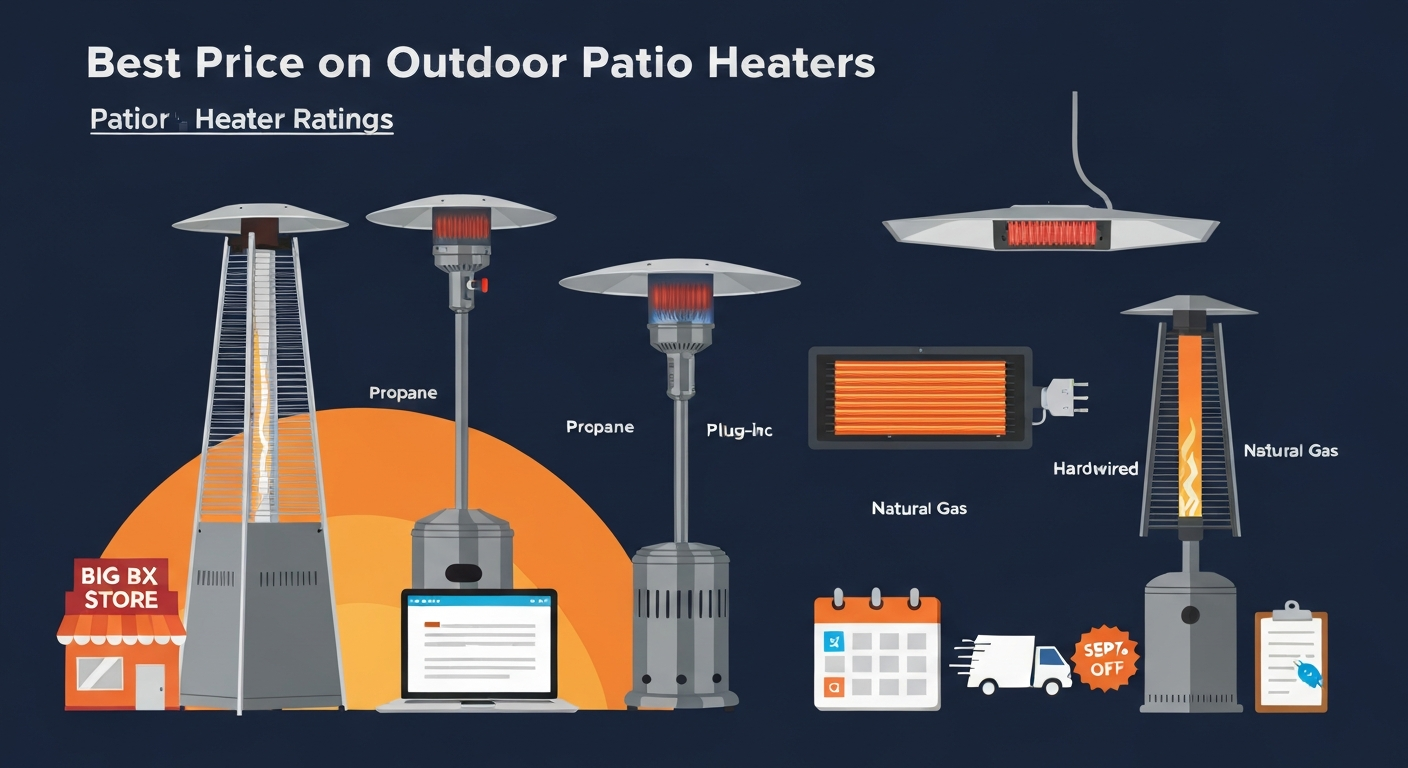
Best Price on Outdoor Patio Heaters: Compare Costs & Deals
Score the best price on outdoor patio heaters, price ranges, top picks, deal tactics, total-cost & safety checklist.
Where Can I Rent Patio Heaters Near Me Today
Find where to rent patio heaters near you today, choose the right fuel type, compare costs, and book safely.
Where to Buy a Patio Heater: Best Places and Types
Where to buy a patio heater now, plus electric vs gas vs propane tips, safety checks, and size/BTU buying checklist.