
The best patio heat lamps right now are electric infrared heaters, and the specific model you need comes down to three things: your patio size, how you plan to mount it, and whether you have access to 240V power. For most covered patios under 100 square feet, a 1500W wall-mount or ceiling-mount electric infrared unit does the job cleanly. For larger spaces, step up to a dual-element 4000W to 5200W model like the Infratech CD4024 or CD52, which covers 8x10 or 10x10 feet respectively at standard 8 to 10-foot mounting heights. If you want something versatile without hardwiring, the Dr. Infrared Heater DR-238 is a strong plug-in pick with adjustable 900W, 1200W, and 1500W settings and up to 1,000 square feet of coverage in enclosed spaces. If you want more detailed patio heater recommendations, compare plug-in electric models against hardwired options and match wattage to your coverage needs.
Best Patio Heat Lamps in 2026: Buying Guide and Picks

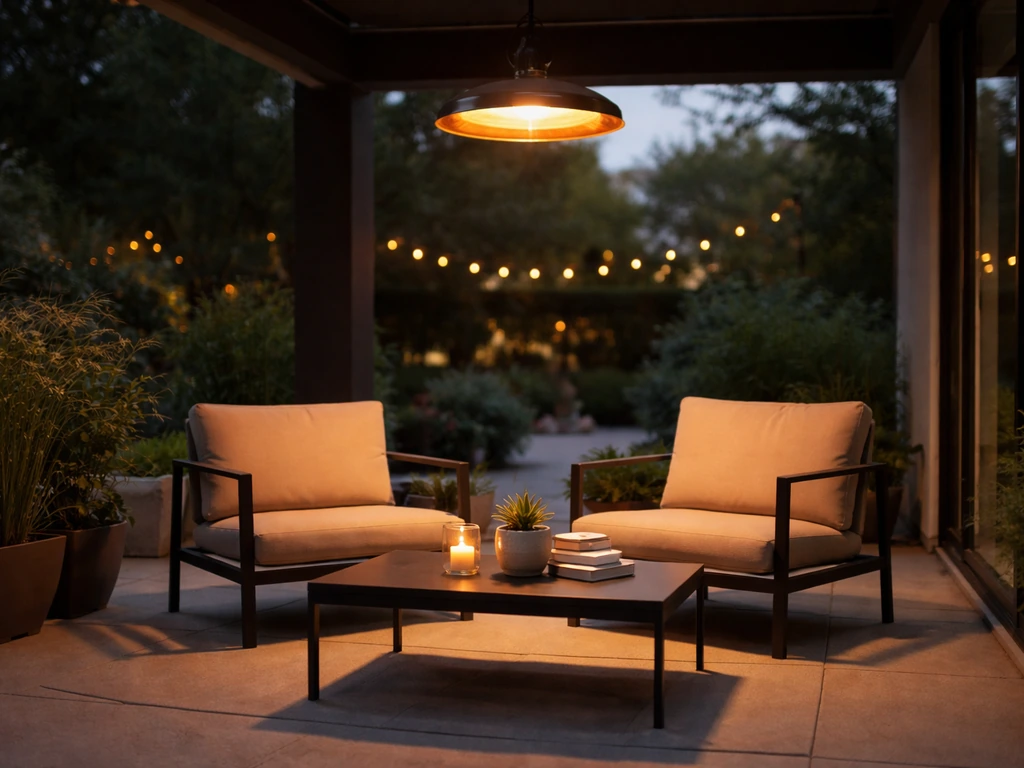
Quick picks: best patio heat lamps by patio size and setup
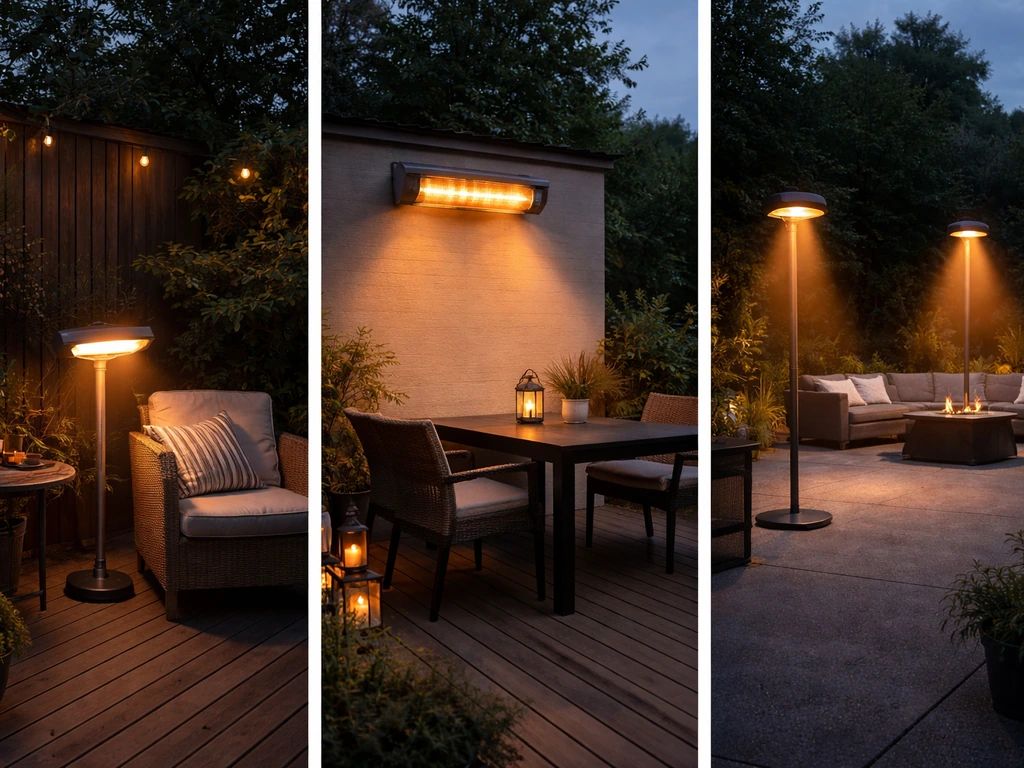
Not every patio is the same, and neither is the right heat lamp. Here's a fast breakdown of which type of heat lamp fits common real-world setups, so you can get to the right shortlist without wading through every spec.
| Patio Setup | Recommended Type | Wattage / Coverage | Best Pick Example |
|---|---|---|---|
| Small balcony or covered porch (under 100 sq ft) | Wall-mount or ceiling-mount electric infrared | 1500W, ~100 sq ft | Dr. Infrared DR-238 (plug-in, adjustable) |
| Mid-size covered patio (100–200 sq ft) | Ceiling-mount single-element hardwired | 2000W–3000W, 8x8 ft per unit | Infratech W3028GR (7–9 ft mount height) |
| Large covered patio (200–400 sq ft) | Dual-element ceiling-mount hardwired | 4000W, 8x10 ft per unit | Infratech CD4024 (8–10 ft mount height) |
| Very large or open-air patio | Multiple dual-element units or 5200W model | 5200W, 10x10 ft per unit | Infratech CD52 (multiple units, grid pattern) |
| Windy or partially open patio | Angled ceiling-mount hardwired infrared | 3000W–4000W per zone | Bromic Platinum SMART-HEAT 4500W (IP54 rated) |
| Budget, seasonal, or renter-friendly | Freestanding plug-in electric infrared | 1500W, adjustable | Dr. Infrared DR-238 or similar |
| Year-round, commercial, or permanent install | Hardwired ceiling or wall-mount, 240V | 3000W–6000W | Infratech W- or CD-Series |
One important note: if you're comparing these to broader propane or natural gas patio heater options, those are worth considering for open or unroofed spaces where you can't run electrical wiring, but electric infrared heat lamps win on efficiency, zero flame risk, and silent operation for covered patios. The rest of this guide focuses specifically on electric infrared heat lamp-style heaters.
How to choose the right heat lamp
Picking the right heat lamp isn't just about buying the most powerful one you can find. Four factors matter most: the coverage area you need, how you're mounting it, the output (wattage) relative to your space, and your power source. Get these four right and you'll be warm. Get them wrong and you'll be underwhelmed no matter what you spend.
Coverage area: start with square footage, not wattage
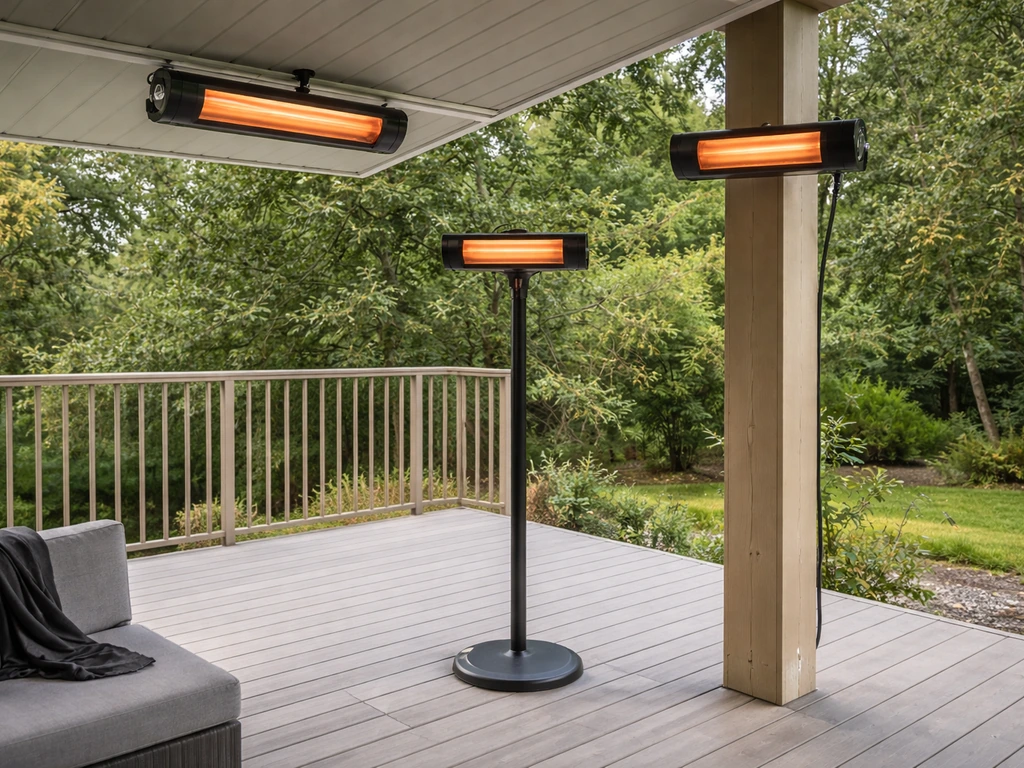
A standard 1500W electric infrared heater covers roughly 100 square feet of covered space. That's the baseline number to work from. But coverage also depends on mounting height. The Infratech W3028GR (3000W) heats an 8x8-foot zone when mounted at 7 to 9 feet. Move that same heater up to 12 feet and the footprint spreads but intensity drops. The Infratech CD4024 at 4000W covers about 8x10 feet at 8 to 10-foot heights, and the CD52 at 5200W pushes that to 10x10 feet. The practical takeaway: measure your actual outdoor seating area in square feet, note your ceiling or overhead structure height, then match to the wattage and mounting height combinations the manufacturer actually specifies, not just generic wattage rules.
Mounting type: ceiling, wall, or freestanding
Ceiling-mount hardwired models (like the Infratech W- and CD-Series) give you the cleanest heat distribution and keep the heater out of the way, but they require a licensed electrician and a permanent install. Wall-mount options work well for narrow patios or pergolas where ceiling access is limited. Freestanding models like the DR-238 are portable and plug into a standard 120V outlet, making them the right call for renters, seasonal use, or anyone who doesn't want to commit to hardwiring. The trade-off is that freestanding units are easier to knock over, take up floor space, and typically max out at 1500W on a standard circuit.
Output and heat range: wattage is only half the story
More wattage means more heat output, but voltage matters just as much. If a heater is rated for 240V and you run it on 208V (common in commercial buildings), it only produces about 60% of its rated infrared energy. That's the difference between a heater that works great and one that always feels like it's underperforming. Always confirm your supply voltage before buying a hardwired unit. For plug-in models, 120V is standard and you won't have that problem, but you're capped at lower wattage.
Power source: electric vs propane vs natural gas
For heat lamp-style heaters specifically, electric infrared is the dominant and most practical choice. It's quiet, instant-on, produces no combustion byproducts, and is the safest option under covered structures. Propane and natural gas options exist and are worth considering for open-air situations (other heater styles on this site cover those in depth), but for ceiling or wall-mounted heat lamps on a covered patio, electric infrared is the clear recommendation.
Placement and installation for real-world warmth
Even a correctly specified heat lamp will underperform if it's mounted in the wrong spot. Placement has a bigger impact on felt warmth than most buyers expect.
Height and angle
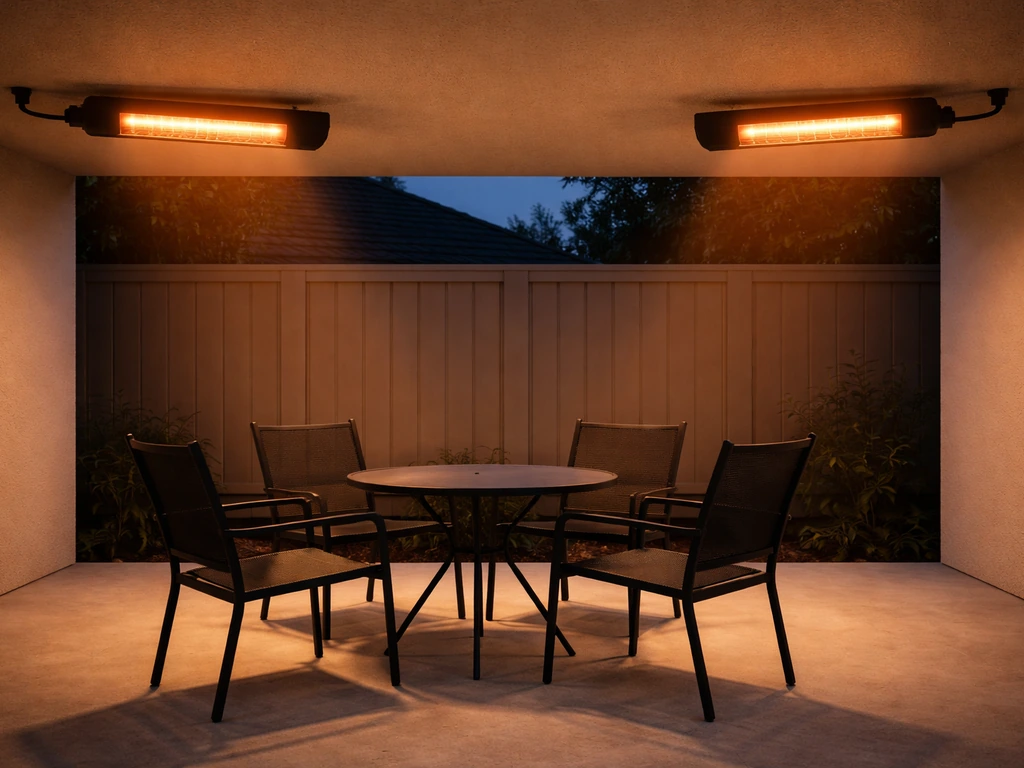
Most ceiling-mount electric infrared heaters work best at 7 to 10 feet above the floor, depending on wattage. Too high and the heat disperses before it reaches people; too low and you create uncomfortable hot spots directly underneath. For angled installations (30 to 60 degrees downward), manufacturers like Infratech provide specific minimum height requirements in their installation manuals, and these differ from straight vertical-down installs. Always follow the spec sheet for the exact model you're buying, not a general rule.
Spacing multiple units
If your patio needs more than one heat lamp, space them to create overlapping heat zones rather than isolated warm spots. A common approach is to orient heaters toward the area of greatest heat loss (usually the open or exposed edge of the patio) and plan coverage so adjacent units overlap slightly. For a 20x20-foot patio, four 4000W units in a grid pattern at 10-foot centers is a reasonable starting point, but you should verify against the manufacturer's coverage table for the specific model.
Wind: the biggest variable nobody warns you about
Infrared heaters work by warming objects and people directly rather than heating the air, which is why they feel warmer than their wattage might suggest in calm conditions. But wind above about 5 mph measurably reduces the effective surface temperature felt by people under the heater. In consistently windy spots, you need more heater output than square footage alone would suggest. Partially enclosing the patio with screens or windbreaks makes a bigger difference than stepping up heater wattage, and it's worth doing both.
Hardwiring: not a DIY job
Infratech's installation manual is explicit: hardwired models must be permanently installed by a licensed electrician, and all electrical connections must comply with the National Electrical Code and local codes. Don't skip this step. Beyond the safety angle, improper wiring is the fastest way to void your warranty and create a fire hazard.
Safety and weather-readiness to check before you buy
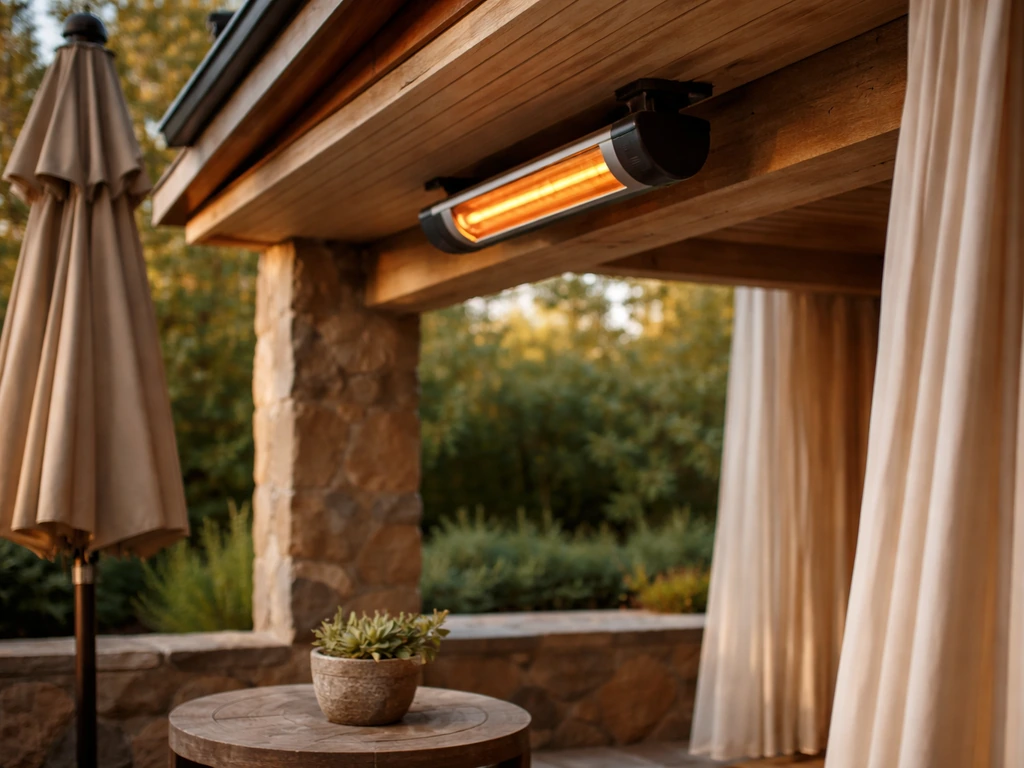
Heat lamps used outdoors have specific safety requirements that differ from indoor space heaters. Before you finalize any purchase, run through these.
Clearance from combustibles
Infratech's installation guidelines require keeping blank" rel="noopener noreferrer">electrical cords, drapery, furnishings, and other combustibles at least 3 feet from the front of the heater and away from the sides and rear. This isn't a suggestion. The CPSC has documented recalls involving infrared quartz heaters that failed to prevent ignition of nearby combustibles. The U.S. Consumer Product Safety Commission provides a general “Recalls & Product Safety Warnings” entry point at CPSC.gov so you can check for recall notices before buying. Outdoor patios with fabric curtains, wooden pergola beams, or decorative materials need careful clearance planning before mounting.
IP rating and weatherproofing
For any outdoor electric heat lamp, look for a documented IP (Ingress Protection) rating. A good benchmark is IP54 or higher, which means the heater is protected against dust and water splashing from any direction. Bromic's Platinum SMART-HEAT electric series, for example, explicitly carries an IP54 rating. Models without a published IP rating are a red flag for outdoor use, regardless of what the marketing copy says.
GFCI protection
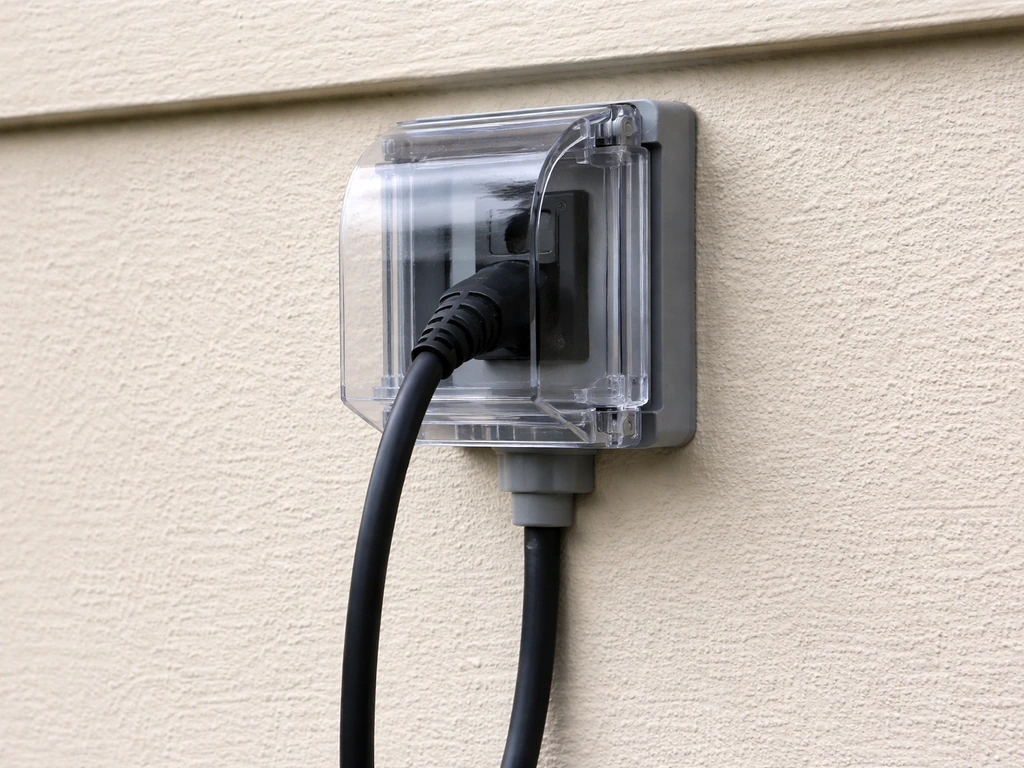
Any outdoor electric heater connection must be protected by a GFCI (ground-fault circuit interrupter). This is not optional. For plug-in units, use a GFCI-protected outdoor outlet. For hardwired units, your electrician must install GFCI protection at the circuit level. This requirement is spelled out in product manuals from manufacturers like Dimplex and applies across the category.
Certifications to look for
UL listing (or UL/cUL for Canada) is the baseline safety certification to require on any electric infrared heat lamp. For gas-fired outdoor infrared heaters, look for ANSI Z83.26/CSA 2.37 listing. Before buying, it's worth a quick check on the CPSC recalls database to confirm no active safety notices exist for the model you're considering.
Running costs and efficiency
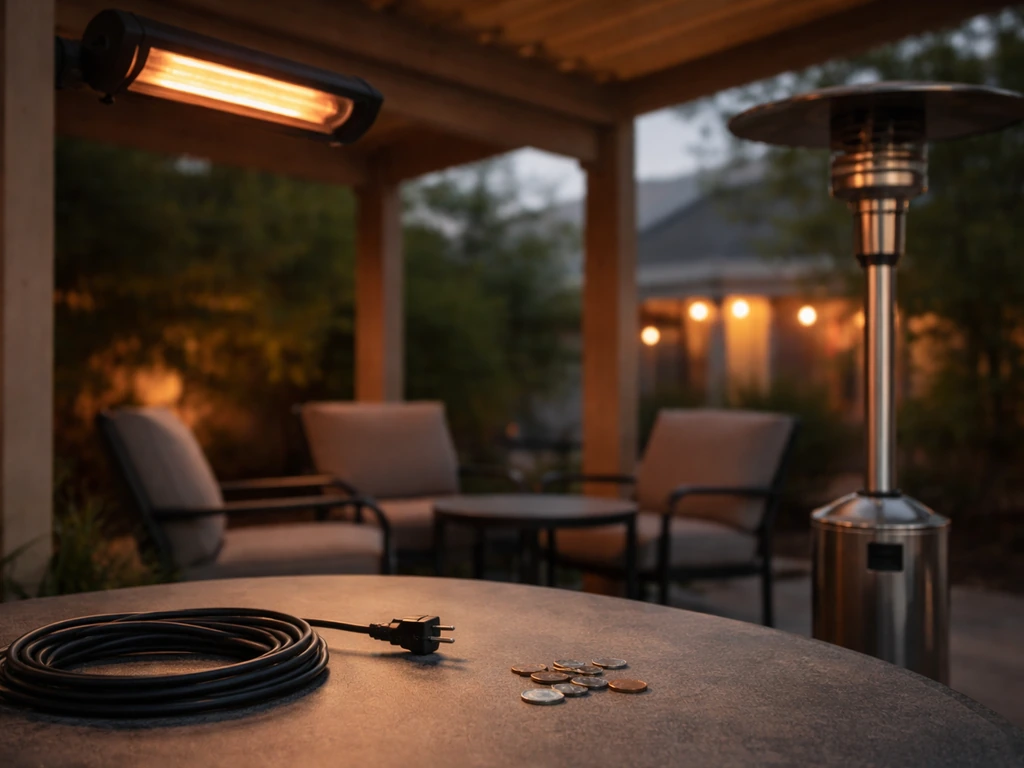
Electric infrared heat lamps are generally more efficient than convective gas heaters for covered outdoor spaces because they warm people and objects directly rather than trying to heat open air that dissipates immediately. Here's how costs break down in practice.
| Heater Type | Typical Wattage | Cost per Hour (at $0.15/kWh) | Best Use Case |
|---|---|---|---|
| Plug-in electric infrared (120V) | 1500W | ~$0.23/hr | Small covered patios, seasonal use, rentals |
| Hardwired electric infrared (240V, single element) | 2000W–3000W | $0.30–$0.45/hr | Mid-size covered patios, year-round use |
| Hardwired electric infrared (240V, dual element) | 4000W–6000W | $0.60–$0.90/hr | Large covered patios, commercial use |
| Propane infrared patio heater | 40,000–48,000 BTU | ~$1.00–$1.50/hr (varies) | Open-air patios without electrical access |
One efficiency lever that's easy to overlook: many hardwired infrared heaters support dimmer or modulation controls that let you run them at less than full power. Infratech's control system, for example, supports intensity modulation, which means you're not stuck choosing between full blast and off. Running a 4000W heater at 70% output during mild evenings can significantly reduce monthly operating costs while still keeping guests comfortable.
The voltage mismatch issue mentioned earlier also has a direct cost impact. A 240V heater running on 208V produces about 60% of rated output. You end up paying for a 4000W heater but getting 2400W of actual heat. Verify your supply voltage before purchasing any hardwired unit.
Maintenance, durability, and what users report
Electric infrared heat lamps are low-maintenance compared to gas heaters (no burners to clean, no gas lines to inspect), but they're not zero-maintenance. Here's what to expect in real outdoor conditions.
Quartz and carbon element longevity
Most electric infrared heat lamps use either quartz tube or carbon element heating elements. Both are durable, but quartz elements can crack if exposed to water while hot or if handled roughly. Infratech's manuals specifically instruct users to turn off power and wait for full cooling before any service or handling. Never spray water on or near a hot element, and keep covers or guards in place during operation.
Weather and corrosion resistance
Stainless steel housings outperform powder-coated aluminum in coastal or high-humidity environments. Many Infratech models offer stainless steel finishes for exactly this reason. If you're in a salt-air environment, the stainless option is worth the premium. For everyone else, a quality powder-coat finish with annual inspection for chips or rust is sufficient.
Common user complaints and how to address them
- Uneven heat: Usually caused by mounting height being too high for the wattage, or units spaced too far apart. Lower the mount within manufacturer specs or add a second unit.
- Insufficient warmth in wind: Infrared output feels weaker above 5 mph wind. Add windscreens or step up wattage by one tier.
- Heater not reaching full output: First check for 208V vs 240V mismatch. Second, check supply voltage under load with a multimeter.
- Element failure: Most often caused by water contact while hot or physical impact. Inspect the protective guard after any storm.
- Glare from quartz elements: Some users find the visible red glow distracting. Carbon fiber elements produce less visible light at the same output. Look for 'dark' or 'shortwave' infrared models if glare is a concern.
Seasonal storage vs year-round installation
Hardwired ceiling-mount units are designed to stay in place year-round, but in climates with hard freezes and ice storms, it's worth covering them or installing a weatherproof protective cover during the off-season. Freestanding plug-in models should be stored indoors during winter. Cold ambient temperatures don't damage the heater itself, but they do reduce perceived warming performance, as noted by manufacturers including Dimplex.
Buying checklist and how to decide if a heat lamp is right for your patio
Before you buy, run through this checklist. It'll either confirm you're on the right track or flag a reason to consider a different heater type (like a freestanding propane unit or a different electric configuration, which are covered in detail across other patio heater guides on this site).
- Measure your patio seating area in square feet. Divide by 100 to get a rough minimum wattage in kilowatts for a covered space (e.g., 200 sq ft = 2kW minimum, more if the space is exposed).
- Measure your ceiling or overhead structure height. Confirm it falls within the manufacturer's recommended mounting height range for the wattage you're considering.
- Check your electrical supply. Is there a 240V circuit available near the mounting location? If not, budget for electrical work or choose a plug-in 120V model.
- Confirm IP rating. Any outdoor electric heat lamp should carry at least IP54. Ask the retailer or check the spec sheet directly.
- Verify UL or UL/cUL listing on the product label or spec sheet.
- Check the CPSC recalls database for the specific model before purchasing.
- Plan clearances. Identify all combustibles within 3 feet of the planned mount location (fabrics, wood beams, furniture) and confirm they can be moved or are already outside the clearance zone.
- Plan GFCI protection. Confirm your outdoor circuit has GFCI protection, or budget for it in your installation.
- Decide on controls. Do you want a wall switch, dimmer, remote, or smart control? Confirm compatibility with the heater model before buying.
- Consider wind exposure. If your patio is regularly exposed to wind above 5 mph, plan for windbreaks or step up wattage by at least 25% from your calculated minimum.
When a heat lamp might not be the right call
Electric infrared heat lamps are the best choice for covered, permanent-install patios with electrical access. But if your patio is fully open-air with no overhead structure, a freestanding propane or natural gas heater often makes more practical sense since you can move it and don't need an electrician. If your space is very large and uncovered, you may need to look at higher-output options across all heater types rather than stacking multiple heat lamps. And if you're renting or want a no-commitment solution, a plug-in freestanding unit like the DR-238 is the honest answer, even if a hardwired unit would ultimately perform better.
The bottom line: patio heat lamps (electric infrared heaters) are reliable, efficient, and the best long-term solution for covered outdoor spaces. Pick the right wattage for your square footage and mounting height, get the electrical install done properly, check the IP rating and clearances, and you'll have a setup that genuinely extends your outdoor season without ongoing fuel costs or maintenance headaches.
FAQ
Can I install an electric infrared heat lamp myself, or do I need an electrician?
Yes, but only if your patio has an overhead structure or wall location rated for the heater’s mounting hardware. For ceiling or wall installs, confirm you have enough clearance to combustibles and that the electrical box can be safely secured (and weather-protected if outdoors). If you cannot mount to a solid surface, a freestanding plug-in unit avoids structural and electrical complexity.
What happens if my patio is windy, will the heater wattage estimate still work?
Assume you should use more output in wind than the square-foot guideline suggests. A practical approach is to start with the coverage table for calm conditions, then add capacity (or add a second unit) if you see consistent gusts. Also consider adding a screen or windbreak first, since blocking wind often improves felt warmth more than buying extra wattage.
Can I lower operating cost by running an infrared heat lamp at less than full power?
It can, but only when the heater’s controller and power supply match and are installed correctly. Most hardwired modulation or dimmer options are meant to be used within the heater’s specifications, and running it at reduced output can change how evenly warmth reaches people. For plug-in units, adjustable power usually means stepping between set levels, so expect different warm zones at different settings.
Why does a heater rated for my square footage sometimes feel weak in real life?
Avoid relying on a generic “wattage equals heat” rule. The manufacturer’s coverage footprint assumes a specific mounting height and tilt angle, and moving the heater up or changing the angle can reduce intensity where people sit. Measure your seating area, then map it against the model’s stated coverage table for your exact mounting height.
How much clearance do I need from patio furniture, curtains, and pergola beams?
For wall or ceiling mounts, the critical distance is the clearance from the front of the heater to combustibles, and keeping furnishings and drapes away from the sides and rear. Outdoors, pay extra attention to fabrics and wooden pergola elements that might drift or sag into the clearance zone. If you have curtains, plan how they will sit during operation, not just how they hang at rest.
My building provides 208V, will a 240V patio heat lamp work?
Often, but only in certain electrical setups. If your heater is designed for 240V, running on 208V can dramatically reduce the delivered infrared output. The safer decision is to match the heater’s rated voltage to your service, and if you are unsure (especially in commercial spaces), confirm at the outlet or at the circuit before purchasing.
Do I need a GFCI for electric patio heat lamps, and what if the outlet is already installed?
No, but you still need a GFCI-protected connection. Plug-in units require a GFCI-protected outdoor outlet, and hardwired units require GFCI at the circuit level installed by a qualified electrician. If you have an older patio circuit, upgrading to compliant protection is often required before wiring is finalized.
How do I confirm a heat lamp is actually safe for outdoor rain and moisture?
Look for a published outdoor ingress protection rating, IP54 or higher as a baseline. If the model does not list an IP rating, treat it as a red flag for outdoor exposure even if the marketing copy mentions weather resistance. Also verify whether the rating applies to splashing from any direction, since patios often have partial exposure during rain.
Can I hose down or clean the heater after use, and is quartz vs carbon different?
Some elements have different sensitivity, but the shared rule is to avoid water on or near the heater while it is operating or cooling. Quartz tube elements can be vulnerable to cracking if hit with water when hot, and carbon elements also require careful handling. The best practice is to turn off power and allow full cooling, then inspect for residue or damage before resuming use.
What quick checklist should I use to avoid buying the wrong patio heat lamp?
To reduce risk and avoid wasted purchases, verify three “compatibility” items before ordering: mounting location type (ceiling, wall, or floor), available power (120V plug-in versus 240V hardwired), and safety requirements (UL listing plus outdoor-rated electrical protection and clearances). If any one of these does not fit your patio, switching to a different configuration (such as a plug-in freestanding) is usually the simplest fix.
Find the best patio heater: type guide, best picks by use and weather, setup tips, and real running cost estimates.
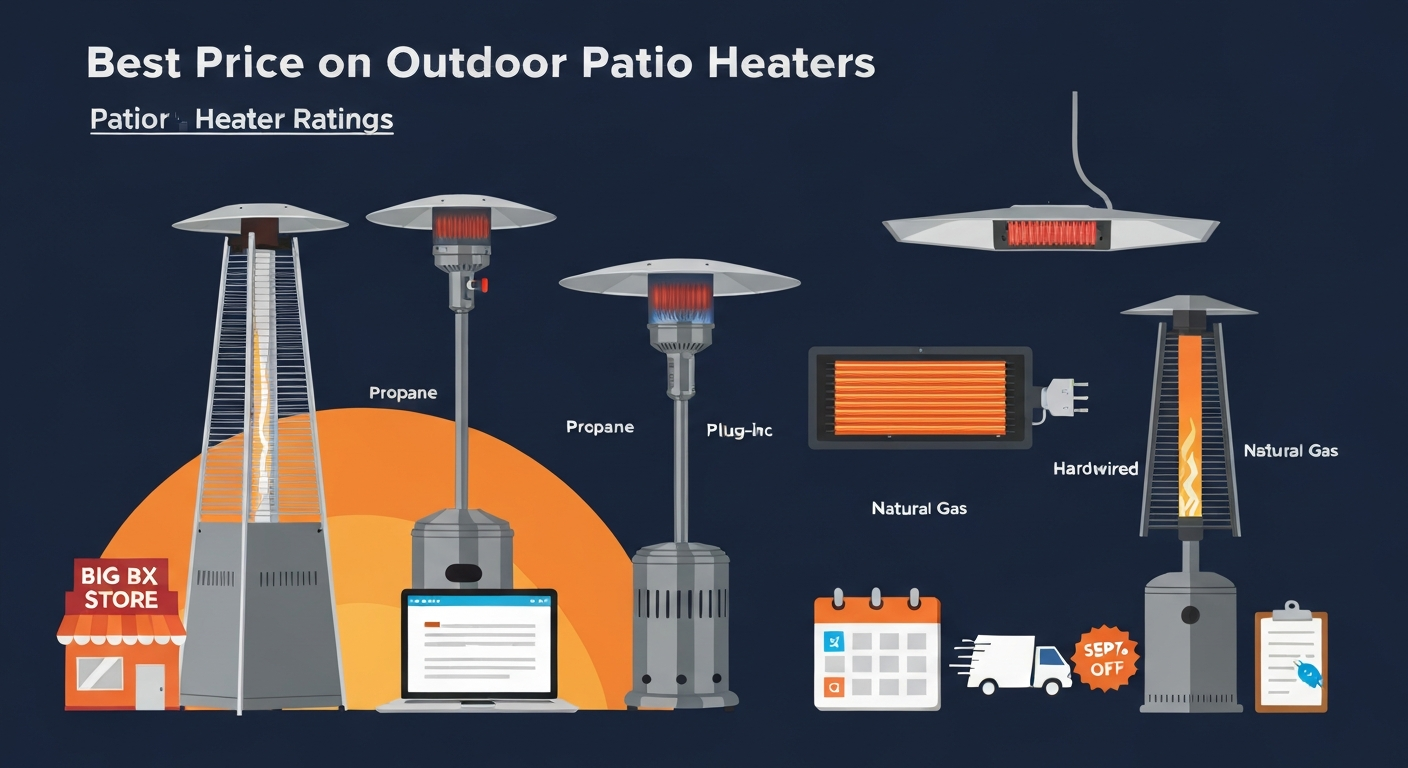
Score the best price on outdoor patio heaters, price ranges, top picks, deal tactics, total-cost & safety checklist.
Find where to rent patio heaters near you today, choose the right fuel type, compare costs, and book safely.