
For most residential patios up to about 200 square feet, a 40,000–48,000 BTU propane standing heater or a wall-mounted infrared electric heater covers the space well and costs the least to set up. For larger covered patios or commercial use, natural gas or infrared radiant systems mounted overhead are the smarter long-term investment. Pellet heaters are a niche pick for people who want a fire-like atmosphere without gas lines. The right answer depends on four things: your patio size, whether it's covered or open, how windy your area gets, and what power or gas connections you already have. This guide walks through all of it so you can make a confident call.
Best Outdoor Patio Heaters: Choose Gas, Electric, Infrared

Caleb Vale
3 May 2026
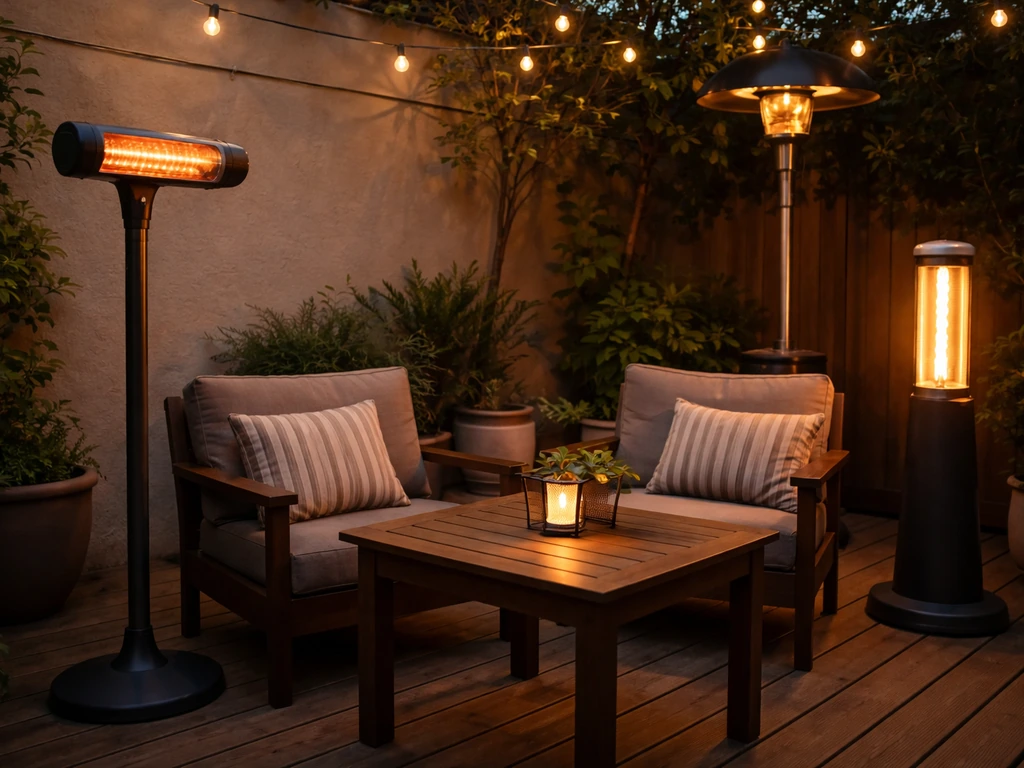
How to Choose the Best Patio Heater for Your Setup
Before you look at any product, nail down three variables: patio size, your comfort goal, and your climate. These determine both the heater type and the output you need, and getting them wrong means buying something that doesn't perform.
Size and BTU: The 20 BTU Rule
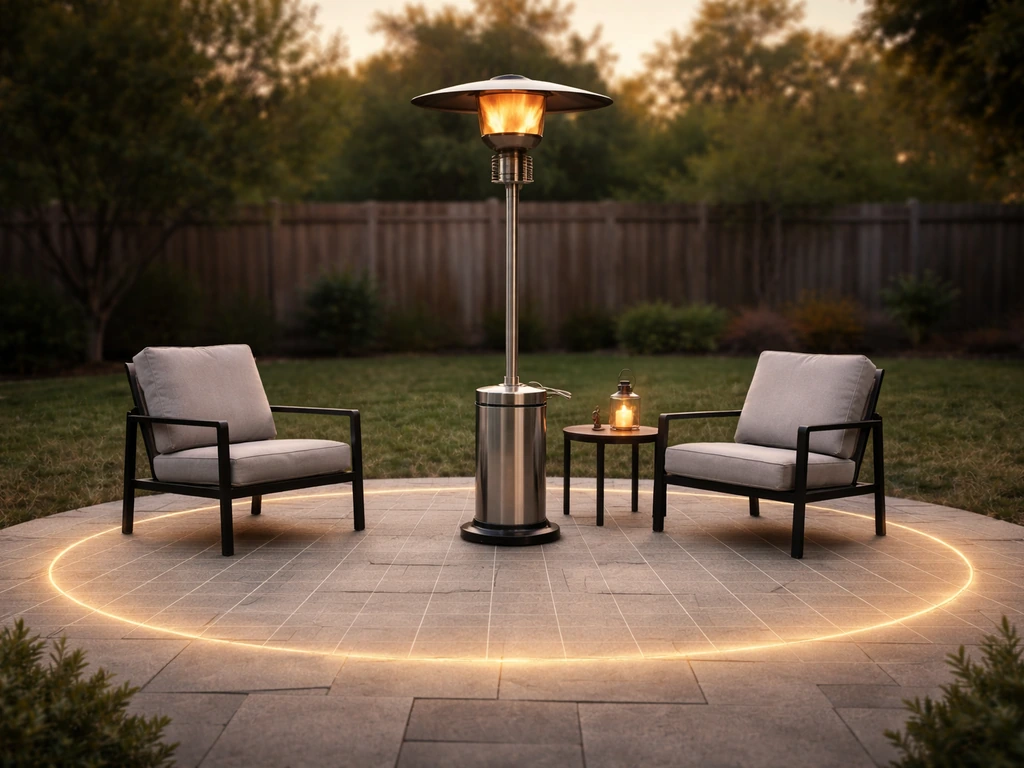
A reliable starting point is 20 BTUs per square foot of patio space. A 200-square-foot patio needs around 4,000 BTU of heat; a 1,500-square-foot covered entertaining area needs closer to 30,000 BTU. That math gets more complicated when the space is open to the sky. A covered patio retains heat far more efficiently, so one 40,000 BTU heater can comfortably warm 1,500 to 2,000 square feet of covered area. The same heater on a completely open patio might only keep people comfortable within a 10- to 12-foot diameter around the unit.
One thing buyers often confuse: a heater's listed BTU output does not directly translate to a square footage coverage number. What matters is the effective range, not just raw output. Some manufacturers specify 'radius' (how far from center warmth is felt) while others give a total 'range' area. Always look for both numbers when comparing models, and pay attention to whether coverage is tested in a real outdoor setting or under controlled conditions.
Comfort Goal: Zone Heating vs Full-Coverage
Decide whether you want to heat the whole patio or create warm zones where people actually sit. Trying to heat an entire large open patio with one heater almost always leaves cold pockets. A smarter approach is to place multiple lower-output heaters over seating zones rather than one giant unit in the middle. For a dining table and four chairs, one well-positioned overhead infrared heater or a floor-standing propane unit nearby is all you need.
Climate and Wind Conditions
Wind is the single biggest performance killer for patio heaters that rely on warming the air (convective heaters). If your patio is exposed to regular breezes, radiant infrared heaters are the better choice because they heat people and surfaces directly rather than the surrounding air. If you are searching for the best outdoor electric patio heater, start by choosing an infrared electric model because it directs heat at people and surfaces, especially in windy conditions.
Wind simply can't strip away warmth that's already absorbed into a body or a surface. In mild climates with light winds, a standard propane mushroom-style heater works fine. In consistently windy or colder regions, wall-mounted or ceiling-mounted directional infrared is worth the extra upfront cost.
Heater Type Showdown: Electric vs Propane vs Natural Gas vs Infrared vs Pellet
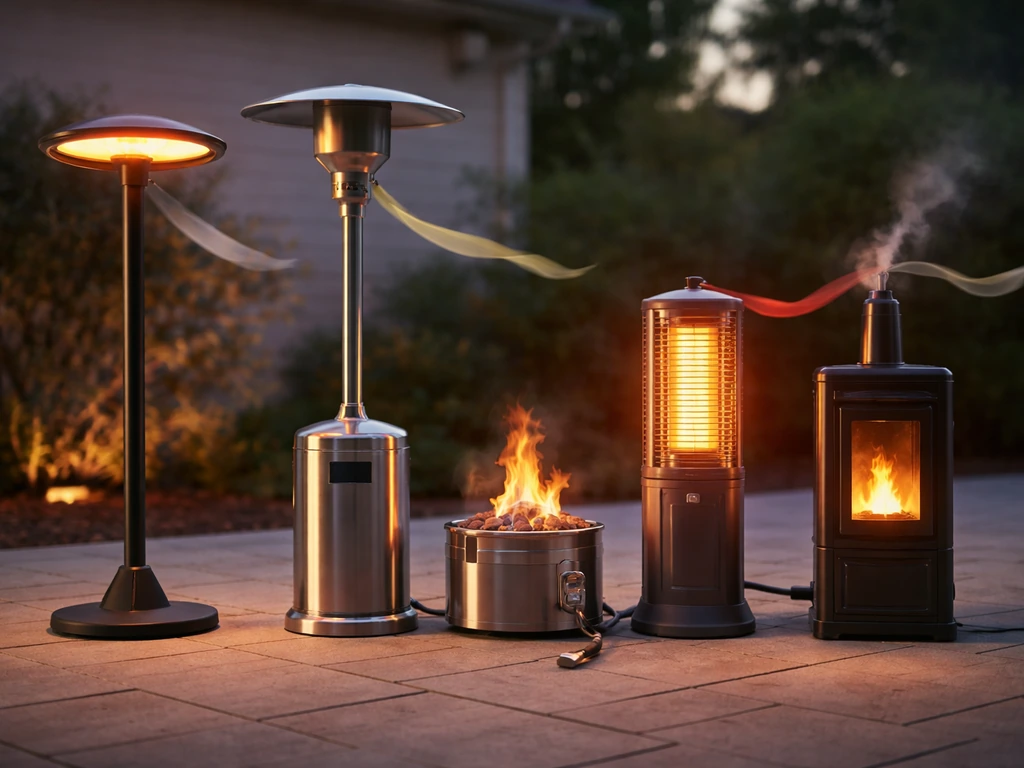
Each fuel type has a real-world profile that suits different situations. Here's an honest breakdown.
| Type | Best For | Heat Output | Setup | Running Cost | Wind Performance |
|---|---|---|---|---|---|
| Electric Infrared | Covered patios, windy spots, small zones | 1,500–6,000W (wall/ceiling mount) | Needs 240V outlet; easy permanent install | Moderate (depends on local electricity rate) | Excellent — heats objects, not air |
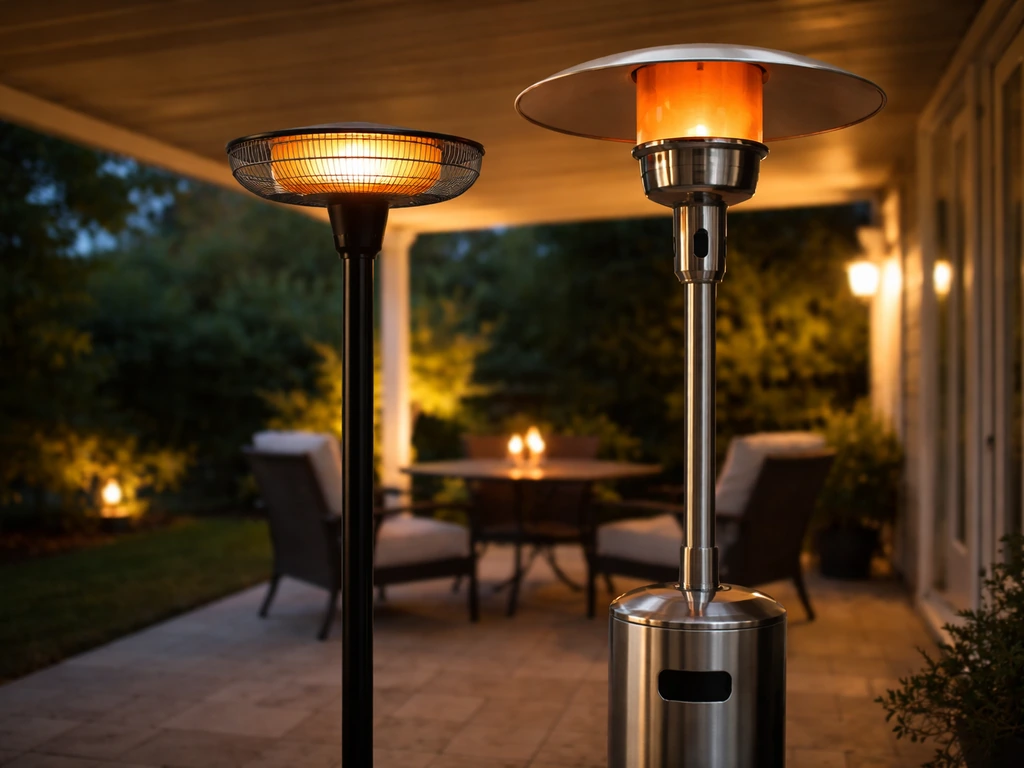
| Propane (Freestanding) | Portable use, small–medium open patios | 30,000–48,000 BTU | Zero install; plug-and-go with tank | Moderate; tank lasts 8–10 hrs at full output | Fair — convection is affected by wind |
| Natural Gas | Large patios, permanent setups, commercial | 30,000–75,000 BTU+ | Requires gas line + licensed plumber | Lowest per-hour fuel cost at scale | Fair to good depending on heater design |
| Infrared (Gas) | Open or large covered patios, commercial | 25,000–75,000 BTU | Permanent mount; gas line required | Low-moderate; high efficiency | Very good — radiant output resists wind |
| Pellet | Aesthetic/ambiance focus, off-grid feel | 10,000–40,000 BTU | Requires venting; more complex install | Moderate; fuel varies by region | Poor — open flame/convection affected |
Electric Infrared: The Cleanest, Most Wind-Proof Option
Electric infrared heaters convert up to 96 to 98 percent of electrical energy into usable heat, which makes them exceptionally efficient in terms of energy-to-warmth conversion. Short- and medium-wave infrared models heat up almost instantly (within seconds) and direct heat precisely where you aim them. A well-designed unit like the Bromic Tungsten Electric covers up to 160 square feet per heater, with coverage adjustable via bracket angle. The mirror-finish reflector on quality models ensures very little infrared escapes upward into the night sky. The main catch: you need a dedicated 240V circuit for the higher-output units, so there's an electrical installation cost if you don't already have one.
Propane Freestanding: The Go-To for Flexibility
Propane mushroom heaters are the most popular choice for residential patios because they require zero installation. Units like the Nexgrill Sundara and Mr. Heater's 48,000 BTU portable model are solid performers with [automatic tip-over shutoff](https://www. mrheater.
com/48-000-btu-portable-propane-patio-heater. html), a feature you should treat as non-negotiable. At full output, a standard 20-pound tank typically lasts 8 to 10 hours, which means a full weekend of use per tank. Home Depot’s product listing for the Mr.
Heater 48,000 BTU portable propane patio heater states it can run up to 10 hours on a 20 lb propane tank under its listed operating conditions.
The downside is ongoing tank cost and the fact that these heaters warm the air around them, so wind cuts into their effectiveness. They're best for sheltered or lightly exposed patios.
Natural Gas: Best Value at Scale
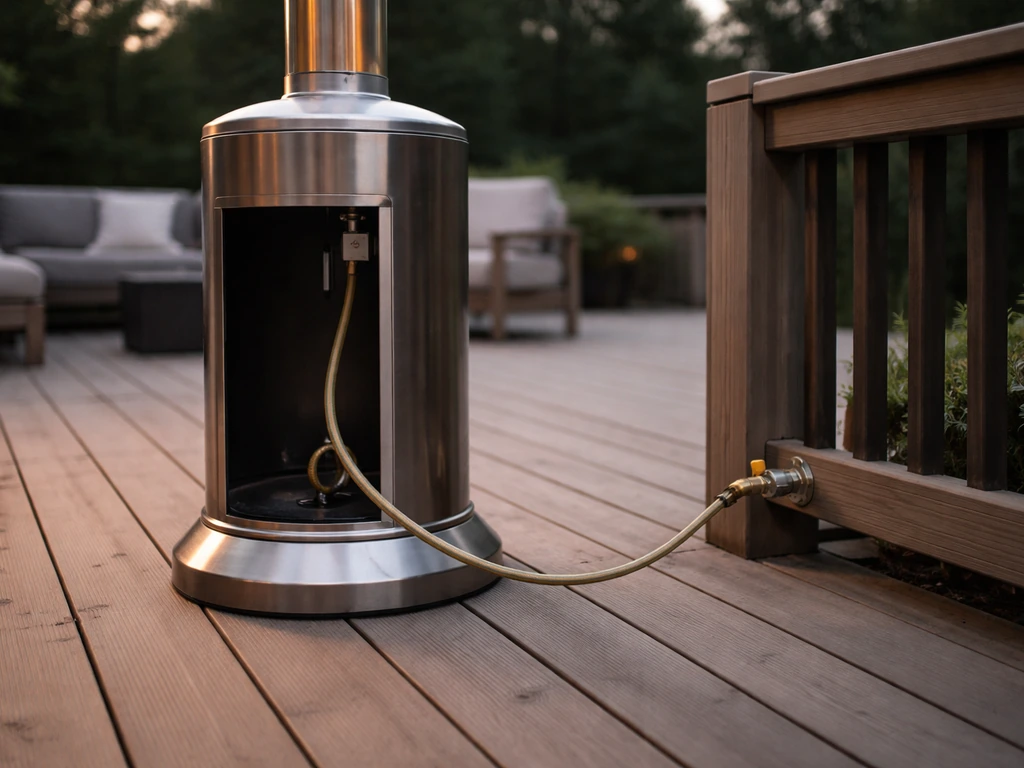
If you're heating a large patio regularly and have (or are willing to run) a natural gas line, natural gas heaters offer the lowest per-hour fuel cost of any type. A natural gas patio heater is often one of the best outdoor gas patio heater options when you already have a line running to the home. You never run out of fuel mid-party, and many models can run continuously when connected.
The upfront cost includes the heater plus a licensed plumber to run the gas line, which can add several hundred to a few thousand dollars depending on distance and local rates. For commercial operators or homeowners with large entertaining spaces, the math usually favors natural gas within one to two seasons.
Pellet Heaters: The Atmospheric Choice
Pellet patio heaters, like the HeatMaxx Radiance, occupy a small but real niche. They burn compressed wood pellets and create a fire-like ambiance that gas and electric heaters simply can't replicate. The trade-offs are significant though: pellet units require proper venting (using the correct vent pipe materials designed for pellet combustion), they take longer to reach operating temperature, and they don't perform well in open windy conditions. They also need a power source to run the auger and controls. If atmosphere is the priority and the space is sheltered, a pellet heater is a genuine option. Otherwise, stick to gas or electric.
Top Picks by Use Case
Small Patios (Under 150 sq ft)
A standard 40,000–48,000 BTU freestanding propane heater is overkill here and usually ends up running at reduced output anyway. Better choices are a wall-mounted electric infrared panel (1,500–3,000W) or a tabletop propane heater in the 10,000–12,000 BTU range. Wall-mount units keep the floor clear, aim heat precisely at seated guests, and work well even on covered balconies and small apartment patios. Look for models with adjustable heat settings so you're not blasting maximum output into a tight space.
Large Seating Areas (150–600 sq ft)
This is the sweet spot for freestanding 40,000–48,000 BTU propane heaters or for a pair of ceiling-mounted infrared units positioned over seating zones. The zone approach works better than a single central heater for anything over about 300 square feet, because one heater will leave the edges cold. For covered spaces in this range, two overhead infrared heaters (electric or gas) mounted 7 to 9 feet off the ground will deliver more consistent warmth than a single floor unit. The Lava Heat Italia Vicenza at 46,000 BTU with a rated coverage area of approximately 144 square feet is a well-regarded propane option for seating clusters.
Windy or Open Spaces
In exposed or windy locations, radiant infrared is the right answer, full stop. Convective heat (from mushroom-style propane or natural gas heaters that warm the surrounding air) gets stripped away by even moderate breezes, leaving guests uncomfortable regardless of BTU output. Ceiling- or wall-mounted directional infrared heaters, properly aimed at seating areas, are far less affected by wind because they heat bodies and surfaces directly. In consistently windy climates, plan on using multiple smaller infrared heaters positioned to cover seating zones from above or at an angle, rather than one large floor-standing unit.
Best Commercial Outdoor Patio Heaters
Commercial patio heating has different demands than residential use: longer run times, higher coverage per unit, durability under daily use, and in many jurisdictions, compliance with local fire and building codes. Here's what to focus on when choosing heaters for a restaurant patio, hotel terrace, or event venue.
Durability and Build Quality
Commercial-grade heaters need stainless steel or powder-coated aluminum construction with weather-resistant finishes. Avoid heaters with plastic housing components in the heating element area. For mounted units, check that the bracket and mounting hardware are rated for permanent outdoor installation. Brands like Bromic, Sunpak, and Schwank build specifically for commercial environments and carry certifications (CSA, ETL, or CE) that matter for code compliance.
Coverage and Controls
Commercial settings almost always benefit from zoned control: the ability to turn on specific heater zones depending on which areas of the patio are occupied. Look for heaters that are compatible with wall-mounted dimmer switches, programmable thermostats, or smart controllers. If you want more accurate comfort, consider pairing your patio heater setup with the best outdoor patio thermometer so you can track temperature changes throughout the night. Some infrared heater systems (like Bromic's Smart-Heat line) are designed to integrate with zone controllers from day one. For large layouts, use a design guide or manufacturer's sizing chart to calculate the number of heaters and spacing, most professional-grade brands offer layout planning support.
Code Considerations
Local fire codes and building ordinances often govern what you can install on a commercial patio, especially under a roof or overhead structure. Natural gas installations require permitted work and licensed contractors in almost every jurisdiction. Electric heaters typically have fewer permit requirements but still need circuits installed to code. Always check with your local authority having jurisdiction (AHJ) before specifying heaters for a commercial project, and make sure the products you choose carry the appropriate safety certifications for your region.
Safety, Setup, and Installation Tips
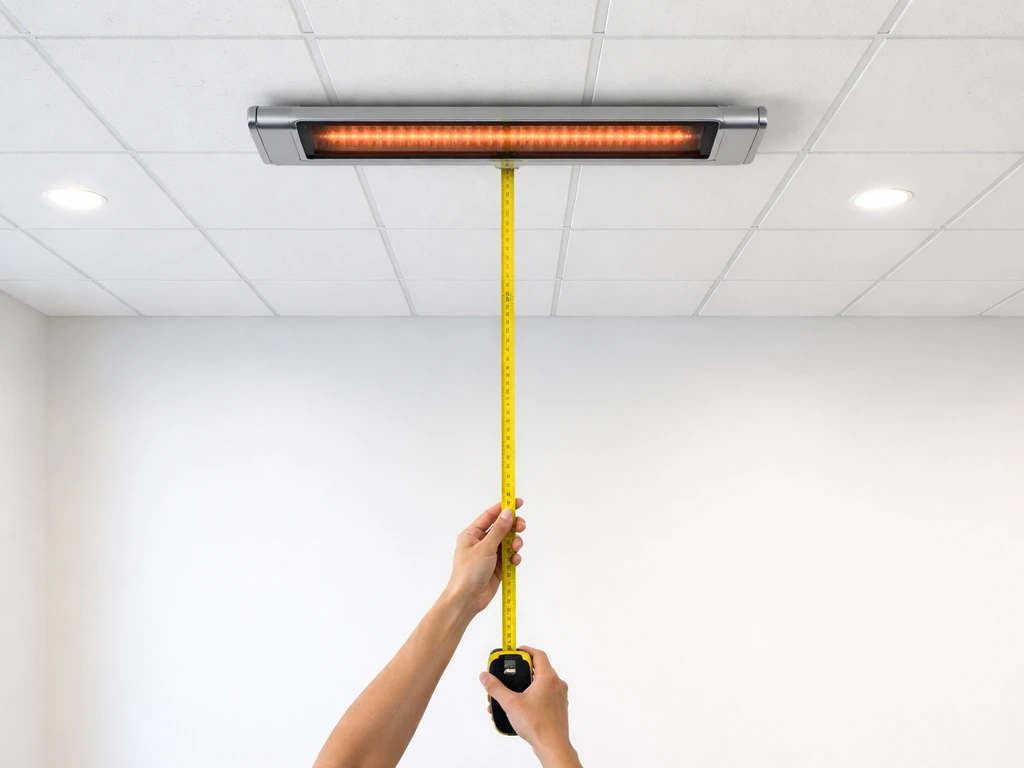
Clearances and Mounting Height
Minimum clearance requirements are not suggestions, they're safety specifications. For overhead-mounted infrared heaters, the standard minimum mounting height is 7 feet from the floor. Some manufacturer guidance (including Sunpak) specifies not installing a heater below this height. Bromic's installation manuals specify exact clearances by mounting type, so always read the installation manual for the specific product you buy, not just generic guidelines. Freestanding propane heaters need at least 3 feet of clearance from combustibles on all sides and should never be placed directly under low overhangs or fabric structures.
Ventilation and Combustion Air
Gas heaters of any type need adequate airflow. Natural gas heaters should never be installed in a completely enclosed area, this is a hard rule, not a preference. Even on a covered patio, there needs to be airflow on all sides of a gas heater. Electric infrared heaters don't have combustion air requirements, which is one reason they're often the smarter choice for semi-enclosed covered patios. Even so, Consumer Reports recommends ensuring airflow on all sides of any patio heater, including electric units under pergolas or covered structures.
Weatherproofing
Check the IP (Ingress Protection) rating on any electric heater before buying. For permanently mounted outdoor units, you want at least IP55 (protected against water jets from any direction). For gas heaters, protect the regulator and hose connections from standing water and direct rain exposure. Cover or store portable propane heaters when not in use, most are not designed to sit out in heavy rain or snow for extended periods.
Propane Safety Checklist
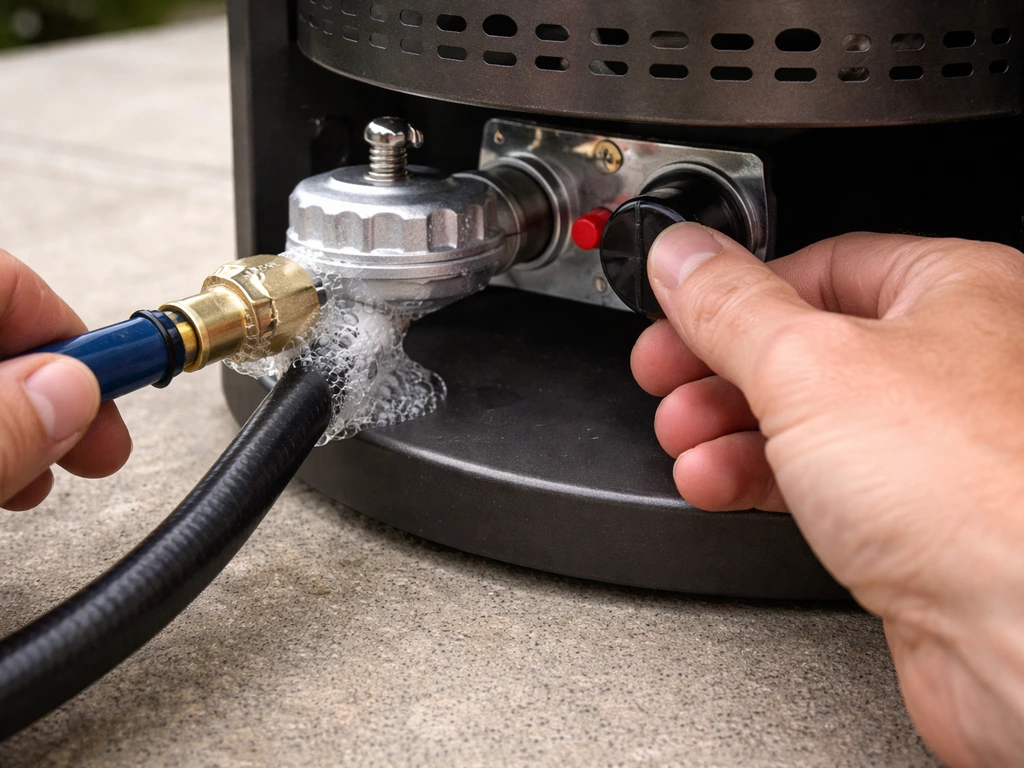
- Always shut off the heater and let it cool before moving it — never relocate a running or hot propane heater
- Test regulator and hose connections with a soapy water solution before each season; bubbles mean a leak
- Verify the tip-over shutoff is functional — tilt the unit slightly at startup to confirm it shuts off gas flow
- Keep the propane cylinder upright and never use a damaged or corroded tank
- Store propane tanks outdoors in a ventilated area, away from ignition sources
Costs and Running Efficiency
Upfront price is only part of the cost equation. Running costs, especially for heaters you'll use regularly through fall and winter, add up fast. Here's how the numbers compare across types.
| Heater Type | Typical Upfront Cost | Avg. Running Cost/Hr | Heat Efficiency | Thermostat/Control Options |
|---|---|---|---|---|
| Electric Infrared (wall/ceiling) | $200–$900+ | $0.15–$0.60 (at $0.13/kWh) | Up to 96–98% energy-to-heat | Dimmer, smart controller, thermostat compatible |
| Propane Freestanding | $100–$400 | $0.80–$1.50 (at ~$4/gal) | 60–80% effective heat output | Manual valve; some models have adjustable output |
| Natural Gas (permanent) | $300–$800 + install | $0.30–$0.70 | Similar to propane; lower fuel cost | Thermostat, zone control, on/off switch |
| Gas Infrared (radiant) | $400–$1,500 + install | $0.40–$0.90 | High — directional radiant reduces waste | Dimmer or zone controller on premium models |
| Pellet | $300–$700 | $0.50–$1.20 (pellet price varies) | Moderate; dependent on combustion quality | Basic thermostat on some models; manual on others |
Electric infrared heaters look expensive per watt on the sticker but are the most efficient in actual use because they convert nearly all electrical input into heat that reaches people directly. A 2,000W infrared heater running 3 hours a night costs around $0. 78 at average US electricity rates, less than a cup of coffee. Propane costs more per hour at current fuel prices but requires no installation.
Natural gas has the lowest fuel cost per BTU at scale, which is why it makes the most financial sense for commercial or high-frequency residential use. Thermostat and dimmer compatibility matters more than most buyers realize: being able to dial back to 50% output in mild weather can cut running costs nearly in half compared to running at full power all evening.
How to Read Reviews and Ratings Without Getting Fooled
Patio heater reviews vary wildly in quality. A lot of star ratings are based on first impressions right out of the box, not on real-world performance through a full season. Here's what to actually look for.
Real Performance Signals
- Look for reviews that mention the actual patio size, whether it's covered or open, and the climate — reviews without context are nearly useless for comparison
- Prioritize reviews from buyers who've used the heater through at least one full cold season, not just a few nights
- For propane heaters, look for comments about consistent heat output toward the end of the tank — some cheaper regulators throttle output as pressure drops
- For electric infrared, look for comments on the quality of the heating element and bracket hardware after 12+ months of outdoor exposure
- Check for mentions of the tip-over shutoff triggering accidentally — a common complaint on lower-quality propane floor heaters with overly sensitive sensors
Reliability and Durability Patterns
The most common failure points on patio heaters are: igniter failure on propane units (look for reviews mentioning pilot light or igniter issues after the first winter), rust and corrosion on exposed steel components, and element failure on electric infrared units. Brands that offer replacement heating elements and spare parts independently, rather than forcing you to buy a whole new unit, are worth paying more for upfront. Steer away from models where the igniter and thermocouple assembly isn't serviceable, because those are wear items.
Customer Feedback Red Flags
- Multiple reviews mentioning the unit arriving damaged or with missing hardware — sign of poor packaging and quality control
- Complaints about the safety shutoff triggering randomly during normal use — indicates a flawed sensor or balance design
- Reviews noting that heat output doesn't match the BTU claim in real outdoor conditions — look for whether the reviewer accounts for wind and open vs covered space
- Igniter that stops working within the first season — a common and annoying failure point on budget propane models
- Rust on exposed surfaces within the first year — indicates inadequate weather protection for outdoor use
If you're weighing specific fuel types in more depth, the considerations for electric-only setups, gas-specific models, and region-specific climate factors (including South Africa and Australia) each carry their own nuances worth exploring separately. If you want the best patio heaters south africa, focus on models that match your patio size, wind exposure, and the fuel options available locally.
But for most buyers in North America heating a standard residential or commercial patio, the framework above, size, coverage type, wind exposure, and fuel availability, will get you to the right heater faster than any single product recommendation. A best indoor patio heater is still about targeting the right heat zone while keeping safety and ventilation in mind right heater.
If you’re searching for the best outdoor patio heater near me, use the BTU and climate guidance above to narrow down the right type quickly. If you want the best outdoor patio heaters in Australia, focus on climate, wind exposure, and the coverage area each unit can realistically deliver.
FAQ
How do I choose BTUs if my patio is partially covered (like under a pergola)?
Treat it like an open patio for performance, unless the cover blocks most of the wind. If breezes still reach the seating area, rely more on infrared and zone heating rather than scaling BTUs. A practical method is to estimate coverage using the effective radius or range, then plan an extra unit if the seating is near the patio edges.
What’s the difference between an electric infrared heater’s “coverage area” and its “radius/range,” and which should I trust?
Use the stated range or total coverage area for planning how many heaters you need, then use radius for placement (how far the warmth fades from the center). If two models list different test conditions, choose the one that gives both numbers and a realistic installation height. If a listing only shows wattage or a single number, treat it as less reliable.
How should I position an infrared heater for best results on a dining table?
Aim the center of the heat beam at seated people, not the ceiling height. For overhead infrared, mount height around the manufacturer’s minimum guidance (often about 7 feet or higher) and angle the unit so warmth reaches chairs, especially the side closest to the wind. If you have tall backs or umbrellas, shift the heater slightly forward to prevent shielding.
Can I use a single heater to warm a whole patio without cold spots?
Usually only for smaller, more enclosed layouts. For larger or open patios, the zone approach works better: cover seating clusters with multiple smaller heaters so each person has line-of-sight to radiant heat. A common mistake is placing one floor unit at the center, which leaves the far corners under-warmed even if BTUs look sufficient.
What wind conditions should push me away from propane mushroom heaters?
If you feel noticeable breezes at seat height, propane air-heating tends to underperform. As a rule, if the patio is exposed enough that you need a coat, switch to directional infrared or add a second heater aimed at people. Also check wind gust patterns, not just average wind, because gusts strip heat quickly.
Is it safe to run a patio heater under a roof overhang or inside an alcove?
It can be, but you must follow the heater’s clearance distances and airflow requirements. Gas units still need ventilation on all sides, electric infrared reduces combustion concerns but still requires spacing from combustible materials. If the overhang is fabric or low, avoid freestanding propane placement directly beneath it.
Do I need a 240V outlet for outdoor electric infrared patio heaters?
Higher-output infrared models often require a dedicated 240V circuit, while many smaller units run on standard household voltage. Check the unit’s wattage and electrical specification before buying, especially if you plan a permanently mounted setup. If you lack the outlet, you may need an electrician, which changes the true cost versus propane.
How long does a propane tank really last at high output?
Tank life depends on output setting, temperature, and burner efficiency. The “hours per 20-pound tank” figures assume full output and typical conditions, so running at 50 to 70 percent will usually extend runtime. If you entertain on chilly evenings, plan for shorter runtime than marketing claims, or keep a spare tank.
What maintenance should I plan for each heater type?
Propane: watch for igniter failures and keep the burner and base free of debris, especially before first winter use. Electric infrared: protect the unit from moisture and check for loose connections, and confirm replacement element availability. Natural gas: schedule professional checks for line connections and valves. Pellet: clean ash and confirm venting remains unobstructed.
Can I leave a patio heater outside year-round?
Many are not designed for extended exposure to heavy rain or snow. Portable propane heaters should be covered or stored, and permanently mounted units should be protected according to their IP rating and installation instructions. A common mistake is assuming “outdoor rated” means “weatherproof indefinitely,” especially for connectors and reflective surfaces.
How do I avoid buying a heater that will shut off or fail to ignite reliably?
Prioritize models with proven ignition after the first winter, and look for reviews mentioning easy starting, no repeated igniter failures, and stable flame behavior. For propane, confirm safety features like tip-over shutoff and verify whether the igniter and related parts are serviceable. For electric, check for element warranty length and whether replacement elements are sold separately.
What’s the best way to reduce running costs once I choose the heater type?
Use controls that let you modulate output. If your heater supports thermostats, dimmers, or zone timers, run it at the lowest setting that keeps seated areas comfortable, rather than full power all evening. Also consider turning on heaters earlier during the warm-up period, then dialing down once guests arrive.
For commercial patios, what’s the most common planning mistake people make?
They buy based on total BTUs instead of layout and zoning. Choose heaters rated for commercial duty, verify mounting hardware suitability, and plan heat so multiple zones cover occupied seating rather than one central source. Also confirm local permits and overhead clearances before installation to avoid redesign or inspection failures.
Next Articles
Best Price on Outdoor Patio Heaters: Compare Costs & Deals
Score the best price on outdoor patio heaters, price ranges, top picks, deal tactics, total-cost & safety checklist.
Where Can I Rent Patio Heaters Near Me Today
Find where to rent patio heaters near you today, choose the right fuel type, compare costs, and book safely.
Where to Buy a Patio Heater: Best Places and Types
Where to buy a patio heater now, plus electric vs gas vs propane tips, safety checks, and size/BTU buying checklist.