
The best outdoor electric patio heater for most people is a wall-mounted or ceiling-mounted infrared radiant model in the 2000W to 4000W range, matched to your patio's square footage and mounted at the right height and angle. Infrared radiant heat warms people and objects directly rather than heating the surrounding air, which means wind barely affects your comfort the way it would with a convection-style heater. If you have a small covered patio (under 100 sq ft), a 2000W unit does the job well. For a medium patio around 100 to 120 sq ft, step up to 3000W or 4000W. Large open areas need 4000W to 6000W, ideally with multiple heaters zoned across the space.
Best Outdoor Electric Patio Heater: Buying Guide by Patio Size

Caleb Vale
23 May 2026
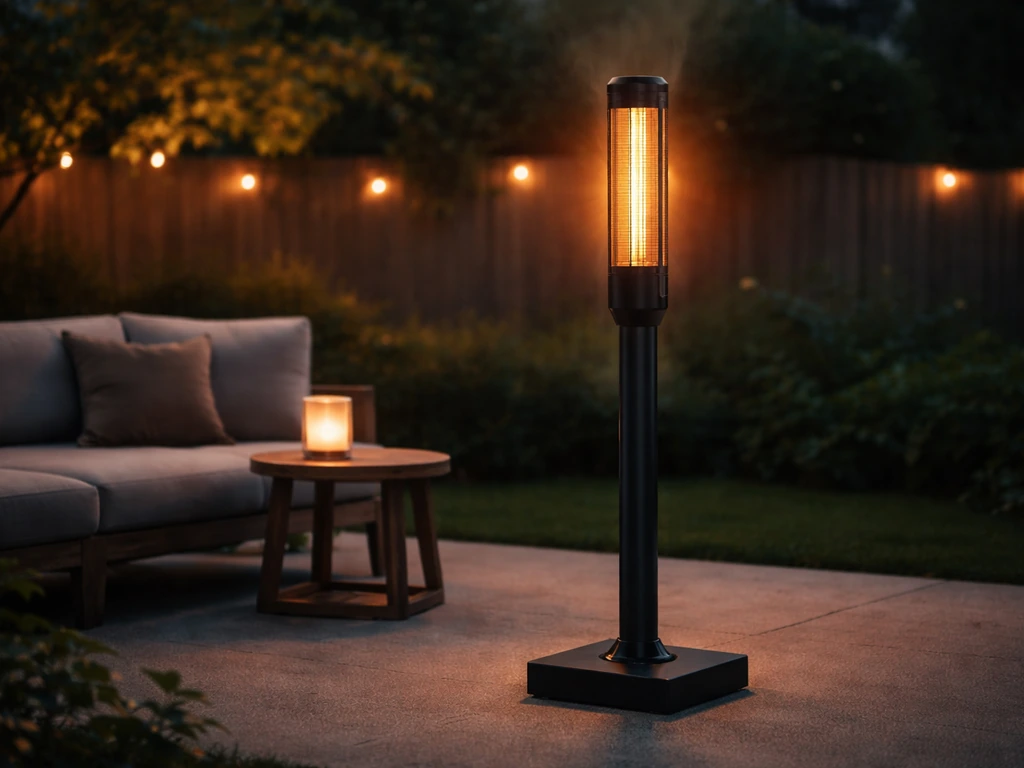
How to pick the right electric patio heater before you buy anything
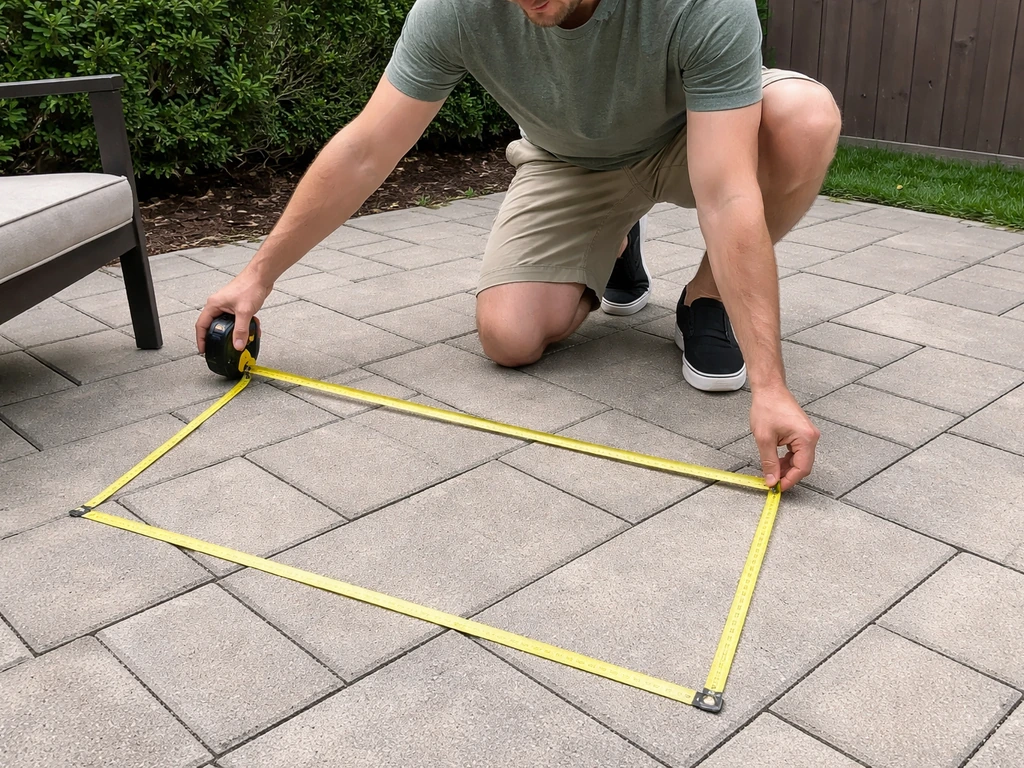
The single biggest mistake people make is buying by BTU rating alone or picking a heater based on vague 'covers up to X square feet' marketing copy. Real coverage depends on heater geometry, mounting height, reflector angle, and how open or exposed your patio is. A 3000W heater from Schwank, for example, is spec'd for a heat coverage footprint of roughly 11 ft x 11 ft (about 121 sq ft) in a well-configured installation. That's a specific heat map, not a blanket number.
Start by measuring your patio and identifying your seating zones. Electric heaters are most efficient when aimed directly at occupied areas rather than trying to heat the whole volume of space. If you have a long narrow deck, one directional wall-mount aimed along the seating run often outperforms a freestanding unit placed in the center. For a square patio with a central dining table, a ceiling-mounted pendant or overhead unit works better because it distributes heat evenly downward. If you want the best indoor patio heater, focus on models that match your space and provide efficient infrared warmth with safe, enclosed-space operation.
Coverage and wattage need to match your climate too. If you're in a milder region and just want to extend the season by a few weeks, a 2000W heater is usually enough. If you're heating through genuine cold snaps or want warmth on a semi-exposed deck in a windy coastal climate, size up and add a second unit rather than maxing out a single heater at continuous full output.
- Measure your primary seating area in square feet, not the entire patio slab
- Note whether your patio is enclosed, semi-covered, or fully open to wind
- Identify where you'll mount or position the heater relative to seated head height (typically 7 to 10 ft overhead for ceiling mounts)
- Check whether you have a 120V or 240V outlet available, as most heaters above 2000W require 240V
- Decide if you want a permanent fixed install or a portable/freestanding option
Infrared radiant vs convection: which electric type actually works outdoors
There are two main approaches to electric outdoor heating, and they behave very differently in real conditions. Infrared radiant heaters emit electromagnetic energy that warms people and objects directly on contact, similar to how sunlight feels warm on your skin even on a cold day. Convection heaters warm the air volume around them. Outside, convection heating is largely pointless once the wind picks up because warm air disperses immediately. Infrared radiant heat projects onto you regardless of breeze, which is why it's the dominant technology for serious outdoor use.
Within infrared, short-wave (near-infrared or IR-A) units deliver intense, immediately felt warmth and perform best in fully open, windy terraces where you need rapid perceived comfort. Medium-wave and long-wave infrared heaters produce a gentler, more diffuse warmth and work well in covered or semi-enclosed patios. Most premium brands like Bromic, Infratech, and Schwank use medium-wave or long-wave carbon/quartz elements, which provide strong coverage without the harsh glare of short-wave halogen tubes.
| Heater Type | How It Heats | Wind Resistance | Best For | Typical Wattage |
|---|---|---|---|---|
| Short-wave infrared (IR-A) | Directly heats people/objects via near-infrared | Excellent | Fully open, exposed patios | 1500W to 4000W |
| Medium/long-wave infrared | Gentle radiant heat via quartz/carbon element | Very good | Covered and semi-enclosed patios | 1500W to 6000W |
| Convection (fan/coil) | Warms surrounding air | Poor | Indoor use only | 750W to 2000W |
| Halogen heat lamp | Short-wave visible infrared, instant heat | Good | Small covered areas, budget installs | 500W to 1500W |
For almost every outdoor patio situation, infrared radiant is the right answer. If you’re in South Africa, the best patio heaters are the ones sized to your outdoor space and chosen for windy, coastal, or covered patio conditions infrared radiant. Convection units belong indoors, or at most in a fully enclosed sunroom. Halogen heat lamps are a budget option for small covered areas but produce visible orange light that some people find distracting at night and they tend to have shorter element lifespans than quartz or carbon infrared models.
Top picks by patio size and setup
Rather than listing specific ranked models in isolation, here's how to match heater type and wattage to your actual patio situation. This is more useful than a ranked list because the 'best' heater genuinely changes based on your setup. Once you know your patio size and mounting type, you can narrow down to the best outdoor patio heaters for your climate and layout.
Small patios (under 80 sq ft): wall-mounted 2000W
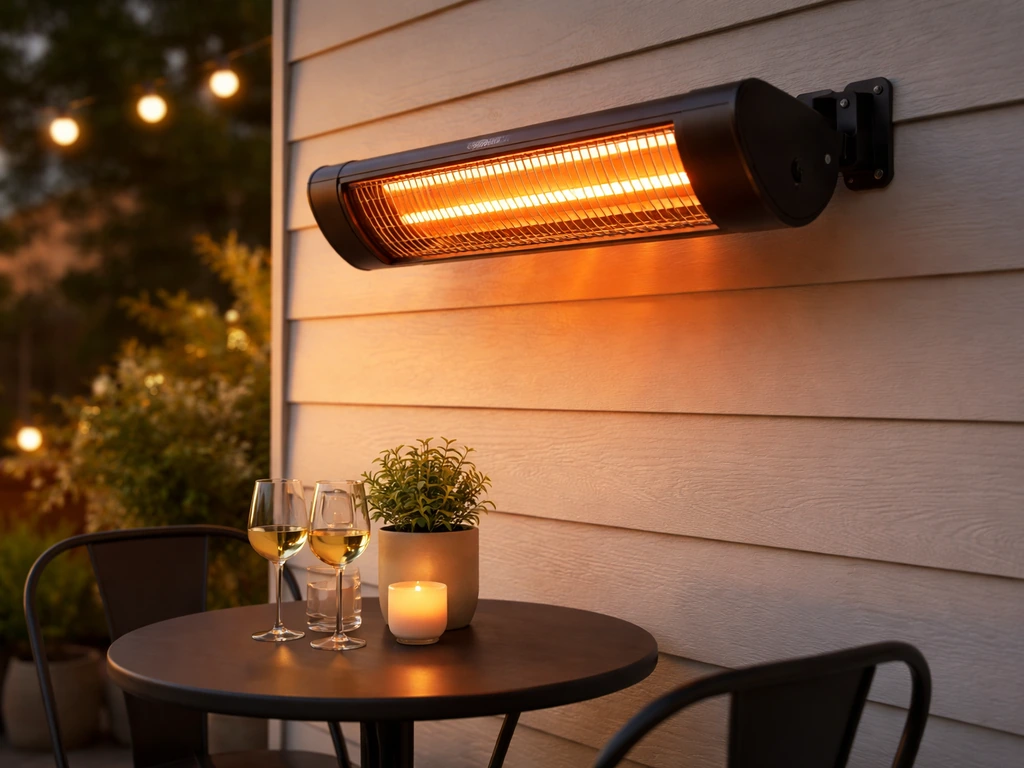
A 2000W wall-mounted infrared unit is ideal for a small deck or bistro setup. The Bromic Tungsten Smart-Heat Electric 2000W covers up to 64 sq ft at its rated specification and runs on a standard 120V or 240V circuit depending on the model configuration. At this size, a single wall-mount aimed at the seating area gives you consistent, directed warmth without overbuilding. Freestanding units work too if you don't want to drill into a wall, but they take up floor space and need a nearby outlet.
Medium patios (80 to 130 sq ft): 3000W to 4000W, wall or ceiling
This is the most common residential setup. A 3000W unit from Bromic covers up to 100 sq ft; the 4000W version covers up to 120 sq ft. Schwank's 3000W class heater is spec'd for roughly an 11 ft x 11 ft coverage footprint. For a rectangular deck with seating along one side, a single wall-mount angled slightly downward at the seating zone works well. For a square patio or dining arrangement, ceiling-mounted works better for even distribution. Infratech's C-Series is a strong option here: the installation manual specifies reflector aiming downward to keep the heat pattern directed at occupant level, not wasted high overhead. Infratech’s more recent C-Series manual (dated July 2024 in the file) continues to provide installation and use guidance for all-weather electric infrared radiant heaters Infratech's C-Series is a strong option here.
Large patios (130 to 200+ sq ft): 4000W to 6000W or multiple units
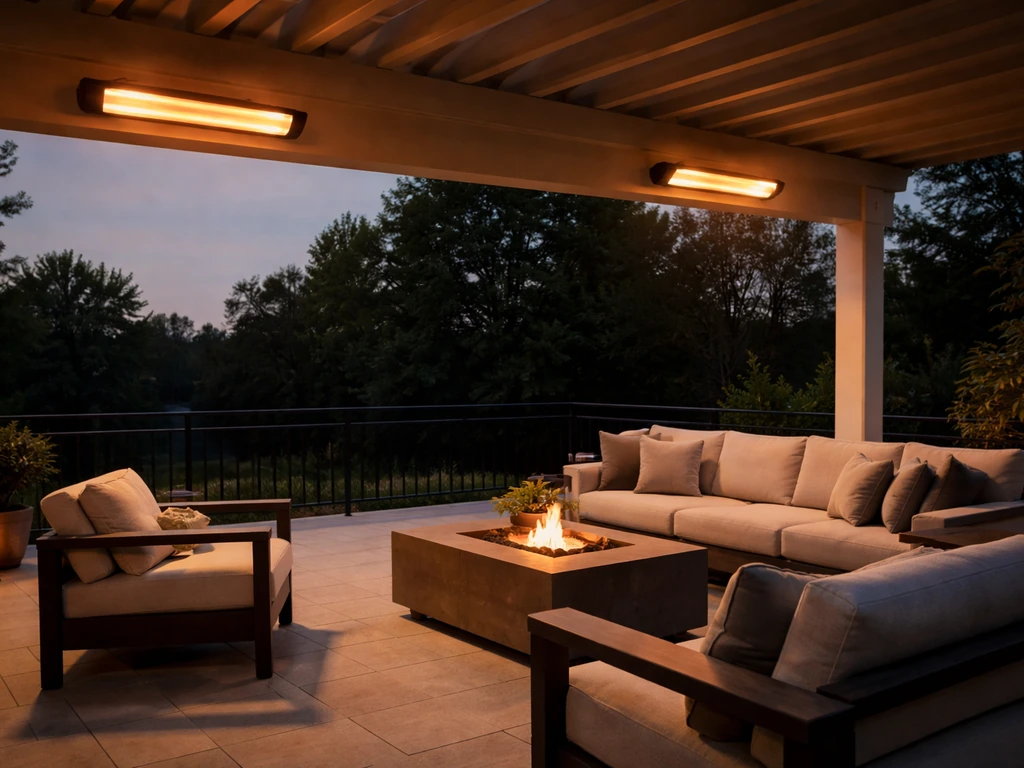
At this scale, a single heater rarely does the job well. The Bromic Tungsten 6000W covers up to 144 sq ft at rated conditions, so a 200 sq ft open patio realistically needs two 4000W units spaced to overlap their coverage zones. Schwank offers models up to 6000W across 208/240/277/480V configurations, giving you flexibility if you have commercial-grade power available. For large restaurant or commercial patios, the zoning approach (multiple heaters on independently controlled circuits) is standard because it lets you heat only occupied sections rather than running everything at once.
Freestanding vs wall-mounted vs ceiling-mounted: what to choose
Freestanding units are the easiest to set up and reposition, but they're less efficient per watt because they can't be optimally aimed, they take floor space, and they're more vulnerable to being knocked over. Wall-mounted units give you directional control and keep the floor clear, but require a dedicated outdoor circuit and mounting surface. Ceiling-mounted pendant heaters are ideal for covered patios with a pergola or roof structure, giving overhead distribution directly above a dining table. If you're deciding between propane and electric, consider that electric heaters eliminate refill hassle and are safer in enclosed areas, though the cord and circuit requirements are real constraints worth planning around.
What actually affects how warm you feel: real-world performance factors
Specs on a box tell you rated wattage and nominal coverage area under ideal conditions. In the real world, four factors make or break perceived comfort: wind exposure, mounting height and angle, wattage controls, and thermostat/timer use.
Wind resistance
Infrared radiant heat has significantly better wind resistance than any convection system because the energy travels as electromagnetic radiation, not as warm air that disperses. The Bromic Eclipse Smart-Heat Electric Portable is rated for wind resistance up to 20 mph, which gives you a concrete reference point. In consistently windy conditions above that, the warmth you feel diminishes even with infrared because the heat absorbed by your skin is carried away by convection from the wind. The practical solution is positioning: use screens, walls, or pergola structures to reduce wind exposure at the seating zone, then let the heater do its job. You can't overpower a 30 mph coastal wind with a patio heater; you work around it with layout.
Mounting height and angle
Both Infratech and Bromic provide specific mounting guidance for good reason. Mount too high and you lose intensity because radiant heat intensity falls off with distance (inverse square law). Mount too close and you create uncomfortable hot spots. For most residential applications, ceiling/overhead mounts at 7 to 10 feet above the seating surface hit the right balance. Wall mounts should be angled downward so the reflector directs heat toward the seated zone rather than projecting horizontally across the space. Infratech's C-Series installation manual is explicit about aiming the reflector downward and following the bracket adjustment to tune the angle.
Wattage controls, thermostats, and timers
Heaters with variable wattage settings are meaningfully more useful than single-output models. The ability to dial from, say, 2000W down to 1000W on a mild evening saves energy and prevents overheating your guests. Smart control systems like Bromic's Affinity Smart-Heat app let you schedule and time heater operation from your phone, so you're not running the heater at full power while nobody's sitting outside. Timer and scheduling functions are among the most practical features for reducing operating costs without any change in comfort when someone's actually using the patio. For simpler setups, even a basic dial dimmer wired into the circuit gives you useful control.
Safety, installation, and outdoor weather ratings
Outdoor electric heaters have specific installation requirements you shouldn't skip. This isn't just regulatory box-ticking: improper installation in a wet environment with live electrical components is a real hazard.
IP ratings and weather protection
IP (Ingress Protection) ratings tell you how well a heater handles moisture. IPX4 is the minimum you should accept for any outdoor patio heater, meaning protection against water splashing from any direction. The Bromic Tungsten Smart-Heat Electric series is rated IPX4. The Bromic Eclipse Portable is rated IP54, which adds dust protection. Infratech's C-Series manual specifically states that all outdoor wiring components used with the heater must also carry a minimum IPX4 rating, so the protection requirement extends to your cables, connectors, and junction boxes, not just the heater body itself.
GFCI protection and circuit requirements
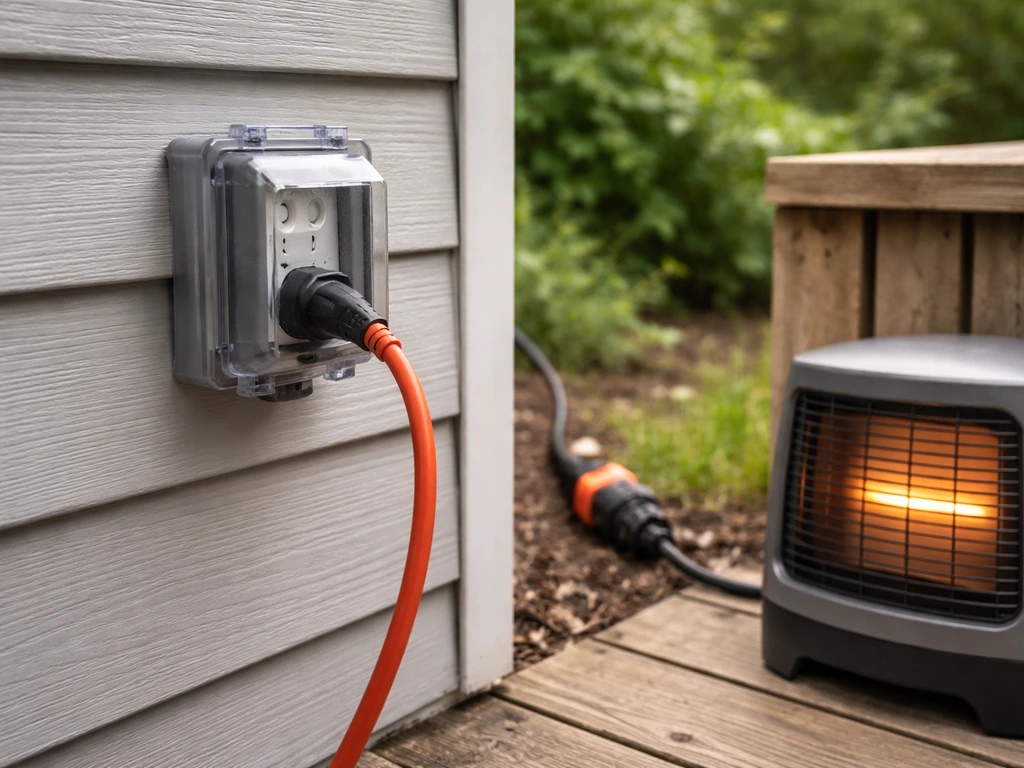
Under NEC 2023 requirements (Section 210.8), outdoor outlets at dwelling units require GFCI protection. GFCI has been required for outdoor receptacles since 1971 in successive NEC editions. In practice, this means your outdoor electric heater should be plugged into or hardwired through a GFCI-protected circuit. Most heaters above 2000W are hardwired to a dedicated 240V circuit and aren't plug-in units, so you'll need an electrician to run the circuit if you don't already have one. Don't run a high-wattage heater on an extension cord or a shared household circuit.
Clearance distances and combustibles
Every heater manufacturer specifies minimum clearance to combustible materials, and these distances are not conservative suggestions. Bromic's Tungsten Smart-Heat Electric manual includes clearance requirements related to surface temperature rise on combustible materials in the vicinity of the heater. Follow the manufacturer's stated clearances precisely, especially for overhead mounts near wood pergola beams, fabric shade sails, or vinyl patio covers. Most wall-mounted infrared heaters require 18 to 24 inches minimum clearance to overhead combustibles; check your specific model's manual.
Cable management and rain/snow use
Use outdoor-rated conduit or weatherproof cable runs for hardwired installations. For any plug-in models, pair them with an outdoor-rated socket with IP54 or better rating (Bromic explicitly requires this for the Eclipse Portable to maintain its IP54 rating). Most infrared heaters rated IPX4 or better can operate in light rain without issue, but no outdoor heater is designed to sit submerged or under a direct stream of water. In climates with heavy snow load, retractable models or wall mounts with weatherproof covers for the off-season extend product life significantly.
What it costs to run an electric patio heater
Electric heaters are straightforward to cost out because they're essentially 100% efficient at converting electricity to heat. The formula is simple: (Watts divided by 1000) multiplied by your local electricity rate equals cost per hour. At the US average of roughly $0.16 per kWh, a 1500W heater costs about $0.24 per hour, a 3000W unit runs about $0.48 per hour, and a 6000W heater costs around $0.96 per hour. Run a 3000W heater three hours an evening, four evenings a week, and you're looking at roughly $23 per month at that rate. At higher US regional rates (some states are now $0.25 to $0.35 per kWh), that same usage pattern costs $35 to $50 per month.
| Wattage | Cost/hr at $0.16/kWh | Cost/hr at $0.25/kWh | Monthly cost (12 hrs/wk) |
|---|---|---|---|
| 1500W | $0.24 | $0.38 | $11.50 to $18 |
| 2000W | $0.32 | $0.50 | $15 to $24 |
| 3000W | $0.48 | $0.75 | $23 to $36 |
| 4000W | $0.64 | $1.00 | $31 to $48 |
| 6000W | $0.96 | $1.50 | $46 to $72 |
The best way to manage costs is to match wattage to actual need rather than always running at maximum output. Variable-output heaters and smart timer controls (like Bromic's app-based scheduling) make a real difference here. Running a 4000W heater at 50% output on mild evenings and only pushing to full power in cold weather is a much more economical pattern than leaving a fixed-output unit cycling on and off with a simple thermostat. If you're comparing electric to gas heaters, keep in mind that natural gas patio heaters typically cost less per hour to run in regions where gas is cheap, but electric heaters are easier to install, require no fuel deliveries, and are safer in enclosed or semi-enclosed patio settings.
Buying checklist: what to verify before you order
Use this as your go-to reference when comparing specific models. A lot of buyers focus entirely on wattage and price and miss the factors that determine whether a heater actually works well for their setup. If you want to dial in comfort without guesswork, pair your setup with the best outdoor patio thermometer to track actual conditions at seating level.
- IP rating: minimum IPX4 for covered patios, IP54 or better for fully exposed installs
- Wattage and voltage: confirm whether your patio has a 120V or 240V circuit available; most heaters above 2000W require 240V
- Coverage area spec: look for actual footprint dimensions (like 11 ft x 11 ft) rather than just square footage claims without geometry context
- Mounting type: wall bracket, ceiling pendant, or freestanding; verify your structure can support the mount and that you have wall/ceiling clearance from combustibles
- Control features: variable wattage output, remote control, timer/scheduling app compatibility, or dimmer compatibility
- Element type: quartz or carbon infrared for longer lifespan and gentler output; halogen/tungsten for budget short-term use
- Warranty: most premium brands (Bromic, Infratech, Schwank) offer 2 to 3 year warranties on residential installs; commercial grade units may carry longer coverage
- Clearance requirements: check manufacturer's minimum clearance to combustibles and confirm your install location meets them before purchasing
- Outdoor wiring compliance: GFCI-protected circuit required; outdoor-rated conduit and junction boxes for any hardwired installation
Common buying mistakes to avoid
- Buying a heater rated for indoor use and using it outside, even seasonally, voids warranty and creates safety hazards
- Choosing the highest wattage available instead of matching output to patio size, leading to wasted energy and uncomfortable heat intensity
- Ignoring voltage requirements and discovering after delivery that a 240V heater can't plug into any existing outlet on the patio
- Mounting a heater at the wrong height or with no downward angle adjustment, which reduces effective coverage significantly
- Using a domestic indoor extension cord for plug-in models instead of an outdoor-rated cord and socket rated to IP54 or better
- Skipping GFCI protection on the circuit because the heater 'looks safe enough' or was working fine without it
Pricing context for premium vs budget options
Premium brand infrared heaters cost significantly more upfront but deliver better build quality, longer element life, and more sophisticated controls. Bromic Tungsten Smart-Heat Electric models run from around $990 for the 2000W version up to approximately $1,444 for the 6000W model. Infratech and Schwank sit in a similar price range for commercial-grade units. For homeowners on a tighter budget, brands like Dr. Infrared (the DR-238 and DR-368 series) offer adjustable multi-wattage settings (900W/1200W/1500W) at a much lower price point and are a reasonable choice for smaller covered patios where you don't need serious wattage or sophisticated controls. Expect to trade off build durability and element longevity for the lower price.
Your next steps to get this right
Start by measuring your seating zone and checking your electrical situation (120V vs 240V, existing outdoor outlet, GFCI protection status). That two-minute assessment narrows your options faster than any product comparison. If you have a small covered patio with a 120V outlet, a 1500W to 2000W wall-mount infrared unit solves your problem today without hiring an electrician. If you have a larger open patio and no 240V outdoor circuit, budget for an electrician visit alongside the heater purchase because a 3000W+ hardwired unit is the right long-term choice and the wiring is a one-time cost. If you still want a quick shortlist, use a guide to the best outdoor patio heater near me based on your patio size, climate, and power setup.
For readers who want to compare electric options against propane or natural gas patio heaters, the trade-offs mostly come down to installation flexibility vs running cost vs enclosed-space safety. If you're also shopping for a best outdoor gas patio heater, check fuel type, burner output, and ventilation requirements before deciding between gas and electric. Electric wins on safety and ease for covered or semi-enclosed patios. Gas models often have lower per-hour fuel costs and greater heat output at high wattage equivalents, but require fuel management and more clearance. If you're specifically evaluating gas options alongside electric, the considerations are meaningfully different and worth reviewing separately.
Once you have your wattage target and mount type figured out, narrow to models with variable output controls, at least IPX4 rating, and a warranty of two years or more. Those three criteria eliminate most of the mediocre products on the market and leave you with a short list of heaters that will actually perform through multiple seasons of outdoor use.
FAQ
What wattage should I choose if my patio is covered but also open on the sides?
Use climate and wind exposure, not just square footage. A covered patio with strong side exposure often behaves like a more open area, so instead of defaulting to the “covered” size tier, start at the next higher wattage (or plan two smaller heaters) and aim them directly at seating.
Is it safe to run a high-wattage outdoor electric patio heater on an extension cord?
No. High-wattage heaters should not be run on extension cords, shared indoor circuits, or under-sized outdoor cords. If the heater requires hardwiring (common above 2000W), budget for proper installation through a dedicated GFCI-protected circuit.
Can I use a plug-in infrared patio heater in light rain?
Generally yes if the heater is rated at least IPX4, and the plug connection is designed for outdoor use. However, do not treat any outdoor heater as submersible, and avoid direct water jets (for example, from a hose or pressure washer).
How do I figure out the right mount height for an infrared heater?
A practical residential starting point is 7 to 10 feet above the seating surface, then verify comfort by observing where the heat lands. If mounted too high, intensity drops fast with distance, and if mounted too low, you can create hot spots or run into clearance-to-combustibles requirements.
Do I really need GFCI protection for my outdoor electric patio heater?
Yes, for outdoor receptacles at dwelling units it is required, and in practice most safe setups use a GFCI-protected circuit. If you are hardwiring a heater, still ensure the feed is on a GFCI-protected breaker or upstream GFCI device, and have an electrician confirm compliance.
What clearance should I keep from wood pergola beams, vinyl covers, or fabric shade sails?
Do not rely on vague “recommended distance” rules. Use the specific clearance values in your heater’s manual, since the needed space relates to surface temperature rise. Many wall and overhead infrared models require on the order of 18 to 24 inches to overhead combustibles, but your exact figure depends on the model.
Will infrared patio heaters still work if it is very windy or during cold snaps?
Infrared is much more wind-resistant than convection because it warms people and objects directly, but it is not magic. In very high winds, the warmth absorbed at skin level can still feel reduced, so prioritize layout and wind blocking (screens, walls, pergola shielding) and consider adding a second heater instead of running one at full power nonstop.
How should I size heaters for a long narrow deck versus a square patio?
Long narrow decks usually benefit from wall-mounting along the seating run so heat projects where people are, while square patios often perform better with overhead or ceiling-mounted placement to distribute warmth more evenly. If you cannot mount overhead, split coverage into multiple wall-directed units.
Is it better to buy one large heater or two smaller ones for about 200 sq ft?
Two smaller heaters is often more comfortable than one oversized unit, because overlapping directional zones can match where people sit and reduce uneven hotspots. A common rule of thumb from rated footprints is that larger open areas typically need zoning, meaning multiple heaters spread across the space.
Do variable-wattage and smart controls actually save money?
Yes, because heating is usually needed intermittently and only at the seating zone. Being able to dial down power on milder evenings and scheduling operation so you heat before guests arrive can cut run time compared with single-output heaters that cycle broadly or run too long while nobody is outside.
How can I compare the real cost to run different wattage heaters at my electricity rate?
Use (watts ÷ 1000) × your $/kWh × hours of use. This gives cost per hour, then multiply by your typical evenings per week. If your local rate is higher than the example averages, you can quickly see whether 3000W or 6000W is the smarter choice given your desired comfort duration.
What IP rating is the minimum I should look for?
For outdoor patio heaters, IPX4 is the minimum practical target, meaning protection from water splashing from any direction. If you are dealing with dust (for example, coastal sand) or want extra robustness, look for higher ratings like IP54, and confirm that the outdoor wiring components also meet the required moisture rating.
Next Articles
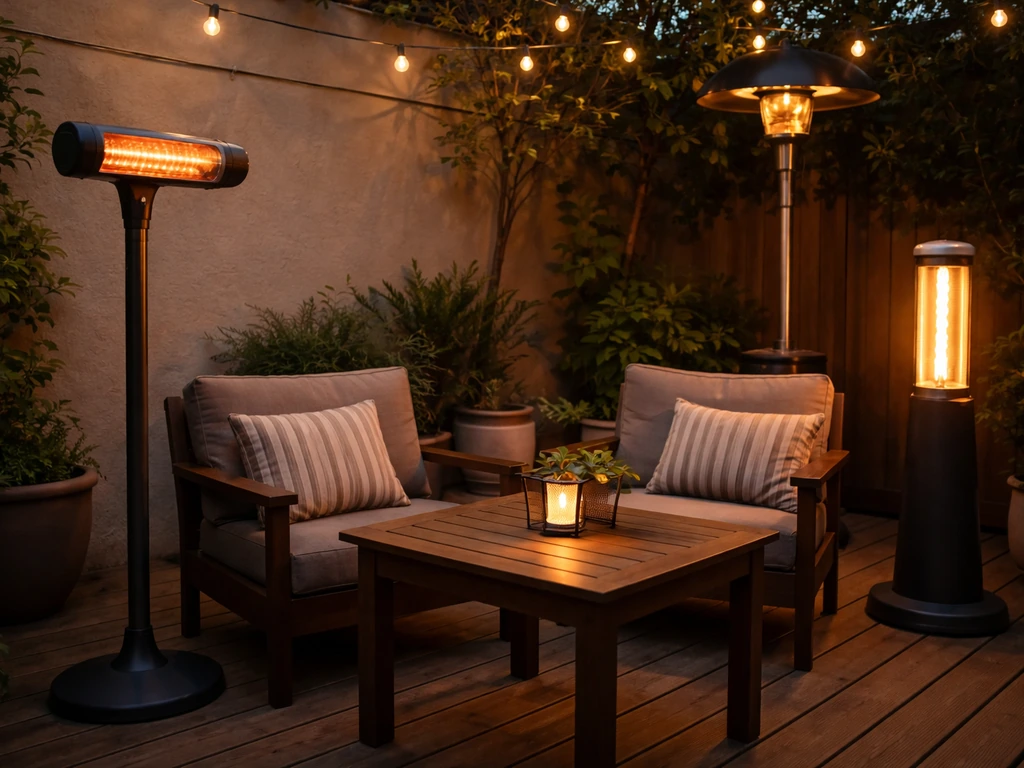
Best Outdoor Patio Heaters: Choose Gas, Electric, Infrared
Buying guide for the best outdoor patio heaters: gas, electric, infrared, propane and pellet with cost, coverage and saf
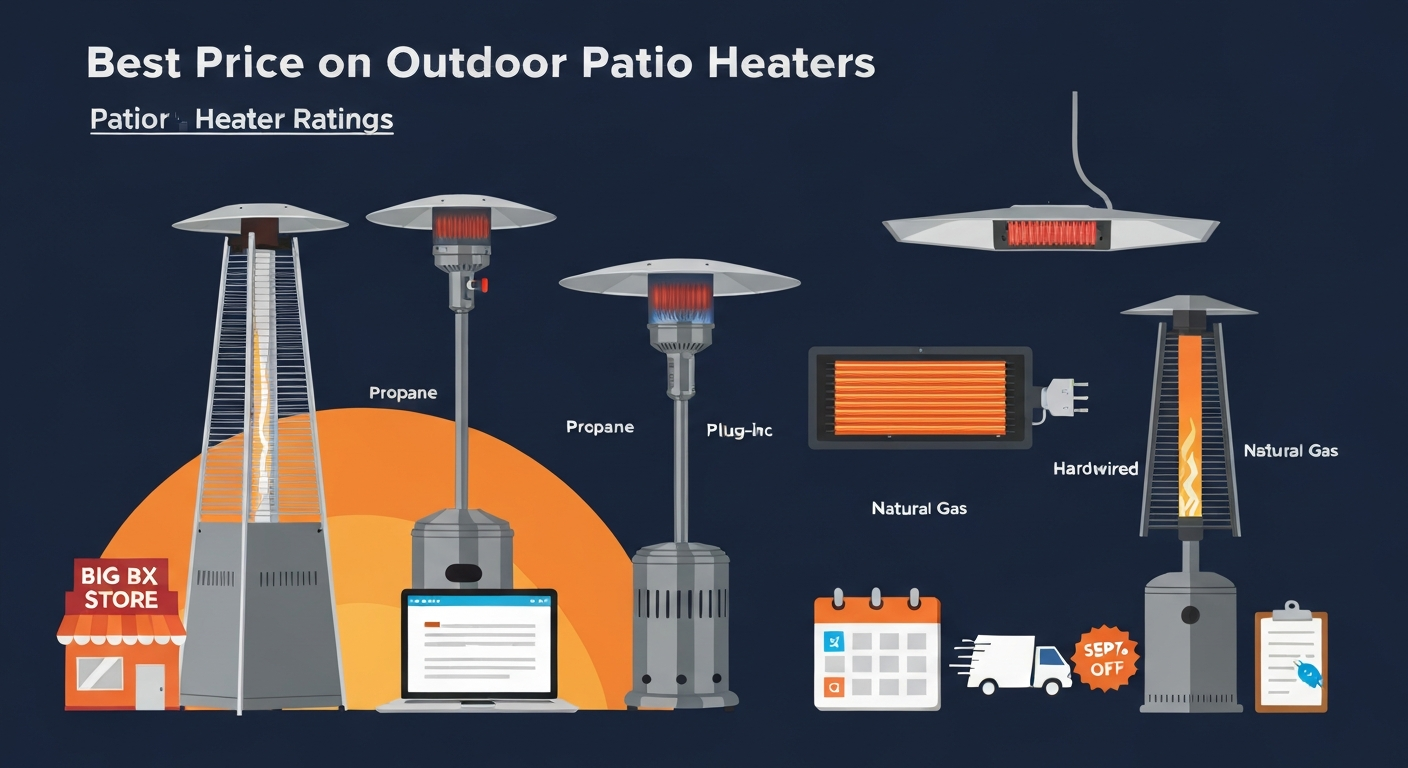
Best Price on Outdoor Patio Heaters: Compare Costs & Deals
Score the best price on outdoor patio heaters, price ranges, top picks, deal tactics, total-cost & safety checklist.
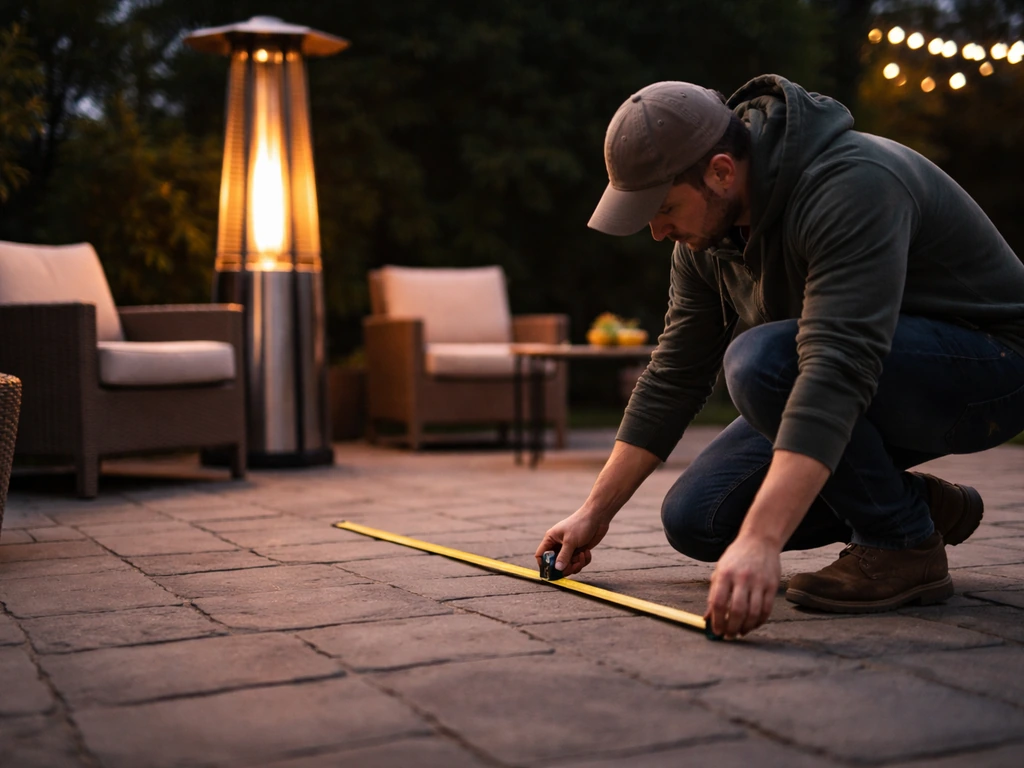
Where Can I Rent Patio Heaters Near Me Today
Find where to rent patio heaters near you today, choose the right fuel type, compare costs, and book safely.