
The best electric patio heater for most people is a hardwired infrared wall or ceiling mount in the 1,500 to 4,000 watt range. Models from Infratech, Dr. Infrared Heater, and Bromic consistently top real-world tests for heat output, weatherproofing, and longevity. If hardwiring isn't an option, a 1,500W freestanding infrared unit with a built-in tip-over switch and at least an IP44 weather rating is the next best pick. Which one is actually right for you comes down to your patio size, how exposed it is to wind, and whether you're willing to run a dedicated circuit.
Best Electric Heater Patio: Top Picks and Buying Guide

Caleb Vale
2 May 2026

What 'Best' Actually Means for an Electric Patio Heater
A lot of heaters get slapped with the 'best' label based on Amazon ratings alone. If you want a shortcut, also check the best electric patio heater 2019 list for curated picks you can compare against these wattage and coverage rules. That's not how I think about it. For an outdoor electric heater, best means three things working together: adequate coverage for your space, enough wattage to overcome ambient cold, and safety features that hold up outside without constant babysitting.
Coverage is the one people most often get wrong. A 1,500W heater will comfortably warm a small 6x8 ft seating area in mild weather, but if you're trying to heat a 12x16 ft open deck in 40-degree temps, you need at least 3,000 to 4,000 watts or multiple units. The general rule is roughly 10 watts per square foot for a semi-enclosed patio, and closer to 15 to 20 watts per square foot for open, exposed spaces.
Safety for outdoor use means a few non-negotiables: a weatherproof rating of at least IP44 (IP55 or higher for rain-exposed spots), a tip-over auto-shutoff on any freestanding model, overheat protection, and for hardwired units, correct mounting clearances from combustibles. Infratech's installation manuals, for example, specify exact minimum clearances around the heater body and directly in front of it. Skipping those specs is how you create a fire risk, not just a code violation.
Types of Electric Patio Heaters and How They Actually Heat
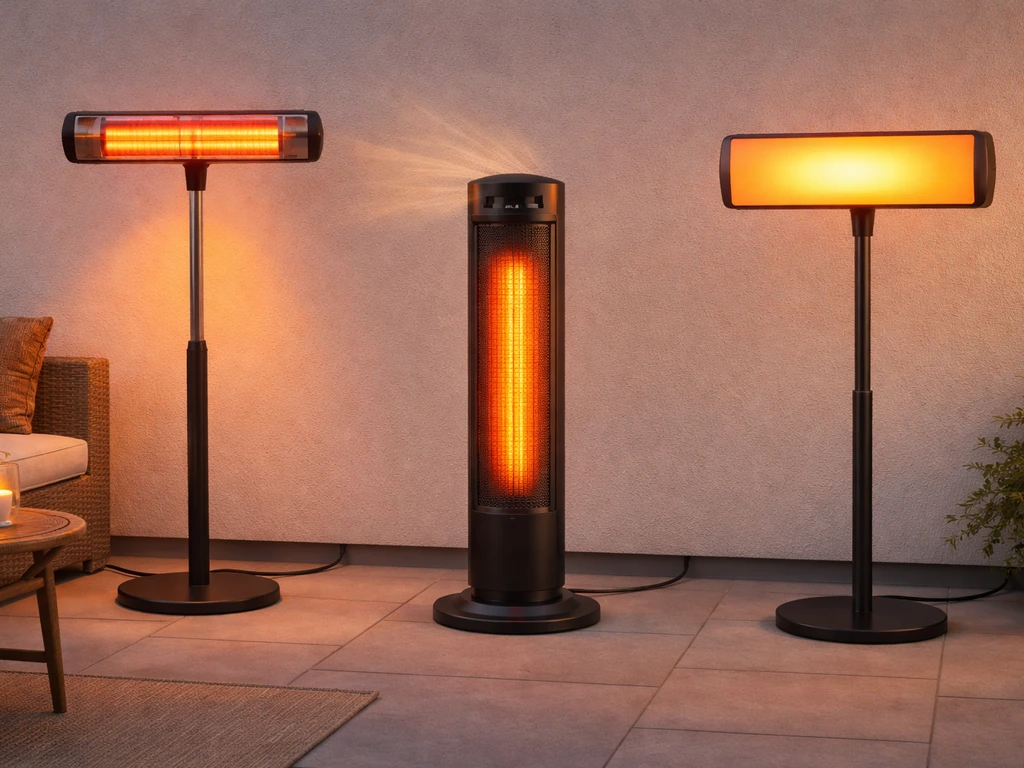
There are three main styles worth knowing, and the differences in how they deliver heat matter more outdoors than they do inside.
Infrared (Radiant) Heaters
Infrared heaters are the clear winner for most outdoor patios. Instead of warming air (which wind immediately blows away), they emit radiant heat that warms objects and people directly, the same way the sun does. That means they still feel effective even in breezy conditions. Most premium electric patio heaters, including Infratech's C-Series, Bromic Tungsten Smart-Heat, and Dr. Infrared Heater models, use quartz or halogen elements. Quartz elements produce a softer, lower-intensity glow and warm up in about 30 to 60 seconds. Halogen elements heat up almost instantly but run hotter and have a shorter lifespan. For a patio you use regularly, quartz infrared is the better long-term investment.
Convection and Fan-Forced Heaters
Convection heaters heat the surrounding air and circulate it with a fan. Indoors, they're efficient. Outdoors, they're mostly a waste of money because any breeze disperses the warmed air immediately. I don't recommend fan-forced or convection-style heaters for open patios. The only scenario where they make sense is a fully enclosed sunroom or a screened porch with no significant air gaps.
Ceramic and Quartz Panel Heaters
Ceramic panel heaters are a middle ground. They use radiant heat like infrared but at lower surface temperatures, so they feel less intense up close. They work fine for tabletop or small accent heating on a covered patio, but they typically max out around 1,500 watts, which limits their coverage. Think of them as supplemental warmth for a single chair or a small bistro table, not a primary patio heater.
Key Buying Factors to Compare Before You Choose
Wattage and Heat Output
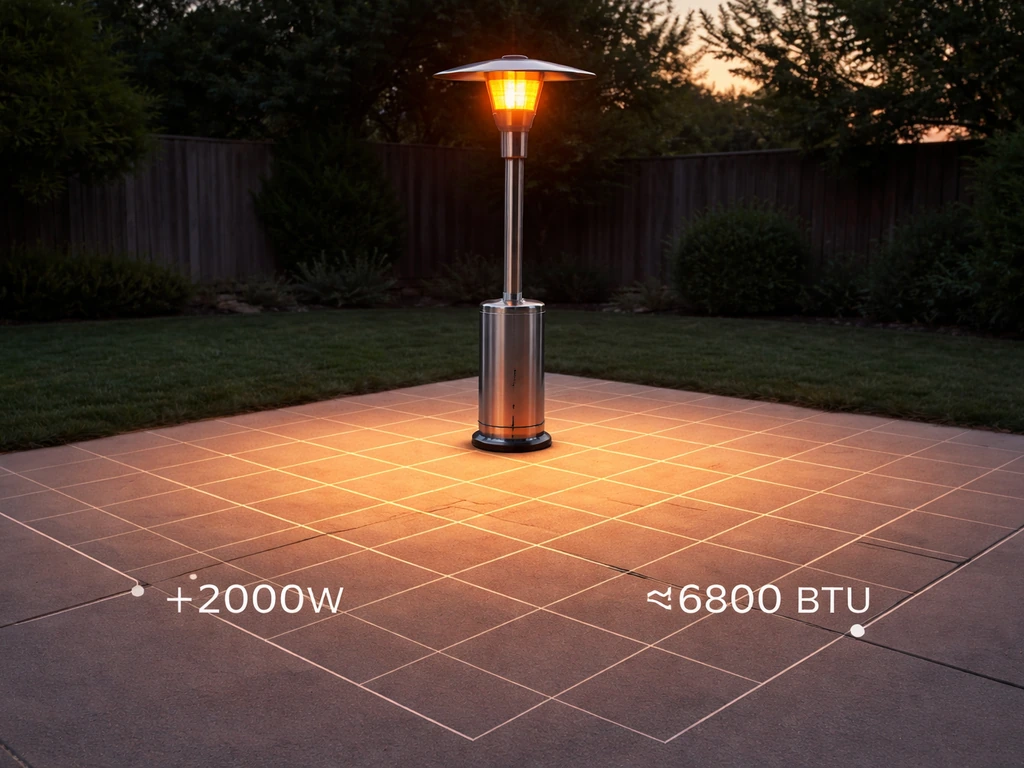
Wattage is the most important spec. Electric patio heaters are rated in watts rather than BTUs, but if you're comparing to a propane model, 1 watt equals roughly 3.41 BTUs per hour. A 1,500W heater produces about 5,100 BTU/hr, a 4,000W unit produces about 13,600 BTU/hr. For reference, a standard propane patio heater runs around 40,000 BTU/hr, so electric heaters deliver a fundamentally different, more targeted warmth rather than broad ambient heat. That's fine for most patios if you size the wattage right.
Coverage Area and Wind Exposure
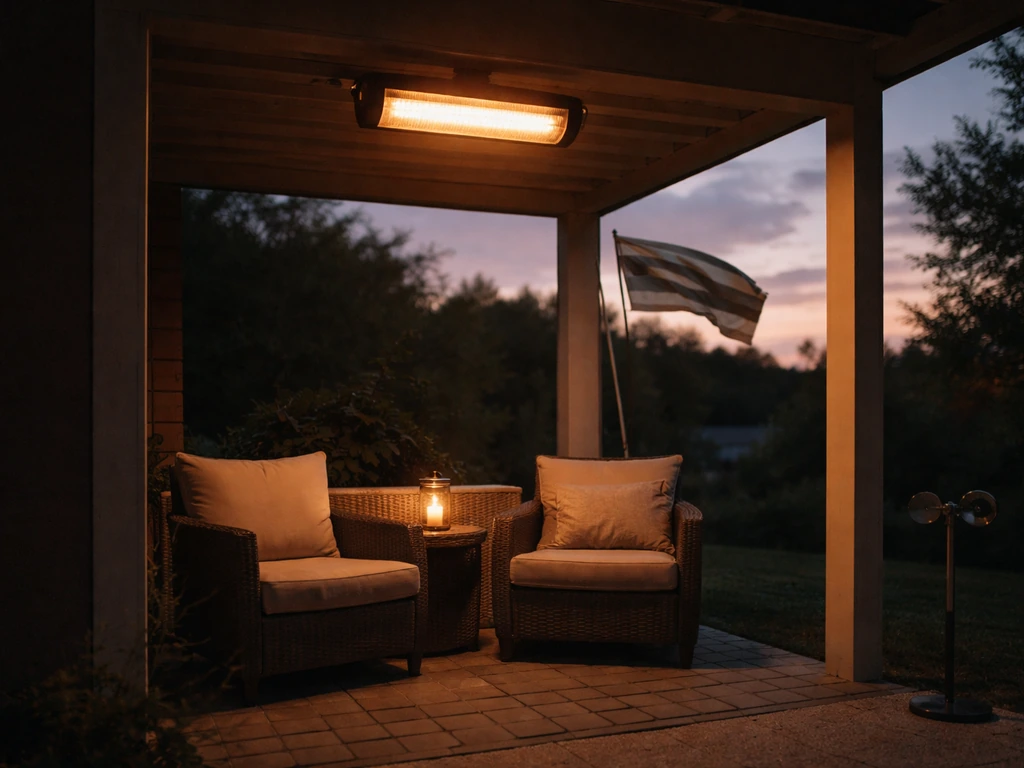
Use 10 watts per square foot as your baseline for a covered, partially enclosed patio. Bump to 15 to 20 watts per square foot if your patio is open on multiple sides or regularly exposed to wind. If your space is larger than what a single heater can handle, it's better to run two mounted units aimed at specific seating zones than to buy one oversized heater and aim it generally.
Controls and Convenience Features
For everyday use, remote control or smart home integration makes a meaningful difference. Bromic's Smart-Heat line integrates with Wi-Fi and supports app and voice control. Infratech offers multi-zone dual dimmer controls that let you dial wattage up or down. Even budget models from Dr. Infrared Heater and EnerG+ now include digital thermostats and programmable timers. A thermostat lets the heater cycle on and off to maintain a set temperature rather than running at full power constantly, which saves money on your electricity bill.
Weatherproofing and IP Rating
IP rating tells you how well a heater is sealed against water and dust. IP44 handles splashing water from any direction and is the minimum I'd accept for a covered patio. IP55, like the rating on the Westinghouse portable infrared model, means it can handle low-pressure water jets and is suitable for partially exposed or rain-prone spots. For a completely open deck with no overhead cover, look for IP65 or a unit specifically rated for rain exposure.
Mounting Style
Wall and ceiling mounts keep the heater out of foot traffic, free up floor space, and let you aim heat exactly where people sit. They're almost always the better choice for permanent setups. Freestanding units are portable and need no installation, but they take up space, require careful cord management, and are more vulnerable to wind tip-overs. Tabletop models are fine for a single person but not practical for a group setting.
Electric Setup Essentials: Power, Cords, and Outlets
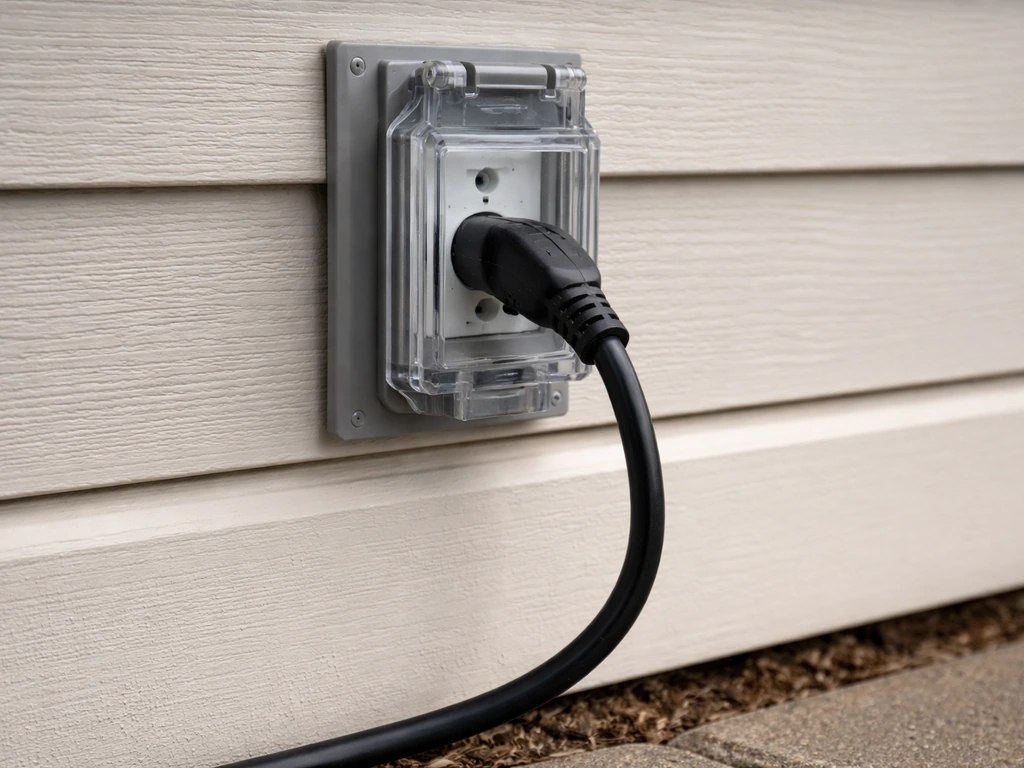
This is where a lot of people run into problems, so I want to be direct about it. Most electric patio heaters that exceed 1,500 watts require a dedicated 240V circuit. That means a separate breaker and wiring run from your panel, which requires a licensed electrician in most jurisdictions. A 1,500W model can run on a standard 120V household outlet, but verify the circuit isn't already shared with other high-draw appliances.
On extension cords: don't use them if you can avoid it. Most owner's manuals (including units sold through major retailers like Lowe's) explicitly state the heater functions best without an extension cord and warn against using one. The CPSC backs this up, noting that using an extension cord with a high-wattage heater can cause heat buildup at the cord and connections, which is a fire hazard. If your outlet placement leaves you no choice, use a heavy-duty, outdoor-rated cord with a gauge matched to the heater's amperage draw, and keep it as short as possible. Never run it under rugs or through doorframes.
For hardwired or 240V models, have a GFCI (ground fault circuit interrupter) outlet or breaker installed as part of the circuit. Any outdoor electrical installation requires GFCI protection under the National Electrical Code. For dwellings, this follows NEC text reprinted by Leviton stating that outdoor outlets supplied by single-phase branch circuits rated 150V or less to ground, when meeting listed limits, must be provided with GFCI protection GFCI protection for outdoor outlets in dwellings. For mounted units, plan your outlet or junction box placement before installing the heater bracket so the cord or conduit run is clean and protected.
Top Electric Patio Heater Picks for Different Setups
These are the models I'd shortlist today based on consistent performance, reliability, and value at their respective price points. That same approach is what you should use when comparing the best electric patio heaters 2018 for your space, coverage needs, and safety requirements. These picks were selected to help you find the best electric patio heater 2020 models for your specific outdoor setup. I've organized them by use case rather than ranking them one through five, because the 'best' genuinely depends on your setup.
| Model | Wattage / Voltage | Mounting Style | IP Rating | Best For | Approx. Price |
|---|---|---|---|---|---|
| Infratech C-Series (C-3000 or C-4000) | 3,000–4,000W / 240V | Wall, ceiling, flush mount | IP65 | Permanent covered patio, commercial, high-end residential | $400–$650 |
| Bromic Tungsten Smart-Heat 2000W | 2,000W / 240V | Wall / ceiling mount | IP55 | Mid-size covered patio, smart home users | $500–$700 |
| Dr. Infrared Heater DR-238 (1,500W) | 1,500W / 120V | Wall mount | IP44 | Small covered patio, standard outlet, budget pick | $130–$180 |
| Westinghouse Portable Infrared Heater | 1,500W / 120V | Freestanding / portable | IP55 | Renters, temporary setups, small patios | $100–$150 |
| EnerG+ HEA-21548 Infrared Heater | 2,000W / 240V | Ceiling / wall mount | IP44 | Medium patio, mid-range budget, good dimmer control | $180–$250 |
| AZ Patio Heaters HLI-1821 (Tabletop) | 1,300W / 120V | Tabletop | IP44 | Accent heat, single-person use, small bistro table | $80–$120 |
For a large, open deck (200+ sq ft) in a cold climate, the Infratech C-4000 hardwired and ceiling-mounted is the performance standard. It's not cheap, but the build quality, clearance specs, and adjustable mounting options make it a genuinely long-term buy. For a small apartment balcony or rental patio where you need zero installation, the Westinghouse portable unit's IP55 rating and tip-over protection put it ahead of most competitors in its class.
How to Compare Models Quickly
When you're standing in a store or scrolling through product pages, here's the fast framework I use: first, confirm the voltage matches what you have (or are willing to install). A 240V heater is useless if you're not prepared to wire it. Second, check the IP rating against your actual exposure to rain or moisture. Third, look at wattage against your square footage using the 10 to 20 watts per square foot rule. If those three boxes check out, then look at controls, warranty, and price. Don't buy based on aesthetics first.
Placement and Installation Tips for Maximum Heat
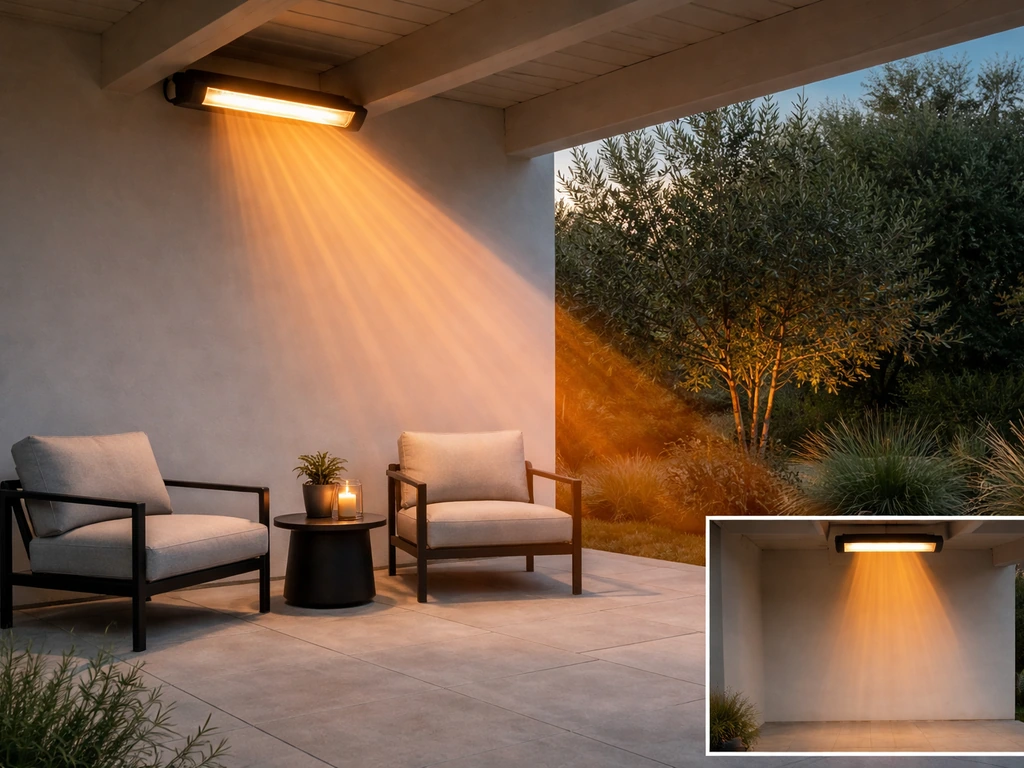
Where you put the heater matters almost as much as which heater you buy. Mounted infrared heaters work best when aimed directly at seating zones at an angle, not straight down. A 45-degree angle from a wall mount positioned 7 to 9 feet high typically gives the most even heat distribution across a seating group. Ceiling mounts work well on covered patios but need adequate clearance above and around the element, as specified in the heater's installation manual.
On open patios exposed to wind, position the heater so it's heating with the prevailing wind direction, not against it. You won't eliminate wind interference with an electric heater, but aiming at a shorter distance (6 to 8 feet rather than 10 to 12) and using a windbreak like a privacy screen or outdoor curtain on the windward side dramatically improves perceived warmth.
For freestanding units, keep them away from foot traffic paths, doorways, and areas where kids or pets move through. Route the cord along the perimeter of the patio rather than across open floor space, and avoid letting it drape where children or animals could pull or trip on it. That's a direct callout from most owner's manuals, and it's a real hazard people overlook.
Clearance from combustibles is non-negotiable for mounted heaters. Infratech's installation specs require specific minimum distances from the heater body on all sides and in the direct heat path. Always follow the clearance specs in the manual for whatever unit you buy, even if the space looks fine to the eye. Awning fabric, wood pergola beams, and outdoor string lights are all combustible and closer than you think when a heater is mounted overhead.
Safety and Maintenance Checklist
Run through this list before you use any outdoor electric heater, and repeat the inspection at the start of each season.
- Check the IP rating against your actual outdoor exposure and confirm the heater is rated for rain if it's not under a cover.
- Verify all electrical connections are secure and show no signs of corrosion, melting, or discoloration.
- Inspect the power cord for cracks, fraying, or pinch damage before each use season.
- Confirm extension cords are not in use (or, if unavoidable, are heavy-duty, outdoor-rated, and the correct gauge for the heater's amperage).
- Test the tip-over auto-shutoff on any freestanding model by gently tilting it until it activates.
- Check that mounting brackets and hardware are tight and show no rust or structural fatigue.
- Clear all combustibles from the manufacturer-specified clearance zone around and in front of the heater.
- Wipe down the heating element and reflector with a dry cloth to remove debris, spider webs, and dust accumulation.
- Verify the GFCI outlet or breaker trips correctly by pressing the test button on the GFCI.
- Store or cover freestanding and portable units when not in use for extended periods to prevent moisture and corrosion buildup inside the element housing.
- Never leave a freestanding electric patio heater running unattended outdoors, especially in wind.
Electric patio heaters have a strong safety track record compared to propane, but outdoor electrical equipment still deserves regular attention. A five-minute inspection at the start of the season and before each heavy-use period catches the issues (corroded connections, worn cords, loose mounts) that cause the rare but real problems. If you're looking at how our current top picks compare to what was available in previous years, the biggest jumps have been in weatherproofing standards, smart controls, and element longevity.
For the best electric patio heater 2022, prioritize adequate wattage for your patio size and an IP-rated heater that fits your exposure level top picks. The core buying logic, though, hasn't changed: get the right wattage, mount it correctly, and wire it safely.
FAQ
Is IP44 enough for an uncovered patio or heavy rain?
Yes, but only if your patio heater is genuinely rated for your conditions. For partially enclosed spaces, IP55 is usually enough for rain and splash zones, while a fully open deck with no overhead cover often needs IP65 or a model explicitly labeled for rain exposure, plus a mounting location that avoids direct runoff channels onto the unit.
How much warm-up time should I expect from quartz vs halogen infrared heaters?
Quartz infrared elements typically warm up in about 30 to 60 seconds, so if you only need heat in short bursts, plan for that warm-up time. Halogen can feel instant, but it tends to run hotter and is usually a less durable choice if you use the heater regularly.
If my patio is too large for one heater, is it better to buy a bigger unit or add a second one?
For a group, the best practice is aiming multiple heaters at seating zones rather than relying on one heater to throw heat across the whole space. If you exceed the coverage of a single unit, adding a second mounted heater and setting each to a zone usually delivers more comfortable, even warmth.
If I use a windbreak, can I downsize the heater wattage?
Often, yes, because infrared works by heating objects and people, not the air. However, you still need sufficient wattage and correct aim distance to overcome cold surfaces, so windproofing alone cannot replace proper sizing.
Can I plug a best electric patio heater into any outdoor outlet?
Use the heater only on circuits it is designed for. A 1,500W unit can often run on a standard 120V outlet, but many heaters should not be shared with other high-draw appliances, and you still need to confirm the outlet is not on a circuit that will trip under load.
Do I need GFCI protection for electric patio heaters?
If your unit is hardwired or 240V, you should have GFCI protection on the breaker or outlet feeding it, and the wiring should be done per local electrical code. If it is a cord-connected model, verify the manufacturer’s instructions for GFCI use still apply and that all connections are outdoor-rated.
What extension cord is safe to use with a high-watt electric patio heater?
Avoid extension cords unless the owner’s manual explicitly allows them for your specific heater model and amperage. If you have to use a cord as a temporary last resort, match the wire gauge to the heater’s draw, keep it as short as possible, and route it where it cannot be stepped on or pulled.
How do I prevent clearance mistakes when installing a wall or ceiling electric heater?
Mounted heaters are safest when aimed correctly and installed with required clearance. A common mistake is mounting too close to combustibles like pergola beams, awning fabric, and string lights, even if the heater looks like it has space.
Are smart features actually worth it, or just marketing?
Remote or smart controls help most when you use the heater repeatedly at predictable times or when you want to avoid full-power operation. A thermostat or dimmer is especially useful outdoors because it can reduce runtime while maintaining a comfortable feel for people sitting in the heat path.
When should I skip freestanding or tabletop heaters and choose mounted infrared instead?
Single-person tabletop warmth is the primary use case for tabletop units. For multiple people or a seating group, tabletop and ceramic panels usually fall short because they have limited wattage and the heat coverage is too narrow.
How do I compare an electric patio heater to a propane heater if the specs use different units?
You do not always need more BTUs than propane, because electric heaters are more targeted. The better approach is to size wattage to square footage using the patio watts-per-square-foot baseline, then compare comfort rather than trying to match propane BTU numbers exactly.
What are the most common placement errors that make an electric patio heater feel weak?
Yes, especially when you see uneven heat. Infrared heaters work best when aimed at the seating group at the right angle, and small placement changes can improve comfort more than buying a higher-watt unit.
What should I check at the start of each season?
Run a quick seasonal inspection: check the cord condition, look for corrosion at connections (especially near outlets), confirm mounts and brackets are tight, and verify the heater clears obstructions. If anything feels loose or looks damaged, stop using it until it is addressed.
Next Articles
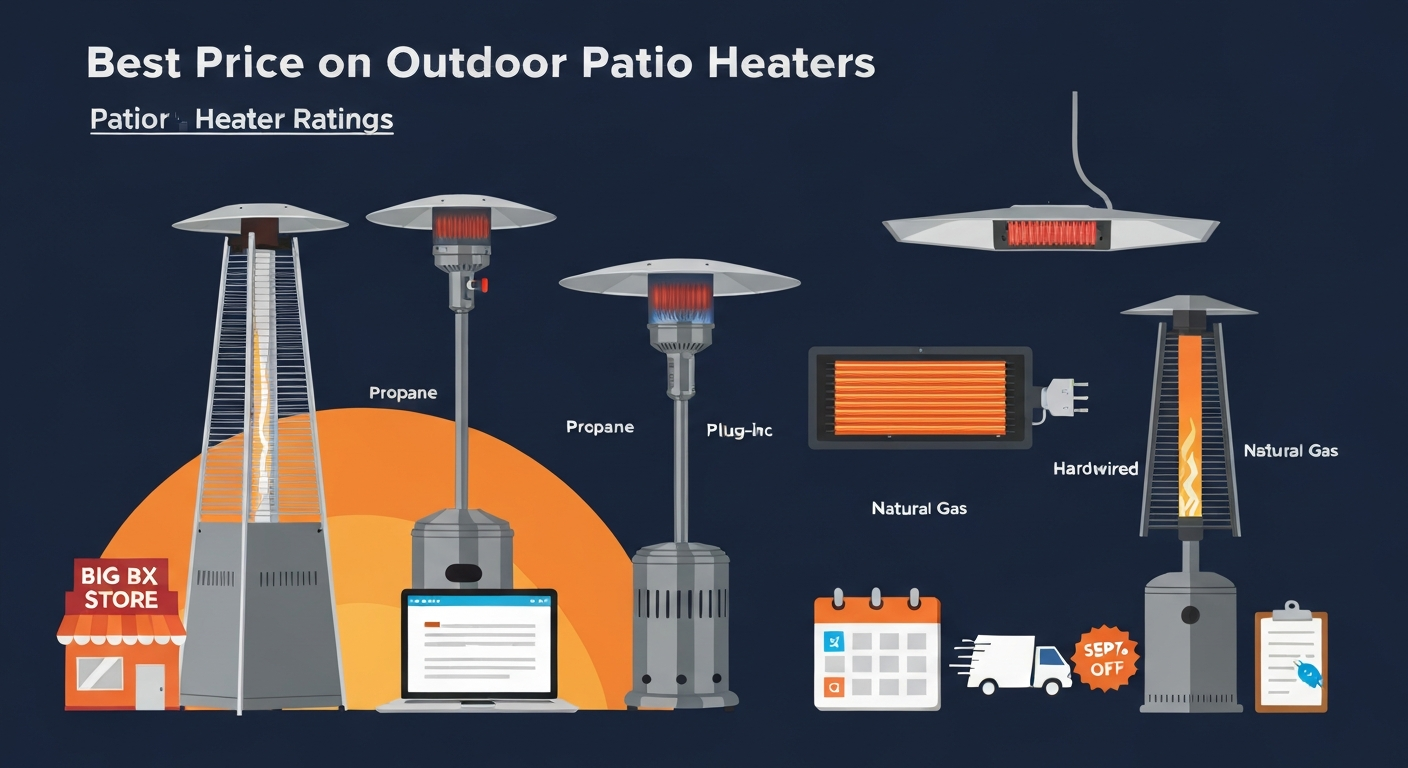
Best Price on Outdoor Patio Heaters: Compare Costs & Deals
Score the best price on outdoor patio heaters, price ranges, top picks, deal tactics, total-cost & safety checklist.
Where Can I Rent Patio Heaters Near Me Today
Find where to rent patio heaters near you today, choose the right fuel type, compare costs, and book safely.
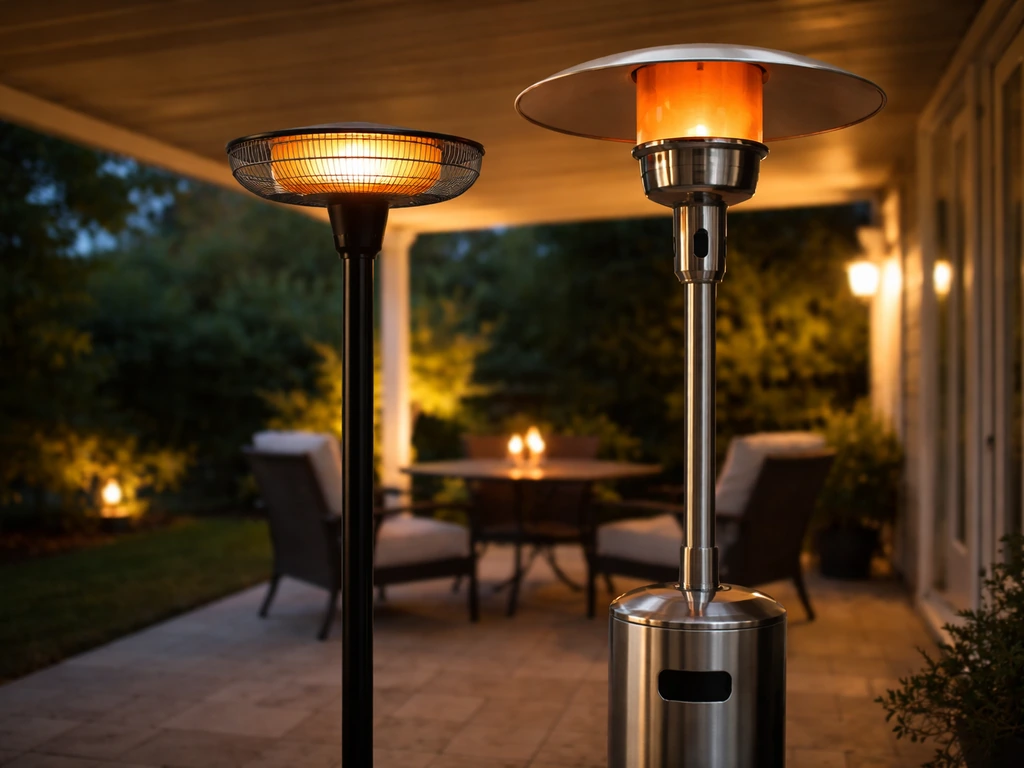
Where to Buy a Patio Heater: Best Places and Types
Where to buy a patio heater now, plus electric vs gas vs propane tips, safety checks, and size/BTU buying checklist.